Best Hardshell Jacket for Hiking in 2026: 6 Top Picks
The best hardshell jacket for hiking blocks rain, wind and snow without soaking you in sweat. Compare six current picks on membranes, layers, ratings, seams and fit.
HikingCare is reader-supported. When you buy through links on our site we may earn a commission at no extra cost to you. How we choose what to recommend.
🧥 Quick answer
What’s the best hardshell jacket for hiking in real wind, rain or snow? A 2.5- or 3-layer waterproof-breathable shell with taped seams and a real hood beats a light rain jacket once weather turns serious.
This guide compares six current hardshell jackets and explains the fabric science behind them. We focus on membranes, layers and features you can verify, not marketing claims.
*Sources: GORE-TEX and Pertex Shield fabric specifications, and the National Weather Service, checked September 2026.
Rain that soaks through your fleece. Wind that cuts through it anyway. Wet snow that just won’t stop. A real storm can turn a good hike into a cold, miserable walk back to the car.
That’s the problem a hardshell jacket solves. This guide covers the best hardshell jacket for hiking in 2026, plus the fabric science, features and fit details that separate a true hardshell from a light rain shell. We stick to specs confirmed on a brand’s own page or a live Amazon listing, not marketing copy.
By the end, you’ll know how waterproof-breathable membranes work, what 2-layer, 2.5-layer and 3-layer actually mean, and whether your next trip calls for a full hardshell or something lighter.
Here’s what you’ll get from this guide:
- A plain-English guide to waterproof-breathable membranes and ratings
- Six current hardshell jackets, compared on layers, weight and features
- The real difference between 2-layer, 2.5-layer and 3-layer builds
- What taped seams, pit zips and a good hood actually do for you
- How to keep a jacket’s DWR coating working for years
- Whether you need a full hardshell or a lighter rain shell instead
What Makes a Real Hardshell Jacket
A hardshell jacket is a waterproof, windproof, breathable outer layer built for sustained bad weather. It’s not the same thing as a packable rain jacket you grab for a quick shower.
Three things define a true hardshell. First, a waterproof-breathable membrane, usually GORE-TEX or a similar laminate, bonded into the fabric. Second, fully taped seams, so water can’t leak through the tiny holes left by stitching. Third, a sturdier face fabric than a basic rain jacket, built to survive scrambling, branches and years of pack straps.
Most hardshells also add features a light rain shell skips: pit zips for venting, a helmet-compatible hood, and a longer cut that covers your hips. Those features add weight and cost, which is why hardshells usually run heavier and pricier than simple rain jackets.
✨ The one-sentence buying rule
If a jacket doesn’t list a specific membrane, taped seams and a fabric weight, treat it as a basic rain jacket, not a hardshell. Our full methodology explains how we vet every product on HikingCare.
Below, we compare six current hardshell jackets, then walk through the fabric science: membranes, layer counts, ratings, seams, hoods, DWR care and packed weight. That way you can match a jacket to your own trips instead of guessing at a hangtag.
Top Hardshell Jackets at a Glance
Here are the six jackets we cover below, side by side. Each one is currently sold on Amazon by an established outdoor brand. Jump to any pick for the full write-up, or scan the table first to narrow down a style before you read the details.
Weights are the manufacturer-listed weight for a men’s size where published, so your own size will vary a little either way. Prices and colors change often on Amazon, so treat this table as a starting point for research, not a final ranking.
Notice the mix of membranes: three jackets use GORE-TEX in different weights, one uses Patagonia’s own H2No laminate, and one uses Pertex Shield. That spread matters, because a named membrane with published ratings is easier to compare across brands than a jacket that only says “waterproof” without any backing numbers.
| Jacket | Membrane / layers | Weight | Best for |
|---|---|---|---|
| Arc’teryx Beta LT | 3L GORE-TEX | About 11 oz | Best overall All-around mountain hiking |
| Outdoor Research Foray II | GORE-TEX Paclite | 11.85 oz | Everyday hiking in mixed weather |
| Marmot Minimalist | GORE-TEX Paclite | About 13 oz | Backpackers who want one do-it-all shell |
| Patagonia Torrentshell 3L | 3L H2No | 14.1 oz | Best value 3-layer build |
| Mountain Hardwear Exposure/2 | 2L GORE-TEX Paclite | 11.8 oz | Lightest pack-along shell |
| Rab Downpour Plus 2.0 | 2.5L Pertex Shield | 13.2 oz | Recycled fabric, budget-friendly |
How We Chose These Hardshell Jackets
We started with brands that publish real fabric specs: membrane type, layer count, seam construction and weight, not just the word “waterproof” on a hangtag. For every pick, we checked the brand’s own product page or a live Amazon listing before writing a word about it.
We also aimed for a spread of weights and prices: a couple of ultralight mountain shells, a budget-friendly recycled pick, and options with and without GORE-TEX branding. None of these brands paid for a spot on this list, and nothing here is ranked by sales figures.
We left out any spec we couldn’t confirm. Where a brand didn’t publish a hydrostatic head or breathability number on its own page, we described the fabric without inventing one. That’s why some jackets below carry an exact rating and others are described a little more generally.
We also confirmed every Amazon listing against the exact model, color and size named on the brand’s own page, since retailers sometimes mix up updated fabric versions or discontinued colorways. Where a listing’s title didn’t match a current model, we skipped it and picked a different listing.
Finally, we checked that each listing actually loads a live product page rather than a dead or discontinued one. Gear listings come and go on Amazon, so we’ll keep updating this page as models change.
What Is a Hardshell Jacket, Exactly?
A hardshell jacket is a standalone outer layer. It carries no insulation of its own. Instead, it blocks wind and rain while letting some sweat vapor escape, so you layer warmth underneath and adjust it as the weather or your effort level changes.
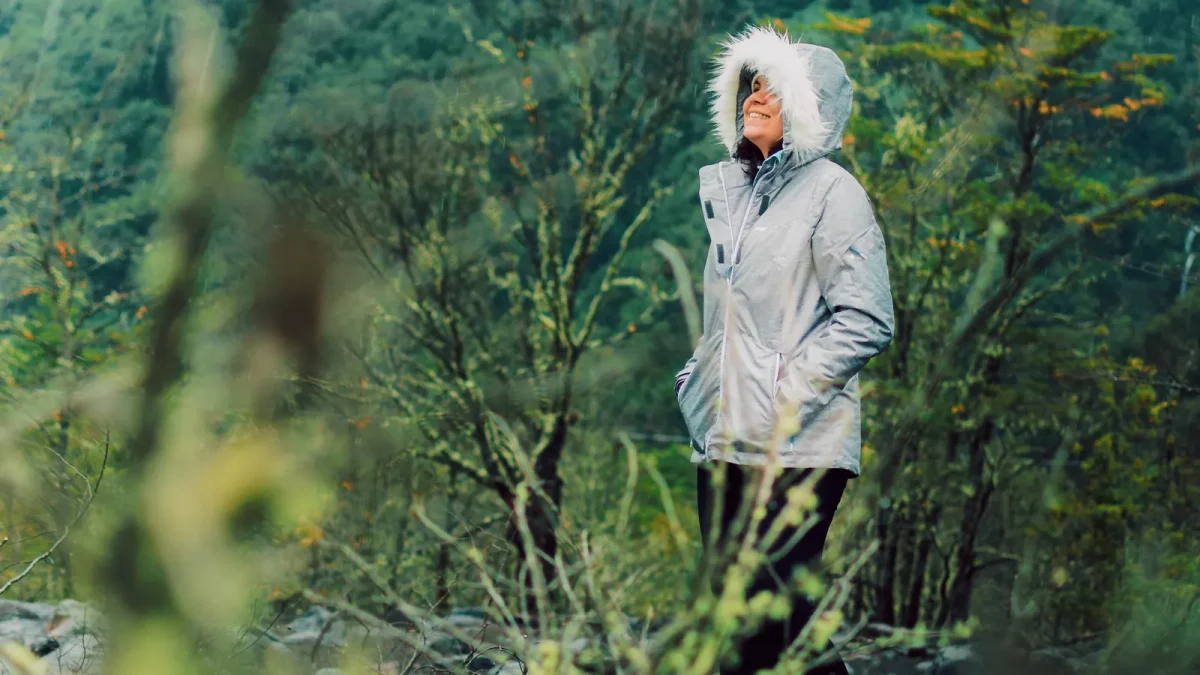
That’s different from a softshell, which trades some waterproofing for stretch and breathability, and from an insulated jacket, which adds down or synthetic fill for warmth on its own. A hardshell is the outer shield in a layering system: a base layer manages moisture, a midlayer adds warmth, and the hardshell blocks the weather.
Hardshells share a few traits no matter the brand. The face fabric is a tightly woven nylon or polyester, often in the 20 to 70 denier range, chosen for abrasion resistance as much as looks. A waterproof-breathable membrane is laminated to the inside of that fabric. Seams are taped, and zippers are either water-resistant on their own or backed by a storm flap.
The term “hardshell” comes from mountaineering and ski touring, where a rigid, protective shell worn over soft insulating layers made sense in cold, wet, technical terrain. Hikers borrowed the term for any serious three-season or shoulder-season rain shell built to that same standard.
💡 Hardshell, softshell or rain shell?
A hardshell is fully waterproof with taped seams. A softshell resists wind and light rain but isn’t fully waterproof. A basic rain shell is waterproof too, but with thinner fabric and fewer features. We compare all three types in our best softshell jacket guide.
Waterproof-Breathable Membranes, Explained
Every hardshell relies on a membrane: a thin layer full of pores too small for liquid water to pass through, but large enough for water vapor from sweat to escape. That’s the trick that lets a jacket keep rain out while still venting some sweat vapor from the inside.
GORE-TEX is the best-known membrane, and it comes in several versions. GORE-TEX fabrics carry a hydrostatic head rating of 28,000 mm, a measure of how much water pressure the fabric resists before it leaks. GORE-TEX Pro is rated for about 25,000 grams of water vapor per square meter per 24 hours, built for heavy, rugged use. GORE-TEX Paclite, used in several lighter jackets below, is rated lower, around 15,000 g/m²/24hr, trading some breathability for lower weight and bulk.
Other brands build their own membranes. Pertex Shield, used in the Rab jacket below, publishes a hydrostatic head of 20,000 mm and a moisture vapor transfer rate of 20,000 g/m²/24hr on its recycled 2.5-layer fabric. Patagonia’s H2No is a proprietary waterproof-breathable laminate; Patagonia doesn’t publish a hydrostatic head figure on its product page, so we describe that fabric without one.
A higher hydrostatic head number means more resistance to water pressure, which matters under a loaded pack’s shoulder straps or when you’re kneeling on wet rock. A higher breathability number means less clammy buildup on a hard climb. No membrane is perfectly breathable, though. Hard effort almost always produces more sweat vapor than any membrane can vent, especially in humid air.
💡 Ratings only tell part of the story
Lab numbers for hydrostatic head and breathability are useful for comparing fabrics, but a jacket’s cut, venting and pit zips affect real comfort just as much as the membrane. Two jackets with the same membrane can feel very different on trail.
2-Layer vs. 2.5-Layer vs. 3-Layer: What’s the Difference?
“Layers” here means how the membrane is bonded into the fabric, not how many clothing layers you’re wearing. Each construction trades off durability, breathability, weight and price a little differently.
A 2-layer jacket bonds the membrane to the face fabric, then adds a separate hanging liner inside to protect it. This is common in casual and budget rain jackets. A 2.5-layer jacket applies a thin printed or coated half-layer directly onto the membrane instead of a full liner, which saves weight and packs down small, though it’s usually the least breathable of the three builds. A 3-layer jacket bonds a protective fabric layer directly onto the membrane, which is generally the most durable and often the most breathable build, at a higher price.
| Construction | How it’s built | Durability | Typical weight | Best for |
|---|---|---|---|---|
| 2-layer | Membrane bonded to face fabric, separate hanging liner | Moderate | Moderate to heavy | Casual, budget rain jackets |
| 2.5-layer | Thin coating or print bonded directly onto the membrane | Lower | Light | Backup shells, packable rain jackets |
| 3-layer | Fabric laminated directly onto the membrane | Highest | Light to moderate | Frequent use, harsh conditions |
Don’t assume more layers always means a better jacket for you. A 2.5-layer shell that lives in the bottom of your pack as backup protection can be the smarter choice over a heavier 3-layer jacket you rarely need. Match the construction to how often, and how hard, you’ll actually use it.
The Best Hardshell Jackets for Hiking in 2026
Below are six hardshell jackets currently sold on Amazon. We picked them for a mix of membranes, weights and price points, based on manufacturer specifications, not personal use.
🏔️ Best overall
Arc’teryx
Arc’teryx Beta LT Jacket (Men’s)
A trim, 3-layer GORE-TEX shell built for year-round mountain hiking.
The Beta LT uses a 3-layer, bluesign-approved GORE-TEX laminate in a trim cut that layers well without extra bulk. Arc’teryx lists it as the lightest jacket in its Beta line, at about 11 ounces. A helmet-compatible StormHood and pit zips round out a shell built for serious weather.
- Helmet-compatible StormHood with glove-friendly cord locks
- Pit zips for fast venting on climbs
- Trim fit keeps the membrane close to the body for better breathability
- Durable, bluesign-approved 3-layer GORE-TEX fabric
| Membrane | 3L GORE-TEX |
|---|---|
| Weight | About 11 oz (men’s) |
| Hood | Helmet-compatible StormHood |
| Venting | Pit zips |
| Fit | Trim |
Best for: hikers who want one do-it-all shell for three-season mountain trips. The trim fit suits a light midlayer; bulky insulation may feel tight underneath.
🛒 Buy from Amazon Check today’s price, colors and sizes on Amazon.
☔ Best all-rounder
Outdoor Research
Outdoor Research Foray II GORE-TEX Jacket (Men’s)
A roomy, fully taped GORE-TEX Paclite shell with pit-to-hem venting.
The Foray II uses GORE-TEX Paclite fabric with fully taped seams and a modern, loose fit that layers easily. Its TorsoFlo side zips run from underarm to hem, so you can vent almost the whole side of the jacket, even wear it poncho-style over a pack’s hip belt.
- TorsoFlo zips vent from underarm to hem on both sides
- Fully taped seams throughout
- Four pockets, including two zippered hand pockets
- Weighs 11.85 oz and packs into its own pocket
| Membrane | GORE-TEX Paclite |
|---|---|
| Weight | 11.85 oz |
| Seams | Fully taped |
| Venting | TorsoFlo pit-to-hem zips |
| Pockets | 4 |
Best for: hikers who want one hood-to-hem shell for variable weather. The loose fit suits a midlayer; size down if you prefer a trimmer feel.
🛒 Buy from Amazon Check today’s price, colors and sizes on Amazon.
🎒 Best do-it-all shell
Marmot
Marmot Men’s GORE-TEX Minimalist Jacket
A full-featured GORE-TEX Paclite shell with a DriClime-lined chin guard.
The Minimalist pairs GORE-TEX Paclite fabric with 100% taped seams and PitZips for venting. A three-point adjustable hood and a soft, DriClime-lined chin guard add comfort details that budget shells often skip.
- 100% seam taping throughout
- PitZips for underarm venting
- Three-point hood adjustment for a snugger fit
- Soft, DriClime-lined chin guard
| Membrane | GORE-TEX Paclite |
|---|---|
| Weight | About 13 oz (men’s listed weight) |
| Seams | 100% taped |
| Venting | PitZips |
| Hood | 3-point adjustable |
Best for: backpackers who want one shell that handles both steady rain and a cold, windy summit. It runs heavier than the ultralight picks on this list.
🛒 Buy from Amazon Check today’s price, colors and sizes on Amazon.
💰 Best value 3-layer
Patagonia
Patagonia Men’s Torrentshell 3L Jacket
A 3-layer recycled shell with long pit zips, at a lower price than most 3-layer jackets.
The Torrentshell 3L uses Patagonia’s H2No 3-layer waterproof-breathable fabric, sewn in a Fair Trade Certified factory. Long, 12-inch pit zips add venting, and the whole jacket stuffs into its own handwarmer pocket for storage on the trail.
- 3-layer H2No fabric at a lower price than most 3L shells
- 12-inch pit zips for venting on climbs
- Two-way-adjustable hood with a laminated visor
- Stuffs into its own pocket with a carabiner clip-in loop
| Membrane | 3L H2No |
|---|---|
| Weight | 14.1 oz (men’s) |
| Venting | 12-in pit zips |
| Pockets | 2 handwarmer |
| Hood | Two-way adjustable |
Best for: hikers who want 3-layer durability without a premium price. It’s heavier than the ultralight picks here, so it suits base-camp trips more than fast-and-light ones.
🛒 Buy from Amazon Check today’s price, colors and sizes on Amazon.
🪶 Lightest pack-along shell
Mountain Hardwear
Mountain Hardwear Men’s Exposure/2 Gore-Tex Paclite Jacket
A 2-layer GORE-TEX Paclite shell built to disappear in your pack until you need it.
At about 11.8 ounces, the Exposure/2 is one of the lighter jackets on this list, using fully seam-sealed 2-layer GORE-TEX Paclite fabric. A brimmed, adjustable hood and two harness-compatible hand pockets keep the feature set simple and light.
- Fully seam-sealed 2-layer GORE-TEX Paclite fabric
- Brimmed hood with an adjustable drawcord
- Harness-compatible hand pockets plus a zippered chest pocket
- Bluesign-approved shell fabric
| Membrane | 2L GORE-TEX Paclite |
|---|---|
| Weight | About 11.8 oz |
| Seams | Fully sealed |
| Pockets | 2 hand, 1 chest |
| Hood | Brimmed, adjustable |
Best for: hikers who want minimum weight for occasional storms. The 2-layer build is less durable than the 3-layer picks here under daily abuse.
🛒 Buy from Amazon Check today’s price, colors and sizes on Amazon.
♻️ Best recycled fabric
Rab
Rab Men’s Downpour Plus 2.0 Jacket
A 2.5-layer recycled Pertex Shield jacket with a helmet-compatible hood.
The Downpour Plus 2.0 uses recycled Pertex Shield fabric, rated to a 20,000 mm hydrostatic head and 20,000 g/m²/24hr breathability, with a fluorocarbon-free DWR finish. AquaGuard pit zips and high chest pockets stay usable under a pack’s hip belt.
- Recycled 2.5-layer Pertex Shield fabric
- Published 20,000 mm hydrostatic head and 20,000 g/m²/24hr rating
- AquaGuard pit zips for venting
- Fluorocarbon-free DWR finish
| Membrane | 2.5L Pertex Shield |
|---|---|
| Weight | 13.2 oz (men’s) |
| Rating | 20,000mm HH / 20,000 g/m²/24hr |
| Venting | AquaGuard pit zips |
| Fit | Regular, articulated arms |
Best for: hikers who want a recycled-fabric shell with published ratings at a mid-range price. The 2.5-layer build is less breathable than the 3-layer picks above.
🛒 Buy from Amazon Check today’s price and colors on Amazon.
Prices and stock change often, so check each listing before you buy. As an Amazon Associate, HikingCare earns from qualifying purchases, at no extra cost to you.
Taped Seams and Pit Zips: Small Features, Big Difference
A waterproof membrane doesn’t help much if water leaks through every stitch hole. That’s why every jacket on this list uses taped seams: a strip of waterproof tape heat-bonded over the seam from the inside, sealing the tiny needle holes left by sewing.
Look for “fully taped” or “critically taped” seams on a product page. Fully taped means every seam is sealed. Critically taped means only the seams most exposed to rain, like shoulder and hood seams, are taped, which saves weight but leaves other seams a little more vulnerable in a long downpour. All six jackets above use full or 100% seam taping, based on their product pages.
Pit zips are underarm zippers that open for extra airflow. Hiking uphill in a hardshell traps heat and sweat fast, since the jacket blocks the wind that would otherwise help cool you down. Opening the pit zips lets hot, damp air escape without taking the jacket off completely.
Some jackets go further than a short zip. The Foray II’s TorsoFlo system runs zips from underarm to hem on both sides, so you can vent almost the whole side of the jacket, or open it poncho-style over a pack’s hip belt. That’s noticeably more airflow than a short pit zip alone offers.
💡 Vent before you’re soaked in sweat
Open the pit zips before you start climbing hard, not after you’re already damp. It’s much easier to stay dry from the start than to dry out once your base layer is soaked through.
Hoods and Fit Over Layers
A hardshell’s hood is not an afterthought. On an exposed ridge in driving rain, the hood does as much work as the rest of the jacket combined.
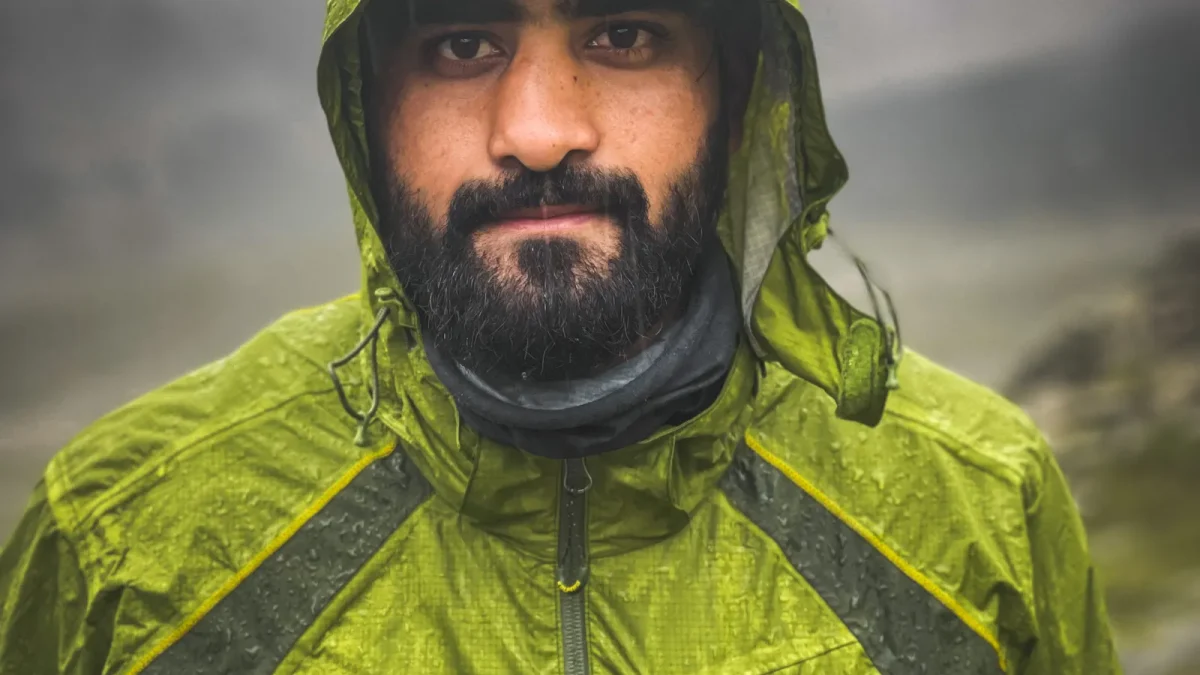
Good hardshell hoods share a few traits. They adjust at two or three points, usually the back and both sides, so you can cinch out the peripheral vision loss that comes with a loose hood. A stiffened brim keeps rain off your face without collapsing in wind. Many hoods, like the Beta LT’s StormHood and the Downpour Plus 2.0’s hood, are cut roomy enough to fit over a climbing helmet, which also means plenty of room for a warm hat underneath.
Fit matters just as much as the hood. A hardshell needs to fit over a base layer and a midlayer, like a fleece or a light puffy, without pulling tight at the shoulders or riding up when you raise your arms. Too tight, and the membrane presses against your insulation, soaking it with condensation. Too loose, and wind flaps the extra fabric around and pushes cold air up your sleeves.
Try on a hardshell over the layers you’d actually wear hiking, not just a T-shirt. Raise both arms overhead and mimic a trekking-pole stride to check the range of motion. The hem should stay below your hip belt, and the cuffs should seal snugly over a pair of gloves.
📝 Sizing runs differently by brand
A “trim fit” jacket like the Beta LT and a “relaxed” or “modern” fit jacket like the Foray II can differ by close to a full size in how much room they leave for layers. Check the brand’s own size chart before you order, and size up if you plan to layer heavily.
DWR Care and Packed Weight
Every hardshell above also carries a DWR, or durable water repellent, finish on its outer face. The membrane stops water from reaching your skin, but the DWR keeps the outer fabric itself from soaking up water in the first place. Without it, the fabric gets heavy and clammy, even while the membrane underneath is still doing its job.
DWR wears off with dirt, body oil and abrasion from pack straps. You can test it yourself: sprinkle a little water on the shoulder. If it beads up and rolls off, the DWR is fine. If it soaks in and leaves a dark, wet patch, it’s time to refresh it.
- Wash it. Use a technical cleaner made for waterproof gear, following the jacket’s care label. Regular detergent can leave a residue that blocks the membrane.
- Dry with heat. A warm tumble dry for about 20 minutes reactivates most factory DWR finishes, since heat re-melts the coating so it spreads evenly again.
- No dryer? Use an iron. Set it to warm with no steam, and press over a thin cloth to protect the fabric underneath.
- Still wetting out? Reapply. If water still soaks in after washing and drying, apply a fresh DWR treatment made for your fabric type.
Packed weight matters most on longer days, when the jacket lives in your pack until the weather actually turns. The six jackets above range from about 11 ounces to 14.1 ounces for a men’s size. A few ounces feels small on a hanger, but it adds up alongside your rain pants, food and water.
As a rule, lighter 2- and 2.5-layer shells pack down smaller and disappear in a pack, while sturdier 3-layer jackets are worth the extra weight if you’re out in real weather often. Our Pack Weight Calculator can help you see how a jacket’s weight fits into your total load.
Hardshell vs. Light Rain Shell: Who Needs Which?
Not every hiker needs a full hardshell. The right choice depends on how often you’re out in real weather, and how far you typically are from a warm car when it hits.

| Hardshell | Light rain shell | |
|---|---|---|
| Fabric | Thicker, more abrasion-resistant face fabric | Thin, lightweight face fabric |
| Seams | Fully taped | Taped, but on thinner backing |
| Features | Pit zips, structured hood, longer cut | Minimal; often no pit zips |
| Weight | 11–20+ oz | Often under 10 oz |
| Best for | Frequent exposure, mountains, multi-day trips | Occasional showers, day hikes, emergency backup |
A hardshell earns its extra weight and cost if you regularly hike above treeline, in the mountains, in winter or shoulder-season conditions, or on multi-day trips where you can’t just wait out bad weather in a car. The tougher fabric and full feature set hold up to years of pack straps, branches and repeated storms.
A light rain shell makes more sense if you mostly hike day trips in mild weather and want a just-in-case layer. It’s cheaper, packs smaller and still keeps you dry through a passing shower. Just don’t expect it to hold up to hours of driving rain or heavy bushwhacking the way a true hardshell does.
⚠️ Wet and windy is a real risk
The National Weather Service notes that hypothermia can develop in temperatures as warm as 60°F, especially if you’re wet or not dressed for the conditions. This is general information, not medical advice. If you or a hiking partner show confusion, uncontrollable shivering or slurred speech, get warm and dry right away and seek medical help.
Still not sure which one you need? Our guide to what to wear hiking in 50-degree weather and the layering system guide can help you plan the rest of your kit.
Common Mistakes That Leave Hikers Cold and Wet
Most hardshell complaints come from a handful of avoidable mistakes, not from bad jackets. Here’s what to watch for before your next trip.
1. Buying a hardshell that’s really just a rain jacket
❌ The mistake: choosing a jacket labeled “waterproof” with no membrane name, seam-taping details or weight listed anywhere.
✅ The fix: check the product page for a named membrane, taped seams and a published fabric weight before you buy.
2. Sizing too tight over layers
❌ The mistake: ordering your normal T-shirt size, then finding it won’t zip closed over a fleece.
✅ The fix: try the jacket on over the layers you’ll actually wear, or check the brand’s size chart for room over midlayers.
3. Ignoring a worn-out DWR coating
❌ The mistake: hiking in a jacket that wets out and feels heavy, then assuming the membrane itself has failed.
✅ The fix: wash and heat-dry the jacket to refresh the DWR first. That often solves the problem without replacing the jacket.
4. Never opening the pit zips
❌ The mistake: keeping the jacket fully zipped on a climb, then arriving at camp soaked in sweat anyway.
✅ The fix: open the pit zips and front zip a few inches before you start climbing hard, not after you’re already damp.
5. Machine-washing with regular detergent
❌ The mistake: washing a hardshell with everyday laundry detergent or fabric softener.
✅ The fix: use a technical cleaner made for waterproof gear. Regular detergent and softener can leave a film that blocks the membrane.
6. Skipping a hardshell above treeline or in winter
❌ The mistake: relying on a light rain shell for exposed, high-wind conditions above treeline.
✅ The fix: save the light shell for mild day hikes, and pack a full hardshell whenever wind and exposure both increase.
Pro Tips for Getting the Most From Your Hardshell
- Layer thin underneath. A hardshell isn’t insulation on its own, so pair it with a moisture-wicking base layer and a packable midlayer you can add or remove as your effort level changes.
- Pack it where you can reach it fast. Weather can turn quickly above treeline or on an exposed ridge, so keep your hardshell in an outer pocket, not buried at the bottom of your pack.
- Re-seal seams if they start to leak. A small tube of seam sealer fixes a worn seam far more cheaply than replacing the whole jacket, and it only takes a few minutes to apply.
- Check the hood adjustment before you need it. Practice cinching the hood at home so you’re not fumbling with cord locks for the first time in driving rain.
- Rinse the jacket after coastal or winter trips. Salt air and road salt residue can quietly degrade both the fabric and the zippers over time.
- Store it loose on a hanger. Stuffing a hardshell into a stuff sack for months at a time can stress the membrane’s coating more than normal use does.
- Match your gloves to your cuffs. A cuff that won’t seal over a glove lets cold water run straight down your wrist on a long climb.
A hardshell’s job isn’t to keep you warm. It’s to keep the weather from taking your warmth away.
Real-World Examples
These are composite examples built from patterns hikers commonly share in gear reviews and trail journals. They’re not individual testimonials, but they show how different needs point to different jackets.
What these three hikers have in common: each one matched the jacket to how often they actually face real weather, not to the most feature-packed option on the shelf. That’s the real buying rule behind every pick on this list.
Frequently Asked Questions
What’s the difference between a hardshell and a rain jacket?
A hardshell uses a tougher face fabric, full seam taping and usually pit zips and a structured hood, built for repeated exposure. A basic rain jacket is thinner and lighter, better suited to occasional showers than to sustained bad weather.
Is GORE-TEX better than other waterproof membranes?
GORE-TEX is the most widely used membrane and publishes clear ratings, but other membranes like Pertex Shield also publish hydrostatic head and breathability figures. The right choice depends more on a specific jacket’s construction, fit and features than on the membrane name alone.
Do I need pit zips on a hardshell?
Pit zips aren’t required, but they help a lot on climbs, since a hardshell traps heat and sweat once it’s zipped up. If you hike hilly terrain often, look for a jacket with pit zips or a longer venting zip system.
How often should I reapply DWR to my hardshell?
It depends on how hard you use the jacket. Heavy use can wear down DWR within a season, while occasional use might last a few years. Test it by sprinkling water on the fabric; if it soaks in instead of beading up, wash and reactivate or reapply the coating.
Can I wear a hardshell without a midlayer?
Yes, in mild or wet-but-warm weather, a hardshell alone over a base layer works fine. In cold weather, add a midlayer for warmth, since the hardshell itself provides no insulation of its own.
Are 2-layer jackets worth buying?
Yes, for occasional use or as a budget backup shell. They’re usually less breathable and durable than 3-layer builds, so frequent hikers in rough terrain may prefer to spend more on a 3-layer jacket instead.
Your Hardshell Jacket Checklist
Use this checklist while you shop and again before any trip where weather could turn. Confirming these details takes a few minutes and can save you from a jacket that lets you down on trail.
Tap each item as you complete it. Your progress is saved in this browser.
- Confirm the membrane name and layer count on the brand’s own page
- Check for fully taped seams, not just a “water-resistant” claim
- Try the jacket on over your normal base layer and midlayer
- Check the hood adjusts at two or more points and fits over a hat
- Look for pit zips or another venting system if you hike hills often
- Note the packed weight and whether it fits your pack’s outer pocket
- Test the DWR with a water-bead test before a big trip
- Pack a midlayer too, since a hardshell alone won’t keep you warm
The Bottom Line
The best hardshell jacket for hiking is the one that matches how often you actually face real weather. A 3-layer GORE-TEX shell like the Arc’teryx Beta LT earns its price if you’re out in the mountains often. A lighter 2.5-layer pick like the Rab Downpour Plus 2.0 covers occasional storms for less weight and cost.
Check the membrane, layer count, seams and hood before you buy, try the jacket on over your real layers, and keep the DWR coating fresh. Do that, and a good hardshell will keep you dry and comfortable for years of trips.
🎒 Build your full layering system
Turn this guide into a complete kit with our free tools. No sign-up, nothing to install.
🧊 Layering System Generator 🎒 Pack Weight Calculator ✅ Checklist Generator
Keep reading: the best softshell jacket for hiking, the best merino wool base layers and down vs. synthetic insulation.
Sources
- REI Expert Advice: Rain Gear, How to Choose the Best Rain Jacket
- REI Expert Advice: Durable Water Repellent (DWR) Care
- Switchback Travel: Hardshells vs. Rain Jackets, How to Choose
- Switchback Travel: Rain Jacket Construction, 2L vs. 2.5L vs. 3L
- Advnture: GORE-TEX vs. GORE-TEX Pro
- Ascent Outdoors: Rab Downpour Plus 2.0 Waterproof Jacket
- National Weather Service: During Extremely Cold Weather
Facts checked in September 2026. Specs and availability change, so confirm details before you buy.
You may also like

Tank Tops With Built-In Bra Support for Hiking (2026)
We compared six tank tops with built-in bra support for hiking, and explain honestly when a shelf bra is enough and when…
Best Hiking Pants for Women (2026)
We compared fabric, fit, pockets and sizing on seven current hiking pants for women, including petite, tall, plus and curvy options, using…
Polyester vs Nylon for Hiking: Which Wins for the Trail? (2026)
Polyester and nylon each shine in different hiking gear. See how they compare on drying time, abrasion, UV resistance, odor, stretch and…

Get better at hiking.
Practical hiking tips, gear guides, trail advice and outdoor stories, delivered occasionally. No spam, unsubscribe any time.