Best Paracord Bracelet (2026): Cord Types, Weaves and a DIY Guide
The best paracord bracelet starts with the right cord. Learn what Type III 550 really means, how it compares with 325 and micro cord, which weave to choose, and how to tie your own cobra bracelet.

HikingCare is reader-supported. When you buy through links on our site we may earn a commission at no extra cost to you. How we choose what to recommend.
⏱️ Quick answer
What’s the best paracord bracelet? One woven from genuine Type III “550” cord and sized to your wrist. Our top pick is Coghlan’s 50-foot Type III 550 paracord, which has 7 core strands and is enough to tie several bracelets yourself.
Prefer a kit? Paracord Planet’s Make Your Own Survival Bracelet kit bundles 20 feet of cord with a buckle that holds a whistle and fire starter. Either way, the cord matters more than the gadgets.
*Strength and stretch from military spec MIL-C-5040H, Table II. Strand count from Paracord Planet’s cord chart. Cord rule of thumb from Colorado State University Extension.
Paracord bracelets are everywhere: on hikers’ wrists, key rings and pack zippers. But two bracelets that look the same can be very different inside. One might hold real military-style cord with seven inner strands. Another might hold thin craft cord with a fraction of the strength.
That difference matters if you ever need to unwrap your bracelet and use the cord. So in this guide we focus on the cord itself. You’ll learn what “550” and “Type III” really mean, how 550 compares with 325 and micro cord, and which weave suits you. Then we show you how to tie your own cobra bracelet, step by step.
Looking for a bracelet packed with built-in tools like a compass and fire starter? See our separate guide to the best survival bracelet. This one is for people who care most about the cord.
Here’s what you’ll get from this guide:
- Five research-based picks: cord, a kit, a buckle, a fire-ready cord and a ready-made band
- What the military spec MIL-C-5040H says, in plain English
- How 550, 325 and micro cord compare, with a simple chart
- Cobra vs king cobra vs fishtail vs quick-deploy weaves
- A step-by-step guide to tying your own cobra bracelet
- Real uses for bracelet cord, and the one thing never to use it for
Top Picks at a Glance
Here are our five picks side by side. Cord details come from each Amazon listing. Where a listing doesn’t say something, we tell you instead of guessing. Tap a name to jump to the details.
| Pick | Best for | What you get | Cord details (per listing) |
|---|---|---|---|
| Coghlan’s Type III 550 Paracord (50 ft) | Top pick DIY bracelets | A 50-foot black hank | Type III 550, 7 core strands, 550 lb break strength |
| Paracord Planet Make Your Own Survival Bracelet Kit | Best kit First-timers | 20 feet of cord plus a buckle with a fire starter and whistle | Cord type not stated in the title |
| Paracord Planet 3/4 in. Whistle and Fire Starter Buckle | Upgrade Any DIY band | A side-release buckle with a whistle and flint rod | Buckle only; add your own cord |
| UST ParaTinder Utility Cord (30 ft) | Fire-ready Fire starting | A 30-foot hank with a flammable core thread | Strength not stated in the title |
| UST Para 550 Paracord Bracelet | Ready-made Non-crafters | A plain finished band | 550 paracord; length not stated |
Why is a hank of cord our top pick for a bracelet article? Because the cord is what you’ll actually use in a pinch, and a good hank lets you choose your own size, weave and buckle. Using Colorado State University Extension’s rule of about one foot of cord per inch of bracelet, a 50-foot hank ties about five standard bracelets for an 8-inch wrist. You’ll still have some cord left for zipper pulls or a spare bootlace.
If you’ve never tied a bracelet before, start with the kit. If you already have a favorite bracelet style, the buckle upgrade adds a whistle and fire starter to it. And if you’d simply rather wear one than make one, the UST band is the easy choice.
How We Chose These Paracord Picks
These picks are research-based. We read maker pages, Amazon listings and published guides, and we checked every cord claim against the military spec and cord makers’ charts. You can read more about our process on our methodology page. Nobody paid to be included.
Here’s what we looked for:
- Clearly labeled cord. The best listings name the cord type, the strength rating and the number of inner strands. We favored products that do.
- Room to make it your own. Because this guide is about the cord, we included a hank, a kit and a buckle, not just finished bracelets. Tying your own lets you pick the exact size and weave.
- Useful extras only. A whistle and a fire starter earn their place. A tinder thread inside the cord is a clever bonus. Long gadget lists didn’t impress us.
- Makers you can find again. We chose brands that sell cord and accessories under their own names, such as Coghlan’s, Paracord Planet and UST.
- Honest gaps. Some listings don’t state a cord length or strength. When that happened, we kept the product only if it was still useful, and we tell you what’s missing.
We didn’t rank products on looks, and we didn’t count color options as a feature. A paracord bracelet is a simple thing. The goal is to help you get a good one made from cord you can trust, at a sensible size, without paying for marketing.
The 5 Best Paracord Bracelet Picks of 2026
Each pick below includes what it is, why it works, who it suits and one honest limitation. Specs come from the Amazon listing or the maker’s website, checked in September 2026.
🏆 Best cord for DIY bracelets
Coghlan’s
Coghlan’s Type III 550 Paracord (50 ft, Black)
A 50-foot hank of Type III 550 cord with 7 core strands, from camping-gear maker Coghlan’s.
If you want a bracelet you can trust, start with the cord. Coghlan’s lists this hank as Type III 550 nylon paracord with 7 core strands and a 550-pound break strength. Fifty feet ties about five standard cobra bracelets, with cord left over for zipper pulls, a knife lanyard or a spare bootlace.
- Listed as Type III 550 with 7 core strands
- 550 lb break strength, per the listing
- 50 feet ties about five standard bracelets
- Coghlan’s also sells a 100-foot version, per its website
| Type | Type III 550 paracord |
|---|---|
| Core | 7 strands |
| Break strength | 550 lb (listed) |
| Length | 50 ft |
| Material | Nylon |
| Color | Black |
Best for: DIY fans who want enough cord for several bracelets. You’ll need to buy buckles separately, and the listing doesn’t claim MIL-C-5040H certification, so treat it as a well-labeled commercial cord.
🛒 Buy from Amazon Check today’s price on Amazon.
🧰 Best all-in-one kit
Paracord Planet
Paracord Planet Make Your Own Survival Bracelet Kit
Twenty feet of cord and a buckle with a built-in fire starter and whistle, ready to tie.
This kit takes the guesswork out of your first bracelet. According to the listing, you get 20 feet of paracord and a buckle that combines a fire starter and a whistle. Using the one-foot-per-inch rule, that’s enough for about two standard cobra bracelets, or one thicker bracelet in a heavier weave.
- Cord and buckle in one box
- The buckle adds a fire starter and whistle
- 20 feet covers about two standard bracelets
- A fun first project for families and scout groups
| Cord | 20 ft paracord |
|---|---|
| Buckle | Fire starter and whistle combo |
| Linked color | Acid Purple |
| You’ll also need | Scissors, lighter, tape measure |
Best for: beginners who want everything in one order. The listing title doesn’t name the cord type, so check the description if you want 550 cord specifically.
🛒 Buy from Amazon Check colors and today’s price on Amazon.
🔔 Best buckle upgrade
Paracord Planet
Paracord Planet 3/4 in. Whistle and Fire Starter Buckle
A side-release buckle with a whistle and a flint rod fire starter built in.
Tie your bracelet with this buckle and you add two backup tools without any extra bulk on the band. The listing describes a 3/4-inch side-release buckle with a whistle and a built-in flint rod fire starter. That’s the same buckle size Colorado State University Extension’s bracelet guide calls for.
- Adds a whistle and fire starter to any DIY bracelet
- 3/4-inch size matches common bracelet guides
- Side-release design opens and closes quickly
| Size | 3/4 in. |
|---|---|
| Type | Side-release buckle |
| Built in | Whistle, flint rod fire starter |
Best for: anyone tying bracelets from a hank like Coghlan’s. Check the listing to see whether a striker is included, because you need one to throw sparks from the rod.
🛒 Buy from Amazon Check today’s price on Amazon.
🔥 Best fire-ready cord
UST
UST ParaTinder Utility Cord (30 ft)
Paracord with a flammable thread in its core, so your bracelet doubles as tinder.
ParaTinder looks like normal paracord, but UST adds a flammable thread to the core. Tie a bracelet from it and, in an emergency, you can pull out that thread to help catch sparks. UST’s ParaTinder bracelet listing also suggests using the other core threads for sewing or fishing line.
- Flammable core thread helps sparks become flame
- 30 feet ties about three standard bracelets
- Orange and gray are easy to spot on the ground
| Length | 30 ft |
|---|---|
| Core | Includes a flammable thread |
| Colors | Orange and gray |
| Model | 20-02795 |
Best for: hikers who want their bracelet cord to help with fire starting. The Amazon title calls it heavy-duty paracord but doesn’t give a strength rating, so don’t assume it matches mil-spec 550.
🛒 Buy from Amazon Check today’s price on Amazon.
⌚ Best ready-made band
UST
UST Para 550 Paracord Bracelet
A plain 550 paracord band for people who’d rather wear one than tie one.
Not everyone wants to tie their own. UST’s simple bracelet is listed as 550 paracord, with no gadgets to snag or rattle. It’s the classic paracord bracelet: cord you can wear every day and unravel if you ever need it.
- Listed as 550 paracord
- Plain design with no tools to break
- Black suits everyday wear, and a lime version is also listed
| Cord | 550 paracord (per listing title) |
|---|---|
| Tools | None listed |
| Colors | Black (linked); lime also listed |
| Size | Check the listing; the lime version is listed at 7 in. |
Best for: anyone who wants a simple, ready-made band. The listings we saw don’t state the cord length, so don’t count on a specific amount of cord.
🛒 Buy from Amazon Black version linked. Prefer the 7-inch lime version? Check sizes and today’s price on Amazon.
Prices and stock change often, so check each listing before you buy. As an Amazon Associate, HikingCare earns from qualifying purchases, at no extra cost to you.
What “550” and “Type III” Really Mean
Paracord started life as parachute cord. Paracord Planet notes that nylon replaced silk in parachutes and parachute cord, and the name stuck. Today the U.S. military still sets the standard that most cord makers refer to.
That standard is MIL-C-5040H, titled “Cord, Fibrous, Nylon.” It covers braided nylon cord, and the H revision is dated March 17, 1994. Cord makers such as Atwood Rope still name it when they sell mil-spec cord. The spec defines six types. For each one, it sets a minimum breaking strength, a minimum stretch before breaking and a minimum length per pound.
| Type | Minimum breaking strength | Minimum stretch at break | Inner core yarns | Minimum length per pound |
|---|---|---|---|---|
| I | 95 lb | 30% | 1 | 950 ft |
| IA | 100 lb | 30% | None | 1,050 ft |
| II | 400 lb | 30% | 4–7 | 265 ft |
| IIA | 225 lb | 30% | None | 495 ft |
| III (“550 cord”) | Bracelet standard 550 lb | 30% | 7–9 | 225 ft |
| IV | 750 lb | 30% | 11 | 165 ft |
Strength, stretch and length come from Table II of MIL-C-5040H. Core yarn counts are as summarized by Wikipedia’s parachute cord article.

So “550 cord” is simply the nickname for Type III, because its minimum breaking strength is 550 pounds. Paracord Planet explains that the core of 550 paracord is usually 7 strands, each made of three smaller strands. Wikipedia adds that mil-spec Type III may be slightly thicker than commercial cord, because the spec often calls for three fibers per inner core yarn instead of two.
Makers who build to the spec also weave in colored identification yarns, so a spool can be traced back to its maker. According to the gear site The Prepared, commercial cord is sometimes identical, minus that colored identification strand. The catch is that labels aren’t always honest. Paracord Planet warns that “not even all ‘Mil Spec’ paracord is truly mil spec.”
🧪 What “30 percent stretch” means
The spec requires every type to stretch at least 30 percent before it breaks. That stretch absorbs shock, which is useful for tie-downs. It also means a paracord guyline sags more than a low-stretch line, so re-tension your tarp or tent after it’s been up for a while.
550 vs 325 vs Micro Cord: Which Is Best for a Bracelet?
Walk into any craft aisle and you’ll see paracord in several sizes. Paracord Planet’s cord chart makes it simple: the number in each name is the cord’s rated tensile strength in pounds. Here’s how the common sizes compare.
| Cord | Diameter | Rated strength | Inner strands | Best bracelet use |
|---|---|---|---|---|
| 750 | 5 mm | 750 lb | 11 | Chunky bands; heavy-duty cord |
| 550 | 4 mm | 550 lb | 7 | Best all-round Survival bracelets |
| 325 | 3 mm | 325 lb | 3 | Slim bracelets, bootlaces, key chains |
| Micro | 1.18 mm | 90–100 lb | None | Decorative bands, lanyards, zipper pulls |
| Nano | 0.75 mm | 36 lb | None | Fine decorative detail only |
All figures are from Paracord Planet’s cord comparison chart and product pages.
550 cord: the all-round choice
For a bracelet you might actually unravel, choose 550. It gives you the most strength in a normal-size band. It also gives you the seven inner strands you can pull out for thread or fishing line. That’s why it’s the standard for survival bracelets.
325 cord: slimmer and lighter
Paracord Planet lists its 325 cord at 325 pounds, with 3 nylon inner strands, and says it’s smaller than 550. It makes neat, low-profile bracelets and good bootlaces. The trade-off: if you unravel it, you get less strength and fewer inner strands to work with.
Micro cord: for crafts, not rescues
Micro cord is about 1.18 mm thick, rated around 100 pounds, with no inner strands at all, according to Paracord Planet. It’s great for decorative bands, lanyards and fine stitching, and the maker even lists fishing line as a use. But it isn’t a survival cord in the 550 sense, so don’t count on a micro cord bracelet for lashing or repairs.
Cords with extras inside
Some makers put useful extras inside the sheath. Titan’s SurvivorCord, for example, adds 25-pound monofilament fishing line, a waxed jute fire-starter strand and 30 AWG brass wire. Titan calls it a mil-style 550 cord and lists a 620-pound tensile strength. UST’s ParaTinder, one of our picks, takes a simpler approach with a single flammable thread.
💡 Check your cord in 30 seconds
Cut a short piece from the end of a new hank and pull out the core. Real 550 should have about seven inner strands, and each strand should twist apart into smaller plies. If you find three strands, or none, you have a lighter cord, whatever the label says.
Cobra, King Cobra, Fishtail and Quick-Deploy Weaves
The weave decides how thick your bracelet is, how much cord it holds and how fast it comes apart. Here are the styles you’ll see most often, and what each one is good for.
| Weave | Look | Cord used | Unraveling | Best for |
|---|---|---|---|---|
| Cobra (Solomon bar) | Flat, classic | About 1 ft per inch | Knot by knot once the end is free | Start here First bracelets, everyday wear |
| King cobra (double cobra) | Thick, chunky | Much more than cobra | Two layers to undo | Carrying extra cord |
| Fishtail | Slim, braided | Slightly less than cobra | Moderate | Low-profile style |
| Trilobite | Wide, textured | More than cobra | Slower | Packing lots of cord into one band |
| Quick-deploy (chain style) | Linked loops | Varies | Fast, if you pull the right end | Getting cord out in seconds |
Cobra
The cobra, also called the Solomon bar, is the classic paracord bracelet. You tie a row of knots around two center strands, alternating sides as you go. Survival site Queen Bee Survival and CSU Extension both put the cord needed at about one foot per finished inch. It’s the easiest weave to learn, and it’s the one we teach below.
King cobra
A king cobra, sometimes called a double cobra, adds a second layer of cobra knots over a finished cobra. Queen Bee Survival says it doubles the outer braid for bulk. The result is a thick, chunky band that holds a lot more cord. It’s great if you want more cord on your wrist, but it’s heavier and slower to unravel.
Fishtail and trilobite
A fishtail weave looks like a slim braid, and Queen Bee Survival says it uses slightly less cord than a cobra. A trilobite is wider and more textured. Titan uses a trilobite weave to fit more than 11 feet of cord into its survival bracelets.
Quick-deploy
Quick-deploy bands use chain-style weaves that come apart when you pull one end. Knot site Animated Knots explains how the classic chain sinnet, also called a daisy chain, works: you release it by pulling out the end you used to finish it. Pull the other end and it only shortens by one link. So if your bracelet is quick-deploy, learn which end is which before you need it.
How to Size a Paracord Bracelet
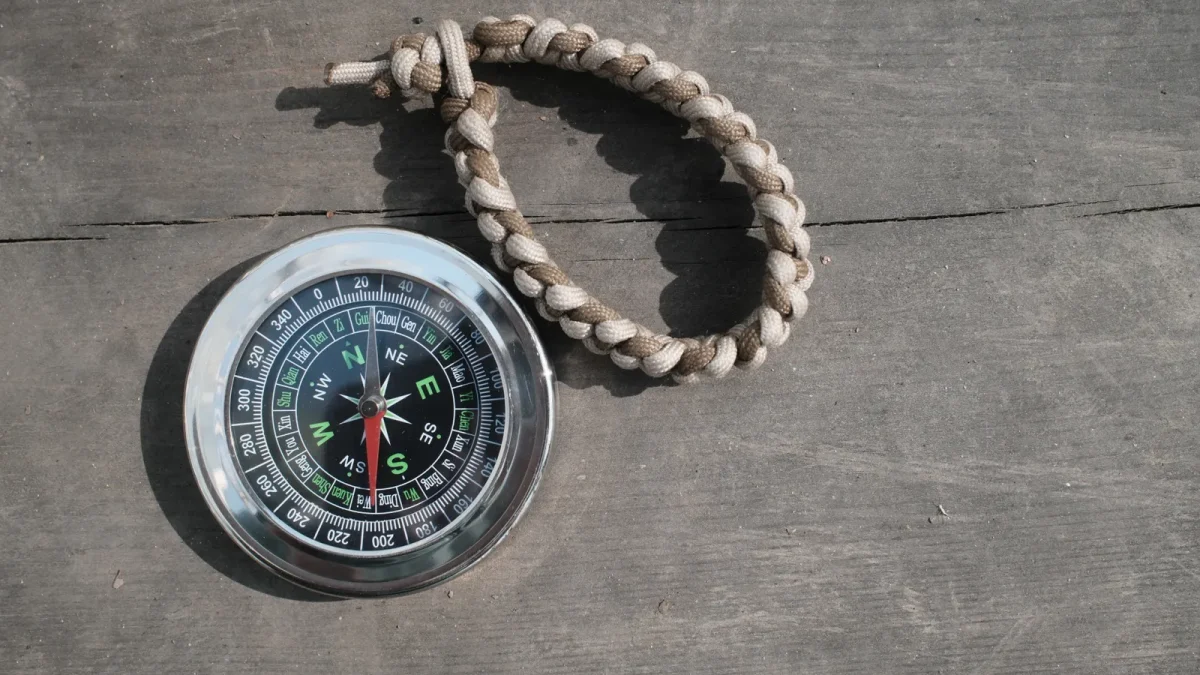
A bracelet that’s too tight pinches, and one that’s too loose snags on everything. Colorado State University Extension’s DIY guide gives a simple rule. Set the bracelet length, measured between the buckles and not counting the buckle prongs, to your wrist measurement plus one inch.
- Measure your wrist. Use a soft tape measure, or wrap a strip of paper around your wrist, mark it and measure it with a ruler.
- Add one inch. A 7-inch wrist gets an 8-inch bracelet.
- Pick your buckle. CSU’s guide uses a 3/4-inch plastic side-release buckle. Paracord Planet sells buckles from 3/8 inch to 1 inch, and smaller buckles suit slimmer bands.
- Cut enough cord. Allow about one foot of cord per inch of bracelet for a cobra. Heavier weaves need more, so cut extra if you’re unsure.
- Test the fit. Once it’s finished, you should be able to slide one finger under the band.
Buying cord by the hank? This table shows roughly how many standard cobra bracelets you’ll get, assuming an 8-inch wrist and a 9-inch bracelet that uses about 9 feet of cord.
| Hank length | About how many bracelets | Example |
|---|---|---|
| 20 ft | 2 | Paracord Planet’s DIY kit |
| 30 ft | 3 | UST ParaTinder hank |
| 50 ft | Family size 5 | Coghlan’s Type III hank |
| 100 ft | 11 | Coghlan’s larger hank |
These are estimates. Tight knots use a little more cord, and bigger wrists need more. Leave a few spare inches on every bracelet so you have enough to finish the ends cleanly.
How to Tie Your Own Cobra Paracord Bracelet
Tying a cobra bracelet takes about as long as a cup of coffee once you’ve done a couple. These steps follow Colorado State University Extension’s DIY guide.
What you need:
- Paracord: about one foot per inch of finished bracelet, plus a little extra
- One 3/4-inch side-release buckle, such as the whistle and fire starter buckle above
- A ruler or tape measure
- Sharp scissors
- A lighter
- A piece of tape to hold your work steady
- Find the middle. Hold the two loose ends together and pinch the loop at the other end. That loop is the center of your cord.
- Attach the first buckle. Push the loop through one half of the buckle so it sticks out about an inch. Thread the loose ends through the loop and pull it snug. This is called a girth hitch.
- Add the second buckle. Thread both loose ends through the other buckle half. Slide it until the distance between the buckles equals your wrist plus one inch.
- Tape it down. Tape the buckle with the free ends to your table so it doesn’t move while you work.
- Tie the first knot. Take the left cord behind the two center strands and cross it over the right cord. Then take the right cord over the center strands and through the loop made by the left cord. Pull both cords snug.
- Alternate sides. Start the next knot from the right side, then the next from the left, and so on. If the braid starts to twist into a spiral, you forgot to alternate. Just undo the last knot and carry on.
- Weave to the end. Keep going until you reach the other buckle, keeping your knots evenly tight.
- Finish the ends. Trim the extra cord to about half an inch. Carefully melt each end with the lighter and press it against the bracelet to seal it. Use the end of the lighter or pliers, never your fingers.
⚠️ Melted nylon burns
Melted nylon is very hot and sticks to skin. Work over a heat-safe surface, keep the flame away from loose cord and supervise kids closely. An adult should handle the lighter for young children.
Your first bracelet may look a little uneven. That’s normal. By the third, your knots will be tight and even, and you’ll be able to tie one for every member of your hiking group.
Real Uses for Paracord Bracelet Cord
A bracelet holds a modest amount of cord, but it can solve a lot of small problems on the trail. Paracord Planet even lists the Hubble Space Telescope among paracord’s famous uses. Here are more down-to-earth ones for hikers.
- Gear repair. Lash a broken pack strap, replace a lost zipper pull or tie a snapped tent pole to a splint.
- Shelter lashing. Queen Bee Survival lists shelter lashing as a core use. Short lengths can tie tarp corners to trees or rocks, or replace a lost guyline. See our guide to the best ultralight tents for how guylines keep a shelter stable.
- A spare bootlace. A lace that snaps on a steep descent is a real hazard, and paracord makes a tough stand-in.
- Inner strands. Pull the thin inner strands for sewing, fishing line or tying small items. Queen Bee Survival and UST both suggest these uses.
- Splint binding. Cord can hold padding in place on an injured wrist or ankle. Tie it snugly but not tightly.
- Lanyards. Leftover cord from a hank makes great lanyards for knives, keys and flashlights.
🩹 First aid note
This is general information, not medical advice. Splinting is a skill, so take a wilderness first-aid course if you hike often. Our guide to building a hiking first aid kit covers what to carry.
There’s one thing never to use it for. In capital letters, Paracord Planet’s guide says paracord is not a climbing rope. Don’t climb, rappel or hang your body weight on it. The 550-pound figure is a minimum breaking strength for new cord in a test, not a safe load for a person.
Common Paracord Bracelet Mistakes (and How to Fix Them)
Most paracord bracelet problems come from the same few mistakes. Here’s how to avoid them.
1. Assuming all “550” cord is equal
❌ The mistake: buying the cheapest cord marked 550 and trusting it blindly.
✅ The fix: buy from makers who state the type, strength and strand count. Then cut a test piece and count the inner strands.
2. Using micro or 325 cord for a survival band
❌ The mistake: choosing thin cord because it looks neater, then expecting 550-level strength.
✅ The fix: save micro and 325 for style. If you might unravel your bracelet, tie it from 550.
3. Cutting too little cord
❌ The mistake: running out of cord two knots from the end.
✅ The fix: allow about one foot per inch for a cobra, and more for a king cobra or trilobite. Extra cord is easy to trim.
4. Forgetting to alternate knots
❌ The mistake: starting every knot from the same side, so the band twists into a spiral.
✅ The fix: alternate left and right. If it twists, undo the last knot and continue.
5. Sealing ends with your fingers
❌ The mistake: pressing hot, melted nylon flat with a fingertip.
✅ The fix: press the melted end with the side of the lighter or with pliers, as CSU Extension advises.
6. Trusting cord with your body weight
❌ The mistake: using paracord to climb, rappel or lower a person.
✅ The fix: keep paracord for gear, shelters and repairs. Anything that holds a person needs rated rope and training.
Pro Tips for Better Paracord Bracelets
These small habits make your bracelets stronger, neater and more useful on the trail.
- Buy one hank and share it. A 50-foot hank ties bracelets for a whole family, with cord left for lanyards.
- Tape the buckle down. A steady base, as CSU recommends, gives you tighter, even knots.
- Pick a bright color for the trail. Orange or red cord is easier to spot if you drop it or use a piece as a trail marker.
- Practice unraveling. Tie a test bracelet and take it apart at home. You’ll learn how your weave behaves and how much cord it really holds.
- Carry a hank too. A bracelet is backup cord. For tarps and repairs, a small hank in your pack goes much further.
- Keep the ten essentials. Cord is only one small part of a safe kit. Review our guide to the ten essentials before every season.
The best paracord bracelet isn’t the one with the most gadgets. It’s the one made from cord you can trust when you finally unwrap it.
Real-World Examples: How Hikers Use Their Paracord
These are composite examples built from patterns hikers and crafters commonly share in reviews, forums and trip reports. They’re not individual testimonials, but they show how different choices play out.
What these three have in common: each matched the cord to the job. The family used one hank to make many bracelets. The backpacker used spare cord first and saved the bracelet for a true emergency. The crafter kept thin cord for style and chose 550 for the trail. That’s the whole secret to a good paracord bracelet.
Frequently Asked Questions
What is the best paracord bracelet?
The best paracord bracelet is one woven from genuine Type III 550 cord and sized to your wrist. Our top pick is Coghlan’s 50-foot Type III 550 hank, which ties about five bracelets. For an all-in-one start, Paracord Planet’s Make Your Own Survival Bracelet kit includes cord and a whistle and fire starter buckle.
What does 550 paracord mean?
“550” is the nickname for Type III paracord under military spec MIL-C-5040H. It has a minimum breaking strength of 550 pounds and 7 to 9 inner core yarns. It’s the standard cord for survival bracelets.
Is 325 paracord good for bracelets?
For style, yes. Paracord Planet rates its 325 cord at 325 pounds with 3 inner strands, so it makes slimmer, lighter bracelets. If you might unravel the cord in an emergency, 550 gives you more strength and more inner strands.
How much paracord do I need for a bracelet?
For a cobra weave, allow about one foot of cord for every inch of bracelet, according to Colorado State University Extension. Make the bracelet your wrist size plus one inch. Thicker weaves such as the king cobra need much more.
What is the difference between a cobra and a king cobra bracelet?
A cobra is a single row of knots around two center strands. A king cobra adds a second layer of cobra knots over the first, so it’s thicker and holds more cord. The king cobra is heavier and slower to unravel.
Can you climb with paracord?
No. Paracord Planet states plainly that paracord is not a climbing rope. The 550 rating is a minimum breaking strength, not a safe working load for a person. Use rated climbing rope, with training, for anything that holds your weight.
Your Paracord Bracelet Checklist
Use this checklist when you buy cord or tie a new bracelet. Work from top to bottom, because each step sets up the next: the right cord first, then the right size, then a clean finish.
Tap each item as you complete it. Your progress is saved in this browser.
- Choose 550 cord if you might ever unravel the bracelet
- Check that the listing states the type, strength and strand count
- Cut a test piece and count the inner strands
- Measure your wrist and add one inch
- Pick a buckle size, such as 3/4 inch
- Cut about one foot of cord per inch of bracelet, plus extra
- Tape the buckle down and alternate your knots
- Seal the ends with the lighter’s side or pliers, never your fingers
- Practice unraveling a test bracelet
- Pack a small hank of spare cord for bigger jobs
The Bottom Line
The best paracord bracelet is the one made from cord you can trust. For most people, that means genuine Type III 550, with 7 to 9 inner strands and a 550-pound minimum breaking strength. Our top pick, Coghlan’s 50-foot Type III hank, lets you tie several bracelets exactly your size. Paracord Planet’s kit is the easiest way to start, and UST’s plain band suits anyone who’d rather buy one ready-made.
Whatever you choose, size it to your wrist plus an inch, learn how it unravels and never trust it with your body weight. Then wear it with confidence as one small part of a well-packed kit.
🧭 Build a smarter hiking kit
Plan your gear and safety basics with our free tools. No sign-up, nothing to install.
Keep reading: the best survival bracelets with built-in tools, the best survival multi-tools and more survival gear guides.
Sources
- U.S. Department of Defense: MIL-C-5040H, Cord, Fibrous, Nylon (PDF copy)
- Wikipedia: Parachute cord
- Paracord Planet: Cord comparison chart
- Paracord Planet: What is paracord?
- Paracord Planet: 325 paracord
- Paracord Planet: Micro cord
- Colorado State University Extension: DIY Paracord Survival Bracelet (PDF)
- Queen Bee Survival: What is a survival paracord bracelet?
- Animated Knots: Chain sinnet
- The Prepared: Best paracord
- Atwood Rope MFG: Mil-Spec 550 Paracord
- TITAN Survival: SurvivorCord
- Coghlan’s: Ropes and cord
Facts and product details checked in September 2026. Listings and specs change, so confirm them before you buy.
You may also like

Best Pocket Knife for Self-Defense? An Honest 2026 Guide
A pocket knife is a poor, legally risky choice for self-defense. Here's why, plus the safer options we recommend first and six…
The Best 2-Person Backpacking Tents for 2026
The best 2-person backpacking tent balances weight per person, foot-end width and door count, not just floor area. See six tents compared,…

How to Avoid Ticks While Hiking (2026 CDC-Based Guide)
Follow CDC guidance to avoid ticks while hiking: permethrin-treated clothing, EPA-registered repellents, trail habits, tick checks, correct removal steps and when to…

Get better at hiking.
Practical hiking tips, gear guides, trail advice and outdoor stories, delivered occasionally. No spam, unsubscribe any time.