Hiking Safety: The 10 Essentials Every Hiker Needs
The 10 Essentials hiking safety list explained — what each item does, lightweight modern versions, and why most hikers carry 7 of 10 by accident.
HikingCare is reader-supported. When you buy through links on our site we may earn a commission at no extra cost to you. How we choose what to recommend.
The 10 Essentials are the items every hiker should carry on every hike — even short ones. Originally codified by The Mountaineers in the 1930s, the modern list has been refined to handle modern hazards (and modern gear weights).
The modern 10 Essentials
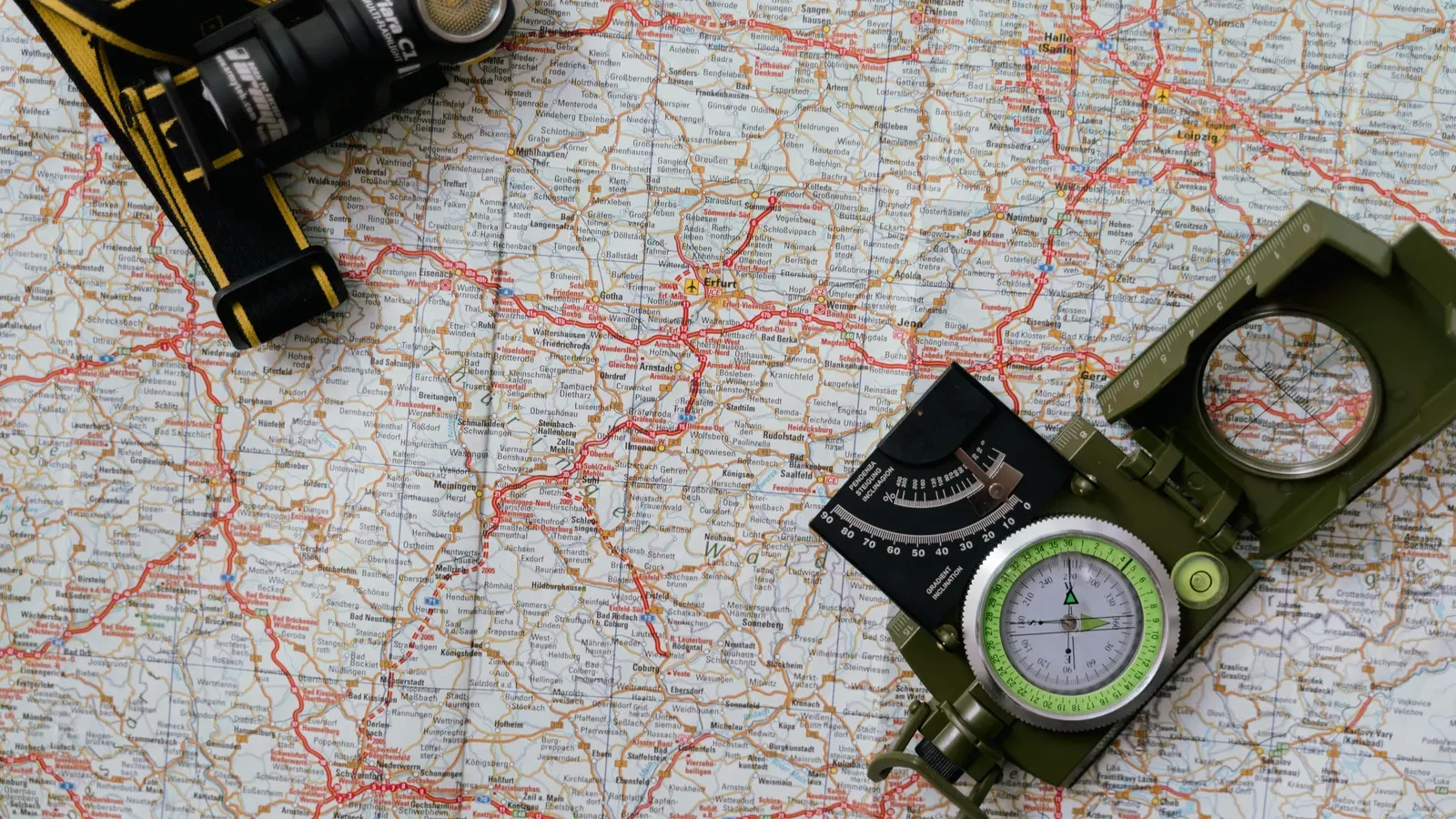
- Navigation — offline trail map app + paper backup on remote routes.
- Sun protection — sunscreen, sunglasses, brimmed hat.
- Insulation — extra warm layer beyond your forecasted needs.
- Illumination — headlamp with fresh batteries. Headlamps on Amazon
- First aid — compact kit + any personal medications.
- Fire — lighter + tinder in a waterproof bag.
- Repair kit and tools — multi-tool, duct tape, cordage.
- Nutrition — extra food beyond your planned meals.
- Hydration — water + a means to filter or purify more.
- Emergency shelter — bivy sack or space blanket. Emergency bivy on Amazon
Why this list is misunderstood
The 10 Essentials aren’t about everyday hiking — they’re about unplanned overnights. The question every item answers is: “If I’m forced to stay out tonight, do I have what I need to be safe until morning?”
How heavy is the 10 Essentials kit?
Done well, the full kit weighs around 2–3 lb. Most hikers already carry 7 of 10 without thinking about it (food, water, sunglasses, sunscreen, layer, headlamp, phone-as-map). Adding the missing 3 is usually under 1 lb.
Where most hikers fall short
- Emergency shelter: a 3-oz space blanket is enough. Don’t skip this.
- Fire starter: a Bic lighter weighs 11 g.
- Paper map: phones die. A printed topo of your trail solves this for under 1 oz.
Building your kit
Run your trail type through our Hiking Safety Prioritizer to get a personalized 10-Essentials list. For multi-day or remote trips, layer the Trail Weather Planner on top to add condition-specific safety extras (extra insulation for cold; satellite messenger for remote).
Practice using your kit
Carrying a first-aid kit you’ve never opened is worse than not carrying one — you’ll waste critical minutes fumbling. Once a year, lay everything out, replace expired items, and remind yourself what’s inside.
Frequently asked questions
Do I really need all ten on a short hike?
The full kit is light enough to carry always, and short hikes are where people get caught out by weather, a fall or a wrong turn. Scale the quantities down, not the categories.
What counts as an emergency shelter?
Anything that keeps wind and rain off a person who cannot move: an emergency bivvy, a space blanket, a large heavy-duty bag or a tarp. On day hikes an emergency bivvy is the best balance of weight and protection.
Which essential do hikers most often forget?
Extra clothing and a headlamp. Both seem unnecessary on a warm morning and both are what you want most when a hike runs late and the temperature drops.
Read next
 Read nextMountain Hiking Safety: Weather, Altitude & Turn-Around Times
 Read nextBest Hiking Headlamps for Trail Safety
Plan it with our free tools: Hiking Safety Prioritizer · Hiking Checklist Generator
You may also like

How to Avoid Ticks While Hiking (2026 CDC-Based Guide)
Follow CDC guidance to avoid ticks while hiking: permethrin-treated clothing, EPA-registered repellents, trail habits, tick checks, correct removal steps and when to…
Hiking First Aid Kit: What to Pack and Why (2026 Guide)
What actually belongs in a hiking first aid kit? See contents by trip type, detailed blister and wound care, five real products,…

How Much Water Should You Bring Hiking?
A practical formula for hiking water — by hour, body weight, climate and elevation. Plus when to filter, when to carry extra,…

Get better at hiking.
Practical hiking tips, gear guides, trail advice and outdoor stories, delivered occasionally. No spam, unsubscribe any time.