Best Camping Tent Brands: How the Top Names Compare (2026)
Not all tent brands are alike. See what Big Agnes, MSR, NEMO, Coleman, Kelty and REI Co-op each do best, their price tier, and how their warranty policies compare.
HikingCare is reader-supported. When you buy through links on our site we may earn a commission at no extra cost to you. How we choose what to recommend.
⛺ Quick answer
What are the best camping tent brands? For most campers, the strongest all-around names are Big Agnes and NEMO for backpacking, MSR for tough weather, REI Co-op for value and member support, and Coleman and Kelty for budget-friendly car camping.
No single brand wins every category. The right one depends on how you camp, how much weight you want to carry, and how much you want to spend.
*MSR’s own warranty page. †REI’s stated satisfaction guarantee for co-op members. Checked September 2026.
Shopping for a tent usually turns into shopping for a brand first. Once you know which brand fits how you camp, picking the actual model gets a lot easier.
But brand reputations get repeated so often online that it’s hard to tell what’s still true. Is Coleman really “just for backyards”? Does MSR really cost that much more than Big Agnes? This guide looks at what each brand actually says about itself, its products and its warranty, so you can compare them on real terms.
We checked each brand’s own site, current Amazon listings and warranty pages directly in September 2026, so this reflects what’s published now, not old reputations.
Here’s what you’ll get from this guide:
- What each of the 6 brands is actually known for, in plain terms
- Each brand’s general price tier, and who it tends to suit
- One representative, currently sold tent per brand
- A side-by-side comparison table across all 6 brands
- Each maker’s own stated warranty and repair policy
- How to match a brand to your own camping style
What Are the Best Camping Tent Brands? A Closer Look
There’s no single “best” brand, because tent brands specialize. Some chase low weight for backpackers. Others chase low prices for families. A few try to do a bit of everything.
This guide covers six brands: Big Agnes, MSR, NEMO, Coleman, Kelty and REI Co-op. Together they span the range from ultralight backpacking to budget car camping, so most campers will find at least one that fits.
We picked these six because each has a clear identity in the market, a public warranty policy we could check, and at least one current, verifiable product. Other good brands exist. These six give a useful, honest cross-section of price tiers and use cases.
Notice that three of these brands (Big Agnes, MSR and NEMO) all chase the same general goal, a light tent for backpackers, but reach it in different ways. The other three (Coleman, Kelty and REI Co-op) care less about ounces and more about price, ease of use or membership perks. Knowing which group a brand belongs to tells you most of what you need before you even open a spec sheet.
The best camping tent brand isn’t the most famous one. It’s the one whose trade-offs match the trips you actually take.
Top Camping Tent Brands at a Glance
Here’s a quick snapshot before we go into detail on each brand.
| Brand | Known for | General price tier | Best for |
|---|---|---|---|
| Big Agnes | Ultralight focus Low packed weight, high-volume freestanding designs | Premium | Backpackers who count ounces |
| MSR | Rugged, mountaineering-tested shelters | Premium | Harsh weather and exposed terrain |
| NEMO | Comfort features and updated, recycled fabrics | Premium | Backpackers who want extra livability |
| REI Co-op | Member-focused in-house gear, sold only at REI | Mid-range | REI members who want lifetime defect coverage |
| Coleman | Affordable, easy-setup family car-camping tents | Budget | First-time campers and families on a budget |
| Kelty | Value-priced backpacking and car-camping tents | Budget to mid-range | Campers who want reliability without a premium price |
Read the “price tier” column loosely. It’s a general position relative to the other five brands, not an exact number, since specific tents within a brand’s own lineup can cost more or less than its typical range. Use it to narrow your search, then compare specific models once you know which brand or two fit your budget.
The “best for” column is a starting point too, not a strict rule. A careful budget shopper can still enjoy a Big Agnes tent on sale, and a fast-and-light backpacker can still make a Kelty work with a lighter loadout. Brands describe a tendency, not a locked category you have to stay inside.
How We Chose These Brands
We chose these six brands from published brand information, current Amazon and manufacturer listings, and each company’s own warranty page, not from our own campouts. Our methodology page explains how we research picks across the site.
For each brand, we looked for three things: a clear, describable identity in the market, a currently sold tent we could verify, and a public warranty policy stated on the brand’s own site. Where we couldn’t confirm a detail, we say so plainly instead of guessing.
This is a brand-level guide, not a single-model shootout. Each brand makes several tents at different weights and prices. The “strengths” and “weaknesses” below describe general tendencies across a brand’s lineup, not a verdict on every model it sells.
We also avoided a few common shortcuts. We didn’t rely on star ratings, since those measure one product’s reviews, not a brand’s overall approach. We didn’t use price alone, since a single sale price can make a premium brand look temporarily cheap. Instead, we read what each brand says about its own designs, then checked that against a real, currently sold tent.
We also skipped brands where we couldn’t verify both a current product and a public warranty page in the same research session. That’s why you won’t see every well-known name here. We’d rather cover six brands accurately than eight brands with gaps we couldn’t fill honestly.
The Best Camping Tent Brands, One by One
Here’s what each brand focuses on, in plain language, plus one representative tent currently sold for each.
Big Agnes: Best for Ultralight Backpacking
Big Agnes built its name on lightweight, freestanding backpacking tents with a roomy, “high-volume” pole structure that adds livable space without much extra weight. Its Copper Spur line is one of the most recognized names in ultralight backpacking.
Strengths: low packed weight for a freestanding design, and more headroom than many ultralight competitors. Weaknesses: premium pricing, and less rugged fabric than expedition-focused brands. Who it suits: backpackers who want to save weight without switching to a non-freestanding shelter.
🏔️ Best for ultralight backpacking
Big Agnes
Big Agnes Copper Spur UL2 Backpacking Tent
An ultralight, high-volume 2-person tent built around dual vestibules and DAC poles.
The Copper Spur UL2 is a 3-season, freestanding backpacking tent with a high-volume pole design for extra headroom. Dual doors and vestibules let two people get in, out and organized without climbing over each other.
- High-volume pole design adds usable headroom
- Dual doors and dual vestibules for two-person use
- DAC anodized aluminum poles
- Freestanding setup works on rock, sand or a wooden platform
| Capacity | 2-person |
|---|---|
| Season rating | 3-season |
| Poles | DAC anodized aluminum |
| Vestibules | 2 (dual) |
Best for: backpackers who want a light, freestanding tent with real headroom. It costs more than budget or mid-range alternatives.
🛒 Buy from Amazon Check today’s price and colors on Amazon.
MSR: Best for Tough Weather
MSR, short for Mountain Safety Research, grew out of mountaineering equipment, and its tents still carry that heritage. The company markets its shelters around durability in wind, rain and rough terrain, not just low weight.
Strengths: a long reputation for weather-resistant, durable builds, plus a notable lifetime warranty on tent pole frames specifically. Weaknesses: generally heavier and pricier than typical 3-season-only competitors. Who it suits: backpackers and mountaineers who prioritize surviving bad weather over shaving every possible ounce.
⛰️ Best for tough weather
MSR
MSR Hubba Hubba NX 2-Person Backpacking Tent
A long-running, lightweight backpacking tent with MSR’s Xtreme Shield waterproof coating.
The Hubba Hubba NX is MSR’s best-known 2-person backpacking tent. It’s built as a lightweight shelter for backpacking trips, with a fly treated in MSR’s Xtreme Shield waterproof coating to hold up to sustained wet weather.
- Xtreme Shield waterproof coating on the fly
- Built specifically as a lightweight backpacking tent
- From a brand with a mountaineering equipment heritage
- Tent poles covered by MSR’s lifetime pole warranty
| Capacity | 2-person |
|---|---|
| Category | Lightweight backpacking tent |
| Fly treatment | Xtreme Shield waterproof coating |
Best for: backpackers who want a durable, weather-ready shelter and don’t mind paying a premium price for it.
🛒 Buy from Amazon Check today’s price on Amazon.
NEMO: Best for Backpacking Comfort
NEMO Equipment has built its reputation on livability features: garage-style doors, oversized vestibules and pole shapes designed to add headroom. It has also moved toward recycled, PFAS-free fabrics across its lineup, branded OSMO.
Strengths: thoughtful comfort details and newer, more sustainable fabric technology. Weaknesses: premium pricing similar to Big Agnes. Who it suits: backpackers who want extra livability and are willing to pay for it.
✨ Best for backpacking comfort
NEMO Equipment
NEMO Dagger OSMO 2-Person Backpacking Tent
An updated backpacking tent with recycled OSMO fabric and a roomier vestibule design.
The Dagger OSMO is NEMO’s well-known 2-person backpacking tent, rebuilt around OSMO fabric and an updated pole structure that adds door and peak height plus extra vestibule space. A “Landing Zone” waterproof tub in the vestibule keeps muddy gear off the tent floor.
- OSMO fabric, NEMO’s recycled and PFAS-free material
- Updated pole structure adds door height, peak height and vestibule room
- “Landing Zone” waterproof gear tub built into the vestibule
- Marketed as lightweight and spacious for a 2-person tent
| Capacity | 2-person |
|---|---|
| Fabric | OSMO (recycled, PFAS-free) |
| Vestibule extra | “Landing Zone” waterproof gear tub |
Best for: backpackers who want extra comfort touches and don’t mind paying NEMO’s premium price for them.
🛒 Buy from Amazon Check today’s price and colors on Amazon.
REI Co-op: Best for Member Support
REI Co-op is REI’s own in-house gear line, sold only through REI’s stores and website, not through Amazon or other retailers. Its tents, like the popular Half Dome series, aim for a middle ground: reasonable weight, reasonable price, and REI’s backing.
Strengths: REI states that its co-op branded items carry lifetime coverage against manufacturing defects, and members get a generous return window. Weaknesses: you can only buy it through REI, and membership makes the return policy meaningfully better. Who it suits: REI members who value in-store support and a straightforward defect policy over shopping around.
🏷️ No Amazon box for this one
REI Co-op tents, including the Half Dome SL 2+, are sold directly through rei.com and REI stores. We couldn’t confirm a current Amazon.com listing for it, so we’re not including an Amazon link here, in line with our rule against linking to unverified listings.
Coleman: Best Budget Family Tent
Coleman is one of the most widely available camping brands, sold in big-box stores and online at low prices. Its tents focus on fast setup and easy use for car camping and family trips, not backpacking weight.
Strengths: low price, wide availability and simple setup. Weaknesses: heavier materials and a shorter general warranty than backpacking-focused brands, and less suited to backcountry travel. Who it suits: first-time campers, families and anyone who wants an affordable tent for a car-accessible site.
👨👩👧 Best budget family tent
Coleman
Coleman Skydome 2-Person Camping Tent
An affordable, quick-setup dome tent built for car camping.
The Skydome line is Coleman’s core car-camping tent range, built around pre-attached poles and a weatherproof design for a fast pitch at a campground. The 2-person size suits a couple or a solo camper who wants extra gear room.
- Pre-attached poles speed up setup
- Weatherproof construction for car-accessible campsites
- Widely available at a budget price point
- Simple dome design suits first-time campers
| Capacity | 2-person |
|---|---|
| Product line | Skydome |
| Poles | Pre-attached |
Best for: car campers and families who want an easy, affordable tent. It’s not built for backpacking weight or extreme weather.
🛒 Buy from Amazon Check today’s price on Amazon.
Kelty: Best Value Across Backpacking and Car Camping
Kelty is one of the longer-standing names in outdoor gear, with a lineup that spans backpacking tents and roomier car-camping models. It generally prices below the premium ultralight brands while still targeting backpackers, not just car campers.
Strengths: a wide range covering both backpacking and family car camping, at prices below Big Agnes, MSR or NEMO. Weaknesses: typically heavier than premium ultralight competitors. Who it suits: campers who want one brand that covers both a backpacking trip and a family weekend, without premium pricing.
💲 Best value across use cases
Kelty
Kelty Discovery 2-Person Tent (with Footprint)
A budget-friendly 2-person tent from one of the longer-standing names in outdoor gear.
The Discovery is Kelty’s approachable, everyday tent line, sold here bundled with a footprint for floor protection. It’s aimed at campers who want a straightforward, reasonably priced shelter rather than an ultralight specialty design.
- Bundled with a footprint for added floor protection
- Priced below Kelty’s premium backpacking-focused competitors
- Simple 2-person layout suits car camping or light backpacking
- From a long-standing name in outdoor gear
| Capacity | 2-person |
|---|---|
| Included | Tent plus matching footprint |
| Product line | Kelty Discovery |
Best for: campers who want a dependable, budget-friendly tent without stepping up to a premium ultralight brand.
🛒 Buy from Amazon Check today’s price on Amazon.
Prices and stock change often, so check each listing before you buy. As an Amazon Associate, HikingCare earns from qualifying purchases, at no extra cost to you.
How to Choose a Tent Brand for Your Trips
Once you understand what each brand focuses on, picking one comes down to matching it to your own trips.
Start with how you’ll carry it
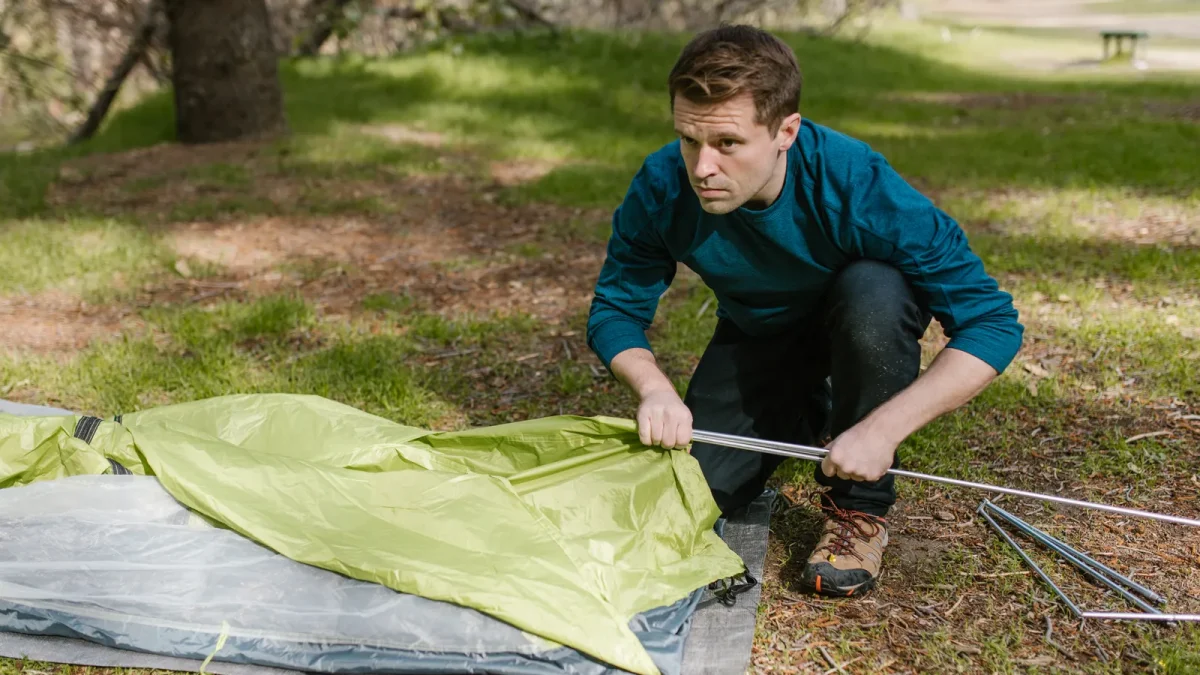
If you’re hiking to your campsite, weight and packed size matter most. That points toward Big Agnes, MSR or NEMO. If you’re driving to a site, weight barely matters, and Coleman or Kelty’s roomier, heavier tents become the better value.
Match the season rating to your trips
Most tents in this guide are 3-season designs, built for spring through fall in normal weather. If you camp in snow or above treeline, look specifically for a 4-season model, which most of these brands also sell separately from the tents featured here.
Think about how many people and how much gear
A “2-person” tent usually fits two sleeping pads with little extra room for gear. If you want space for packs inside, or you’re not an especially close couple, consider sizing up to a 3-person tent for two people.
Factor in the warranty, not just the price tag
A cheaper tent with a short warranty can cost more over years of use than a pricier one backed by a lifetime defect policy. We cover each brand’s actual policy in the warranty section below.
💡 Buy for your next five trips, not just your next one
A tent bought for a single weekend trip often gets used for years afterward. Picking a brand and size that fits your typical trip, not just your very next one, usually saves money in the long run.
Comparing the Brands Side by Side
Here’s a fuller side-by-side look, based on each brand’s own published positioning and our research into current listings.
| Brand | Typical use case | Weight focus | Price tier | Sold on Amazon |
|---|---|---|---|---|
| Big Agnes | Backpacking | Ultralight | Premium | Yes |
| MSR | Backpacking, mountaineering | Light, weather-focused | Premium | Yes |
| NEMO | Backpacking | Light, comfort-focused | Premium | Yes |
| REI Co-op | Backpacking and car camping | Moderate | Mid-range | No, REI only |
| Coleman | Car camping | Not a priority | Budget | Yes |
| Kelty | Backpacking and car camping | Moderate | Budget to mid-range | Yes |
Notice the pattern: the three premium brands (Big Agnes, MSR, NEMO) all chase low weight for backpackers, just with different specialties layered on top. The other three prioritize price or availability over shaving grams.
The “sold on Amazon” column matters more than it might seem. If you like to compare prices across sellers or use Amazon’s return process, that rules out REI Co-op automatically, no matter how much you like its warranty terms. Five of these six brands sell through Amazon and multiple other retailers, so shopping around is easy. REI Co-op is the one exception, available only through REI itself.
“Weight focus” is relative, not absolute. Even Coleman’s car-camping tents have gotten a little lighter over the years, and even Big Agnes sells sturdier, less ultralight models alongside its lightest ones. Treat this table as a map of general tendencies you can use to shortlist two or three brands, then compare specific tents within them.
Warranty and Repair Support, Brand by Brand
A tent is a long-term purchase, so it’s worth knowing what happens if a pole snaps or a seam fails years later. Here’s what each brand’s own policy says, checked directly on their sites in September 2026.
| Brand | Stated warranty | What it covers |
|---|---|---|
| Big Agnes | Limited warranty for the lifetime of the product | Manufacturing and material defects; items are inspected in person at Big Agnes’s repair center |
| MSR | Two policies 3-year limited, plus a lifetime warranty on tent pole frames | Materials and workmanship (3 years); broken tent poles specifically (lifetime) |
| NEMO | Lifetime warranty (“Adventure Forever Guarantee”) | Defects in workmanship and materials, to the original owner |
| REI Co-op | Lifetime defect coverage on Co-op branded gear; separate 365-day (members) or 90-day (non-members) satisfaction guarantee for general returns | Manufacturing defects (lifetime); general dissatisfaction returns (365 or 90 days) |
| Coleman | Limited warranty; length varies by product, with tents commonly covered for one year | Defects in material and workmanship from the original purchase date |
| Kelty | Limited lifetime warranty (the product’s practical lifetime, not the owner’s) | Manufacturing defects; does not cover weather damage or normal wear |
📋 “Lifetime” means the product’s lifetime
Every brand here is clear about one thing: a lifetime warranty covers defects, not normal wear and tear, weather damage, or the natural breakdown of fabric and waterproof coatings over years of use. None of these policies replace a tent just because it’s old.
All six brands require proof of purchase from an authorized retailer, and most ask you to contact them directly or ship the tent in for inspection rather than approving a claim from photos alone. Keep your receipt with your gear, not just in an inbox you might not check again.
Common Mistakes When Picking a Tent Brand (and How to Fix Them)
Most brand-shopping regrets come down to a handful of avoidable mix-ups.
1. Buying a backpacking brand for a car-camping trip
❌ The mistake: paying premium ultralight prices for a tent that never leaves the trunk of a car.
✅ The fix: if you always drive to your site, put that budget toward space and comfort with a brand like Coleman or Kelty instead.
2. Ignoring the warranty until something breaks
❌ The mistake: only reading a warranty policy after a pole has already snapped.
✅ The fix: check the brand’s stated policy before you buy, and keep your receipt somewhere you’ll actually find it later.
3. Assuming every tent from a brand shares its flagship’s specs
❌ The mistake: buying any tent from a premium brand and expecting its lightest, most expensive model’s weight.
✅ The fix: check the specific model’s own specs. Brands sell tents across a wide weight and price range, not just their flagship.
4. Forgetting that REI Co-op only sells through REI
❌ The mistake: searching Amazon or another retailer for an REI Co-op tent and assuming it’s discontinued when it doesn’t show up.
✅ The fix: shop REI Co-op products directly through rei.com or an REI store.
5. Sizing a “2-person” tent too tightly
❌ The mistake: buying the smallest size that technically fits your group, with no room for gear.
✅ The fix: size up by one person if you want room for packs inside, especially in bad weather.
6. Choosing a 3-season tent for a 4-season trip
❌ The mistake: assuming any tent from a mountaineering-associated brand can handle snow loading.
✅ The fix: check the specific season rating on the model you’re buying, and look for a dedicated 4-season design if you camp in snow.
Pro Tips for Comparing Tent Brands
These habits come up often in how experienced campers actually shop for gear.
- Read the warranty page, not just the product page. It tells you how a brand handles problems, which matters more once the tent is a few years old.
- Compare a brand’s budget and premium lines separately. Many brands, including Kelty and REI Co-op, sell both backpacking and car-camping tents at very different weights and prices.
- Check who actually sells the tent. Some brands, like REI Co-op, sell exclusively through their own site and stores.
- Look at the fly’s stated coating or fabric, not just the brand name. Features like MSR’s Xtreme Shield or NEMO’s OSMO fabric tell you more than the logo does.
- Keep your receipt with your gear. A warranty is only useful if you can still prove when and where you bought the tent.
- Don’t assume a higher price always means a better tent for you. A premium ultralight design solves a problem, carried weight, that a car camper never has in the first place.
- Ask what “lifetime” means for that specific brand. Every brand in this guide ties “lifetime” to the product’s practical life, not the owner’s, and excludes normal wear and weather damage.
A brand’s reputation is a starting point for research, not a replacement for it. Specs and warranty pages change faster than reputations do.
Real-World Examples: Three Common Brand Choices
These are composite examples built from patterns campers commonly share in gear forums and reviews. They’re not individual testimonials, but they show how different priorities lead to different brands.
What these three examples have in common: each one picked a brand based on their own priority, weight, price or repairability, rather than picking whichever brand was simply most familiar. None of them started by asking which brand was “best” in general. They started by naming the one thing that mattered most on their own trips, then matched a brand to that single priority. That’s a simpler filter than trying to weigh every strength and weakness at once, and it usually points to the same brand a longer comparison would.
Frequently Asked Questions
What is the most reliable camping tent brand?
“Reliable” depends on what you need. For stated warranty coverage specifically, MSR’s lifetime pole warranty and NEMO’s and Big Agnes’s lifetime defect coverage are all strong, clearly published policies. Reliability also depends on using the right tent for the right season and conditions.
Is REI Co-op a good tent brand?
REI Co-op tents carry lifetime coverage against manufacturing defects on top of REI’s general satisfaction guarantee. The trade-off is that they’re sold only through REI, not Amazon or other retailers.
Are expensive tent brands like MSR and NEMO worth the price?
It depends on your use. Their higher prices generally buy lower weight, tested weather resistance, or comfort features. For occasional car camping, a budget brand like Coleman or Kelty often makes more sense.
Which tent brand is best for beginners?
Coleman and Kelty both make straightforward, affordable tents that are easy to set up, which suits most beginners on car-camping trips. Our beginner hiking setup guide covers more starter gear choices.
Do all these brands make 4-season tents too?
Several do, including Big Agnes, MSR and NEMO, but the specific tents featured in this guide are 3-season models. Check the season rating on any specific tent before a winter or high-altitude trip.
Your Tent Brand-Picking Checklist
Work through this list before you commit to a brand or a specific tent.
Tap each item as you complete it. Your progress is saved in this browser.
- Decide if you’re backpacking or car camping first
- Set a price tier you’re comfortable with
- Check the season rating on the specific tent, not just the brand
- Confirm where the brand actually sells (some are retailer-exclusive)
- Read the brand’s own warranty page before buying
- Size up if you want room for gear inside
- Save your receipt somewhere you’ll find it again
The Bottom Line
The best camping tent brands aren’t interchangeable. Big Agnes, MSR and NEMO chase light weight for backpackers, each with its own specialty. Coleman and Kelty chase value and easy setup. REI Co-op sits in the middle, backed by REI’s own return policy.
Pick based on how you actually camp, check the specific model’s season rating and specs, and read the warranty page before you buy. Do that, and the brand name becomes a helpful shortcut instead of a guess.
🏕️ Plan your next camping trip
Build your gear list and packing plan with our free tools.
Keep reading: the best ultralight tents, the best tents for rain and building a camp kitchen box.
Sources
- Big Agnes: Warranty Policy
- MSR (Cascade Designs): Warranty
- NEMO Equipment: The Adventure Forever Guarantee
- REI: Satisfaction Guarantee
- Coleman: Limited Warranty Information
- Kelty: Warranty
Facts checked in September 2026. Product listings, prices and warranty terms change, so confirm them before you buy.
You may also like
The Best 2-Person Backpacking Tents for 2026
The best 2-person backpacking tent balances weight per person, foot-end width and door count, not just floor area. See six tents compared,…
Best Backpacking Cookware (2026): Pots, Sets and Mugs Compared
Titanium, hard-anodized aluminum or stainless steel? Compare weight, durability and heat behavior, then see 7 verified backpacking cookware picks with maker specs,…
Best Paracord Bracelet (2026): Cord Types, Weaves and a DIY Guide
The best paracord bracelet starts with the right cord. Learn what Type III 550 really means, how it compares with 325 and…

Get better at hiking.
Practical hiking tips, gear guides, trail advice and outdoor stories, delivered occasionally. No spam, unsubscribe any time.