The Best 2-Person Backpacking Tents for 2026
The best 2-person backpacking tent balances weight per person, foot-end width and door count, not just floor area. See six tents compared, plus how to split one between two packs.
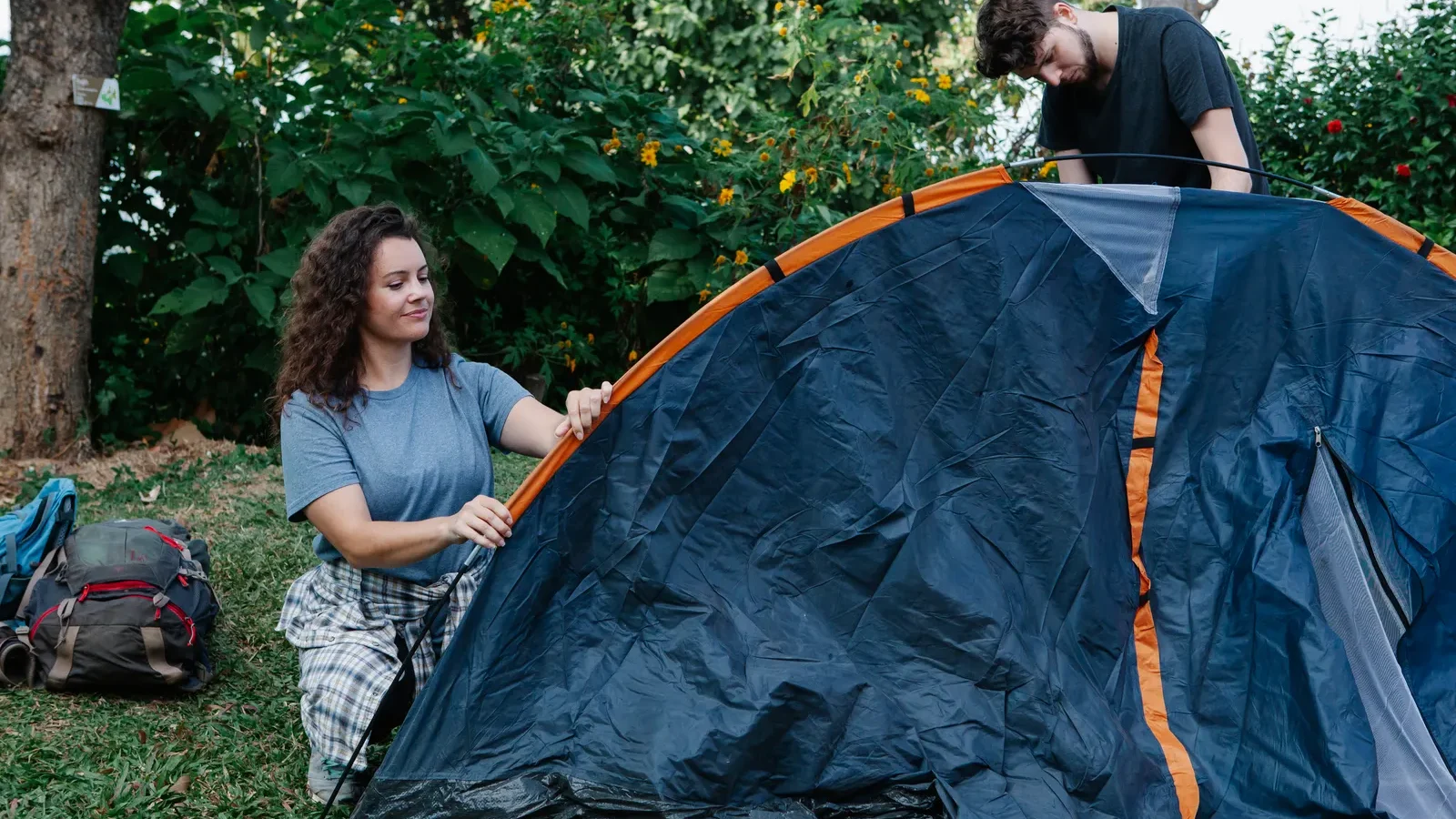
HikingCare is reader-supported. When you buy through links on our site we may earn a commission at no extra cost to you. How we choose what to recommend.
⏱️ Quick answer
Looking for the best 2-person backpacking tent? Pick one by weight per person and true foot-end width, not just the floor-area number on the box. A tent that suits two people well balances trail weight, floor shape and door count.
Below we compare weight per person, floor area, peak height, doors and vestibules, then explain freestanding vs trekking-pole designs and how to split a tent between two packs. Six tents, checked against maker specs in September 2026.
*Trail or minimum weight as published by each maker; see the Sources box for links.
Two people, one tent, one shared floor. That is a great way to save weight on a trip, but it only works if the tent actually fits both of you and your gear.
A lot of buying guides stop at “floor area” and call it done. That number hides a lot. Two tents with the same square footage can feel completely different once you and your hiking partner are both inside with packs, boots and a midnight bathroom trip to manage.
In this guide we break down the numbers that actually predict comfort: weight per person, floor shape at the head and foot, peak height, door count and how the tent’s structure holds up in wind. Then we share six 2-person tents that span budgets and styles, all checked against maker specs in September 2026.
Here’s what you’ll get from this guide:
- How to compare weight per person instead of just total tent weight
- Why floor shape and peak height matter more than raw square footage
- Six 2-person tents spanning budget, weight and door count
- A plain-English guide to freestanding, semi-freestanding and trekking-pole designs
- How two people actually fit, pad by pad
- A practical system for splitting the tent between two packs
The Short Answer: Match Weight and Shape to How You Actually Camp
The best 2-person backpacking tent for you balances three things: trail weight per person, floor shape at the foot end, and how many doors you need. Get those three right, and almost any tent on this list will serve you well.
Total tent weight matters less than you might think, because you split it. A 4-pound tent shared by two hikers costs each person about 2 pounds, which is often lighter than each hiker carrying a solo tent.
A 2-person tent is a math problem before it is a gear choice: total weight divided by two people, floor width divided by two sleeping pads.
Floor area on its own is a poor predictor of comfort. A rectangular floor that stays wide at the foot end can feel roomier than a larger tent that tapers sharply where your feet and gear actually sit. We cover exactly how to check this further down.
Door count is the other variable that matters more in practice than it looks on paper. A single shared door works fine for a solo hiker, but two adults sharing one exit tend to notice it every single night, not just occasionally. We flag which of our picks skip the second door, and why that trade-off might still make sense for your budget.
Top Picks at a Glance
Here is how our six picks compare on trail weight, floor area and structure. Weight is trail or minimum weight as published by each maker, which excludes stakes and stuff sacks unless noted. Jump to any tent’s full write-up by clicking its name.
| Tent | Best for | Trail weight | Floor area | Style |
|---|---|---|---|---|
| Big Agnes Copper Spur HV UL2 mtnGLO | Top pick Best overall balance | about 2 lb 13 oz | 29 sq ft | Freestanding |
| MSR Elixir 2 | Most livable interior | 5 lb 2 oz | 30 sq ft | Freestanding |
| Naturehike Cloud-Up 2 | Best budget pick | 3 lb 1 oz | about 28 sq ft | Freestanding |
| NEMO Hornet Elite OSMO 2P | Lightest pick | 1 lb 11 oz | 27.3 sq ft | Semi-freestanding |
| Big Agnes Tiger Wall UL2 | Best for tight, uneven sites | 2 lb 2 oz | 28 sq ft | Semi-freestanding |
| 3F UL Gear Lanshan 2 | Best trekking-pole value | about 2 lb 7 oz | 29.7 sq ft | Trekking-pole |
Notice the spread: trail weight ranges from under 2 pounds to over 5, while floor area barely changes. That gap is exactly why weight per person and floor shape matter more than a single square-footage number.
Use the “best for” column as your starting filter, then read the full write-up before you decide. A couple who mostly car-camps a short walk from the trailhead can afford the MSR Elixir 2’s extra weight for its roomier interior, while a thru-hiking pair chasing big miles will likely gravitate toward the Hornet Elite OSMO 2P or the Lanshan 2 instead.
How We Chose These Tents
This list is research-based. We compared published specs, read manufacturer product pages, and cross-checked details against independent gear reviews, rather than pitching every tent ourselves.
Every tent here is currently sold by an established outdoor brand, sleeps two, and publishes (or has independently confirmed) trail weight, floor dimensions and peak height. We looked for a spread of budgets, weights and structures, from a 1-door budget dome to an ultralight trekking-pole shelter.
We left out any tent we could not verify as currently available, and any listing that only gave vague marketing language instead of real numbers. See our full methodology for how we research gear across HikingCare.
ℹ️ Nobody paid for a spot on this list
We do not accept payment for placement, and this article contains affiliate links. If you buy through them, HikingCare may earn a small commission at no extra cost to you. See our affiliate disclosure for details.
If you want the deepest possible dive into ultralight materials and the price-to-weight curve, our best ultralight tents guide covers that ground. This guide takes a different angle: it is built specifically around sharing a tent with another person, so the picks and comparisons below are not the same ones you will find there.
The Best 2-Person Backpacking Tents
These six tents span about four and a half pounds of trail weight and three structural styles. We note each one’s weight, floor shape, doors and vestibules so you can compare like for like.
⭐ Best overall balance
Big Agnes
Big Agnes Copper Spur HV UL2 mtnGLO Backpacking Tent
A fully freestanding ultralight tent with near-vertical walls and a door and vestibule on each side.
The Copper Spur’s high-volume hub pulls the walls up steep, so the 29 square feet of floor space feels bigger than the number suggests. This mtnGLO version adds Big Agnes’s built-in LED light diffusion to the tent body, for about an ounce more than the standard model. Two full doors mean neither partner has to climb over the other at 2 a.m.
- Two doors and two vestibules (9 sq ft each) for separate gear storage
- High-volume hub creates steep walls and more usable headroom
- Fully freestanding DAC Featherlite pole set pitches on any firm ground
- Integrated mtnGLO light diffusion lights the whole tent body
| Trail weight | about 2 lb 13 oz |
|---|---|
| Floor area | 29 sq ft |
| Vestibule area | 9 + 9 sq ft |
| Peak height | 40 in |
| Doors | 2 |
| Structure | Freestanding, DAC Featherlite poles |
Best for: couples who want the least compromise between weight and livability. It costs more than the budget picks here, which is the main trade-off.
🛒 Buy from Amazon Check today’s price on Amazon.
🏕️ Most livable interior
MSR
MSR Elixir 2-Person Lightweight Backpacking Tent
A roomy, true-to-size freestanding tent built for comfort more than ounce-counting.
The Elixir 2 trades some weight for genuine livability. MSR rates the floor at 30 square feet plus 15 square feet of vestibule space, with a 41-inch peak height that gives real sitting-up room. Sturdy 7000-series aluminum poles and thicker 75-denier fabric make it a forgiving first tent for new backpackers.
- 41-inch peak height, tall for a 2-person backpacking tent
- Two large doors with roomy vestibules for two full packs
- Durable 75D floor with a 3,000 mm waterproof rating
- Freestanding aluminum pole set pitches easily for beginners
| Minimum weight | 5 lb 2 oz |
|---|---|
| Packaged weight | 6 lb 3 oz |
| Floor / vestibule area | 30 sq ft / 15 sq ft |
| Peak height | 41 in |
| Doors | 2 |
| Structure | Freestanding, 7000-series aluminum poles |
Best for: new backpackers and anyone who values headroom and storage over shaving ounces. At just over 2.5 pounds per person, it is heavier than the ultralight picks here.
🛒 Buy from Amazon Check today’s price on Amazon.
💰 Best budget pick
Naturehike
Naturehike Cloud-Up 2-Person Backpacking Tent (with Footprint)
A freestanding budget tent with a rectangular floor that stays wide at the foot end.
The Cloud-Up 2 costs less than any other pick here, and it still publishes real numbers: a 3-pound-1-ounce minimum weight and an 82.7 by 49.2-inch floor, roughly 28 square feet. Because the floor is closer to rectangular than tapered, two people keep nearly the full width at both the head and foot end.
- Rectangular-leaning floor keeps width at the foot end, not just the head
- 7001 aluminum alloy poles for the price point
- Ships with a matching footprint in most current listings
- Freestanding setup is simple for a first tent
| Minimum weight | 3 lb 1 oz (1.38 kg) |
|---|---|
| Packed weight | about 3 lb 15 oz (1.8 kg) |
| Floor area | 82.7 x 49.2 in (about 28 sq ft) |
| Peak height | 41.3 in |
| Doors | 1 |
| Structure | Freestanding, 7001 aluminum poles |
Best for: budget-conscious campers who do not mind a single door. One person will need to climb past the other for a night bathroom trip, which is the main trade-off at this price.
🛒 Buy from Amazon Check today’s price on Amazon.
🪶 Lightest pick
NEMO Equipment
NEMO Hornet Elite OSMO 2P Ultralight Backpacking Tent
A semi-freestanding tent built for hikers who count every ounce, with a stuff sack designed to split weight between two packs.
At 1 pound 11 ounces trail weight, the Hornet Elite OSMO 2P is the lightest tent on this list by a wide margin. NEMO’s Flybar technology adds a short structural pole over the door to buy back headroom that ultralight tents usually lose. It ships with a Divvy Cube stuff sack built specifically to split the tent’s weight between two hikers.
- Lightest 2-person tent in this guide at 1 lb 11 oz trail weight
- Divvy Cube stuff sack splits fly and body between two packs
- Flybar pole adds headroom near the door despite the low weight
- OSMO fabric is PFAS-free and resists stretching when wet
| Trail weight | 1 lb 11 oz |
|---|---|
| Packaged weight | 2 lb 1 oz |
| Floor area | 27.3 sq ft (85 x 50/42 in) |
| Peak height | 37 in |
| Doors / vestibules | 2 / 2 (6.2 sq ft each) |
| Structure | Semi-freestanding, DAC Featherlite poles |
Best for: thru-hikers and weight-focused pairs who will trade some peak height and floor area for the lightest possible shared load. It costs more than every other pick here.
🛒 Buy from Amazon Check today’s price on Amazon.
🚶 Best for tight, uneven sites
Big Agnes
Big Agnes Tiger Wall UL2 Tent
A semi-freestanding, side-entry ultralight tent that pitches with a smaller footprint than a full dome.
The Tiger Wall uses a single DAC Featherlite NFL pole clipped into a near-freestanding arch, with the foot end staked instead of poled. That trims weight to 2 pounds 2 ounces trail weight while keeping two full doors and vestibules, which is unusual at this weight.
- Two doors and two vestibules despite a semi-freestanding, single-pole build
- Smaller footprint than a full freestanding dome, useful on tight ledges
- Solution-dyed HyperBead fabric resists UV fading over time
- Side-entry doors make getting in and out easier on a slope
| Trail weight | 2 lb 2 oz (992 g) |
|---|---|
| Packaged weight | 2 lb 8 oz |
| Floor area | 28 sq ft (86 x 52/42 in) |
| Peak height | 39 in |
| Doors | 2 |
| Structure | Semi-freestanding, single DAC Featherlite pole |
Best for: pairs who camp on rocky ledges, tent platforms or other tight spots where a full freestanding footprint is hard to fit. It still needs a few solid stakes at the foot end to pitch correctly.
🛒 Buy from Amazon Check today’s price on Amazon.
🥾 Best trekking-pole value
3F UL Gear
3F UL Gear Lanshan 2 Trekking Pole Tent
A double-wall, dual-apex trekking-pole tent that skips dedicated poles entirely.
The Lanshan 2 pitches with two trekking poles you are already carrying, one at each end, instead of a dedicated pole set. That keeps its own weight to about 39 ounces (fly and inner body together), split between two doors and two generous vestibules that zip close to the ground.
- No dedicated tent poles to carry, since it uses your trekking poles
- Two doors and two vestibules, unusual at this price point
- PU-coated silnylon body sheds rain well for a budget shelter
- Packs smaller than any freestanding tent in this guide
| Weight (fly + inner) | about 39 oz (2 lb 7 oz) |
|---|---|
| Floor area | 29.7 sq ft (90.7 x 47 in) |
| Peak height | about 47 in (sources vary slightly) |
| Doors | 2 |
| Structure | Trekking-pole, dual-apex (needs 2 poles, 6+ stakes) |
Best for: budget-minded pairs who already hike with two solid trekking poles. It needs a confident pitch and good stakes to stay taut, so practice at home first.
🛒 Buy from Amazon Check today’s price on Amazon.
Prices and stock change often, so check each listing before you buy. As an Amazon Associate, HikingCare earns from qualifying purchases, at no extra cost to you.
Weight Per Person, Explained
The simplest way to judge a shared tent is to divide its weight by two. A 4-pound tent costs each hiker 2 pounds. Compare that number to what a solo tent would cost either of you alone, and sharing usually wins.
Watch for two different numbers on spec sheets: trail weight (sometimes called minimum weight) counts only the tent body, fly and poles, the parts you need to pitch it. Packaged weight adds stakes, guy lines and stuff sacks as the tent ships from the factory. Many hikers carry closer to the trail weight, since stuff sacks often get left at home and stakes get swapped for lighter ones.
Across our six picks, trail weight per person ranges from about 13.5 ounces (the Hornet Elite OSMO 2P, split two ways) to about 2 pounds 9 ounces (the MSR Elixir 2, split two ways). That is a real difference on a multi-day trip, but it is not the only number worth checking.
💡 Compare against two solo tents, not zero
The honest comparison is not “this shared tent weighs more than nothing.” It is “this shared tent, split two ways, weighs less per person than two solo tents would.” Run the math with tents you are actually considering before you decide sharing is worth any lost privacy.
Weight per person also helps you decide how much to spend. If the weight difference between a budget and a premium tent works out to only a few ounces per person, the cheaper tent is often the smarter buy. If it is closer to a full pound per person, on a long trip that difference is worth paying for.
Floor Area, Peak Height and How Two People Actually Fit
Floor area is the number every listing leads with, and it is the least reliable one for predicting comfort. A tapered floor can carry the same square footage as a rectangular one while feeling much tighter at the foot end, exactly where two people’s feet, socks and extra layers pile up.
Standard sleeping pads run about 20 to 25 inches wide. Two 20-inch pads side by side need 40 inches of usable width. Look at each tent’s foot-end width, not just its headline floor area, and compare it to that number. Several tents in this guide taper to 42 inches at the foot, which fits two 20-inch pads with only a couple of inches to spare.
| Tent | Head width | Foot width | Peak height |
|---|---|---|---|
| Big Agnes Copper Spur HV UL2 mtnGLO | 52 in | 42 in | 40 in |
| NEMO Hornet Elite OSMO 2P | 50 in | 42 in | 37 in |
| Big Agnes Tiger Wall UL2 | 52 in | 42 in | 39 in |
| Naturehike Cloud-Up 2 | 49.2 in | Least taper 49.2 in | 41.3 in |
| MSR Elixir 2 | 52 in | 52 in (84 x 52 in floor) | 41 in |
Notice that the Naturehike and the MSR both stay close to full width at the foot end, since their floors are closer to rectangular. The Big Agnes tents taper more but save real weight in exchange, which is a fair trade if you and your partner do not mind a snugger foot end.
Peak height decides how easily you can sit up to change clothes or play cards on a rainy afternoon. Anything from about 38 to 41 inches lets most people sit upright without their head brushing the fabric; the Hornet Elite OSMO 2P’s 37 inches is the tightest here, the trade-off for its very low weight.
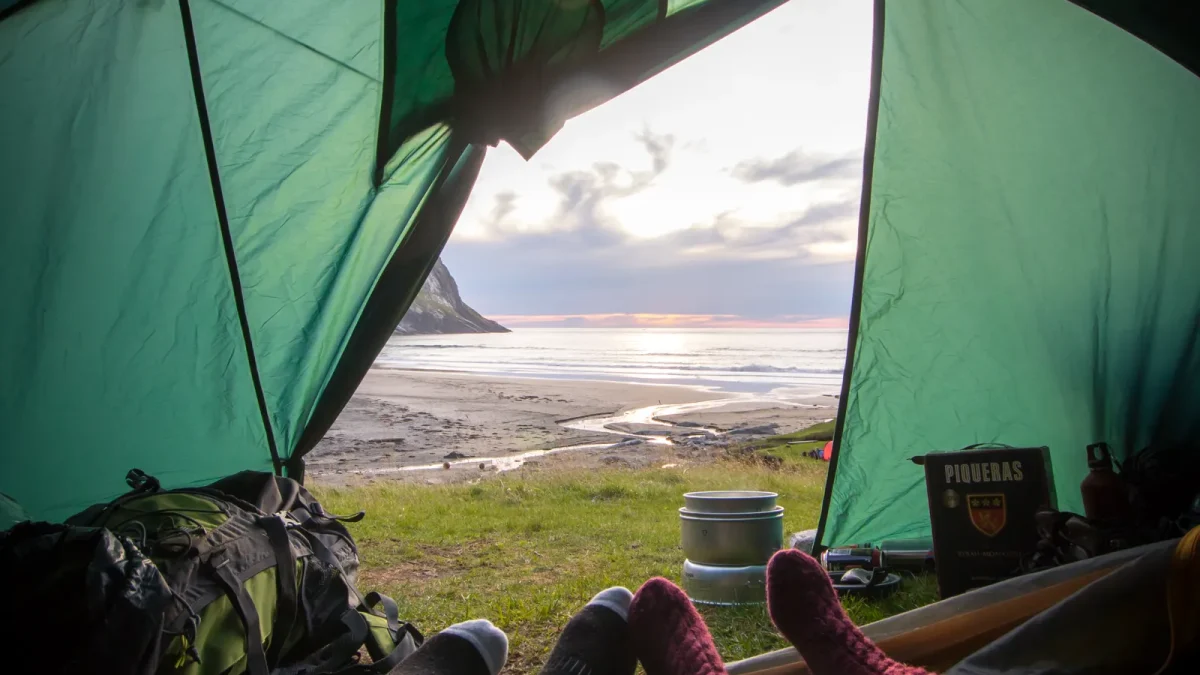
✨ Bring your own pads to the decision
Before you buy, lay your actual sleeping pads out on the floor dimensions listed for any tent you are considering, even just on your living room floor with tape marking the outline. It takes five minutes and tells you more than any review can.
Doors and Vestibules: One vs Two
Five of our six picks ship with two doors, and that is not a coincidence. A private door and vestibule per person means neither of you climbs over the other for a middle-of-the-night bathroom trip, and each person gets a dry spot to stash boots and a pack.
The one exception here, the Naturehike Cloud-Up 2, uses a single front door to hit its low price and weight. That is a real trade-off, not a flaw: whoever sleeps on the door side gets easy access, and the other person climbs past them or a pack to get out. For occasional trips with an early sleeper and a late one, that can matter more than it sounds.
Vestibule size matters almost as much as the door count. A vestibule under about 6 square feet barely fits one pack, so on a two-door tent, check whether each side gets its own vestibule or whether one large vestibule is shared. The NEMO Hornet Elite OSMO 2P’s two 6.2-square-foot vestibules and the Big Agnes Copper Spur’s two 9-square-foot vestibules both give each person a separate, covered spot for their own gear.
ℹ️ Two doors add a little weight, not a lot
A second door and vestibule typically adds a few ounces of fabric and zipper, spread across two people. For most couples and hiking partners, that small weight cost buys back a lot of goodwill on multi-night trips.
Freestanding vs Semi-Freestanding vs Trekking-Pole Designs
How a tent’s structure holds itself up changes what it weighs, how it pitches and where it works well. Our six picks span all three common approaches.
| Feature | Freestanding | Semi-freestanding | Trekking-pole |
|---|---|---|---|
| Dedicated poles | Full pole set included | One shorter pole included | None; uses your trekking poles |
| Typical weight | 3–6 lb | Middle ground 2–3 lb | Under 2.5 lb (tent only) |
| Pitches on | Almost any firm surface | Firm ground, needs some stakes | Needs solid stake-out ground |
| Learning curve | Easiest, good for beginners | Moderate | Steeper; practice at home first |
| Best for | Rock platforms, sand, first-time buyers | Weight-conscious pairs who still want an easy pitch | Ounce-counters who already carry trekking poles |
Freestanding tents, like the Copper Spur and Elixir 2 here, use their own dedicated poles and hold their shape before you stake anything down. That makes them forgiving on rock, sand or a tent platform where stakes barely work, and easiest for a first-time buyer to learn.
Semi-freestanding tents, like the Tiger Wall and Hornet Elite OSMO 2P, use fewer or shorter poles and rely on stakes at the foot end to reach full shape. They save weight over a full freestanding design but need at least some soil or snow you can stake into.
Trekking-pole tents, like the Lanshan 2, carry no dedicated poles at all. If you already hike with two solid trekking poles, that is close to free weight savings. The trade-off is a fussier pitch: you need a good, solid stake-out on every corner, which takes practice in wind or on hard ground.
Splitting the Tent Between Two Packs
Once you own a shared tent, the next question is who carries what. Most pairs split close to evenly: one person carries the tent body and poles, the other carries the fly, stakes and footprint. That usually lands within a few ounces of a 50/50 split.
Some tents make this official. The NEMO Hornet Elite OSMO 2P ships with a Divvy Cube stuff sack, built specifically so two hikers can each carry half the tent in a labeled, evenly sized bag. Even without a purpose-built sack, you can copy the idea with two lightweight stuff sacks of your own.
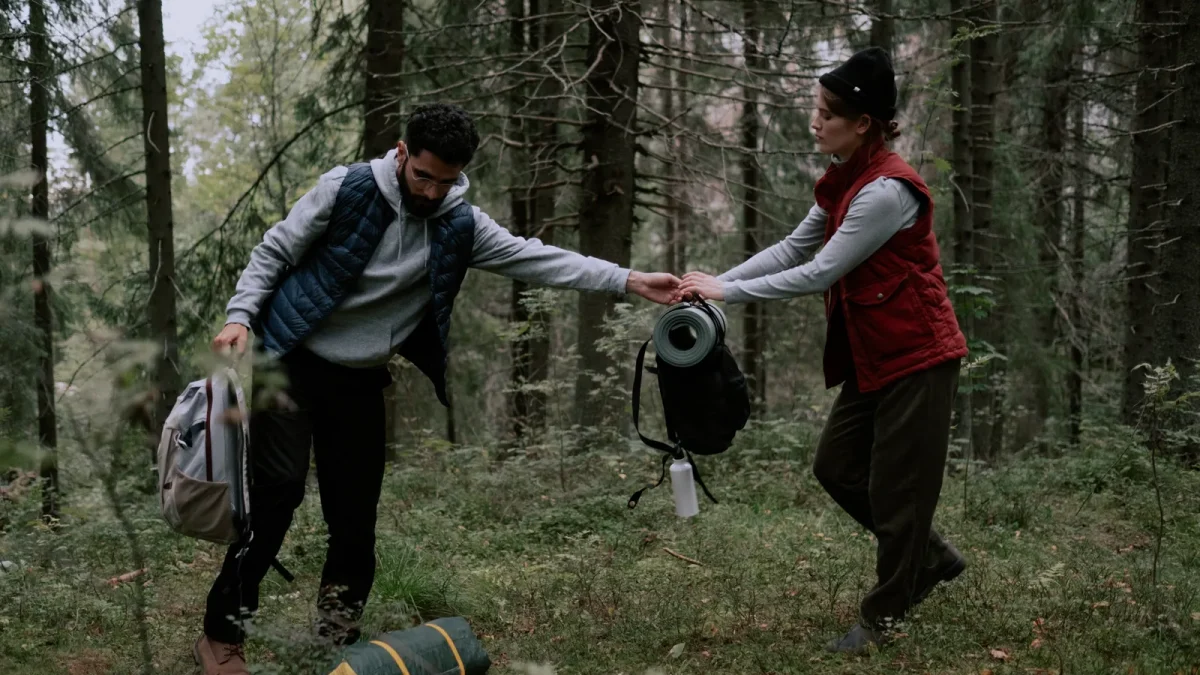
- Weigh the pieces, not just the whole tent. Put the body, fly, poles and stakes on a kitchen scale separately before your first trip together.
- Split by weight, not by piece count. Poles are often heavier than they look, so the “tent body” side and “fly and poles” side may need adjusting to balance out.
- Label the stuff sacks. A quick marker label saves a confused, half-unpacked moment at the trailhead.
- Agree on a backup plan. Decide in advance what happens if you get separated on the trail, even briefly, so neither of you is stuck without poles or a fly.
On a solo night, whoever is hiking should take the heavier half, or the whole tent if their partner is carrying something else bulky like the stove or food bag. Splitting a shared tent works best when both people know the plan before they reach the trailhead, not while standing in the parking lot.
Common Mistakes When Buying a Shared Tent (and How to Fix Them)
Most tent-sharing regrets trace back to a handful of avoidable choices. Here are the ones we see most often.
1. Shopping by floor area alone
❌ The mistake: picking the tent with the biggest square-footage number and assuming it will feel roomiest.
✅ The fix: check head width, foot width and peak height too. A rectangular 28-square-foot floor can beat a tapered 30-square-foot one for two adults.
2. Ignoring the door count to save a few ounces
❌ The mistake: choosing a single-door tent purely for its lower weight or price.
✅ The fix: weigh that saving against climbing over your tent-mate on every bathroom trip. For most pairs, two doors are worth the small extra cost.
3. Never testing your own pads against the floor plan
❌ The mistake: trusting a listing’s floor area without checking it against the sleeping pads you actually own.
✅ The fix: lay your pads out on the tent’s stated dimensions, even just taped out on a floor at home, before you buy.
4. Splitting the tent’s weight unevenly, or not at all
❌ The mistake: letting one person’s pack quietly carry the whole tent trip after trip.
✅ The fix: weigh the pieces and split by weight, not by convenience. Swap who carries what on multi-day trips.
5. Buying a trekking-pole tent without practicing the pitch
❌ The mistake: assuming a trekking-pole tent pitches as easily as a freestanding dome, straight out of the box on trail.
✅ The fix: practice the pitch at home first, in your yard, so trailhead setup is quick and the corners pull properly taut.
Pro Tips for Tent-Sharing Couples and Teams
These habits come up again and again in gear reviews and long-time backpackers’ advice. None of them cost extra money.
- Pitch together at home first. Learning which pole goes where, as a team, saves real time at a cold or buggy campsite.
- Check foot-end width, not just floor area. It is the single best predictor of whether two pads actually fit side by side.
- Carry a couple of spare stakes. Thin stock stakes bend in rocky or root-filled ground, and a shared tent needs every corner staked to reach full size.
- Decide who carries what before the trailhead. A quick weigh-and-split at home beats renegotiating with a full pack on your back.
- Consider a nominal “3-person” tent if you both want extra space. Many 2-person tents run snug for two adults with gear; sizing up costs some weight but buys real elbow room.
- Match trekking pole length to the tent’s pitch height. If you are eyeing a trekking-pole tent, confirm your poles extend to the height its instructions call for.
- Run your combined base weight through our Backpack Load Optimizer. It helps confirm the split you picked keeps both packs reasonable.
A shared tent is a small piece of teamwork you practice every night on trail. Sort out the details at home, and it stops being a decision you make in the dark.
Real-World Examples: Three Tent-Sharing Pairs
These are composite examples built from patterns hikers commonly share in gear reviews and trip reports. They are not individual testimonials, but they show how these choices play out.
What these three have in common: each pair matched the tent’s structure and door count to their actual trips, not to the lightest or cheapest option in isolation. The right shared tent is the one that fits your ground, your budget and your patience for climbing over a tent-mate at midnight.
Frequently Asked Questions
How much should a 2-person backpacking tent weigh?
Trail weight for 2-person backpacking tents commonly runs from about 1.5 to 6 pounds, depending on materials and structure. Divide any tent’s weight by two to see the real cost per hiker before you compare options.
Is a “2-person” tent actually roomy enough for two adults?
It fits two adults and modest gear, but it is rarely spacious. Many 2-person tents suit one hiker and a large pack just as well as two cozy adults. If you both want extra elbow room, consider sizing up to a 3-person model.
Freestanding or trekking-pole: which is better for beginners?
Freestanding tents are the easier starting point. They hold their shape before staking, which forgives an imperfect pitch on a first trip. Trekking-pole tents save weight but need a confident, practiced stake-out to pitch well.
Do two people really need two doors?
Not always, but most pairs prefer it. A single-door tent saves weight and cost, but one person has to climb past the other for every nighttime exit. Two doors add only a small weight penalty for most tents.
How do we split a shared tent’s weight fairly between two packs?
Weigh the tent body, fly, poles and stakes separately, then divide them so each pack carries close to the same total weight. Some tents, like the NEMO Hornet Elite OSMO 2P, include a stuff sack designed for exactly this split.
Your 2-Person Tent Checklist
Work through this list before you buy, then again before your first trip together.
Tap each item as you complete it. Your progress is saved in this browser.
- Divide each candidate tent’s trail weight by two people
- Check foot-end width against your actual sleeping pads
- Confirm peak height suits how you plan to use the tent
- Decide whether one door or two matters for your trips
- Match freestanding, semi-freestanding or trekking-pole to your usual ground
- Weigh the tent’s pieces and agree on a fair split between packs
- Practice pitching the tent together at home at least once
- Pack a few spare stakes for rocky or soft ground
The Bottom Line
The best 2-person backpacking tent is not the one with the biggest floor-area number. It is the one whose weight per person, foot-end width and door count match how you and your hiking partner actually camp.
Any of the six tents above will serve a pair well; which one fits depends on how much weight you want to save, how much floor width you need, and whether you are pitching on rock, dirt or snow. Check the specs, split the load fairly, and practice the pitch together before your first night out.
🗺️ Plan your next trip together
Build a shared gear list and check your combined pack weight with our free tools.
🎒 Gear Planner ⚖️ Backpack Load Optimizer ✅ Checklist Generator
Keep reading: the best ultralight tents, the best tents for rain and 4-season backpacking tents for snow and wind.
Sources
- Big Agnes: Copper Spur HV UL2 mtnGLO Product Page
- Big Agnes: Tiger Wall UL2 Product Page
- MSR / Cascade Designs: Elixir 2 Tech Specs
- Naturehike: Cloud Up 2-Person Tent Specs
- NEMO Equipment: Hornet Elite OSMO Product Page
- GearJunkie: 3F UL Gear Lanshan 2 Tent Review
Facts checked in September 2026. Specs and availability change, so confirm before you buy.
You may also like
Best Backpacking Cookware (2026): Pots, Sets and Mugs Compared
Titanium, hard-anodized aluminum or stainless steel? Compare weight, durability and heat behavior, then see 7 verified backpacking cookware picks with maker specs,…
Best Camping Tent Brands: How the Top Names Compare (2026)
Not all tent brands are alike. See what Big Agnes, MSR, NEMO, Coleman, Kelty and REI Co-op each do best, their price…

How to Avoid Ticks While Hiking (2026 CDC-Based Guide)
Follow CDC guidance to avoid ticks while hiking: permethrin-treated clothing, EPA-registered repellents, trail habits, tick checks, correct removal steps and when to…

Get better at hiking.
Practical hiking tips, gear guides, trail advice and outdoor stories, delivered occasionally. No spam, unsubscribe any time.