Are Timberlands Good for Hiking? A Comprehensive Review (2026)
Timberland sells real hiking boots and a classic work boot under one name. Here's an honest, spec-based look at which models handle trails, and which are better left for the sidewalk.
HikingCare is reader-supported. When you buy through links on our site we may earn a commission at no extra cost to you. How we choose what to recommend.
🥾 Quick answer
Are Timberlands good for hiking? Some are, some are not. Timberland’s Mt. Maddsen and Chocorua Trail lines are built as real hiking boots, but the classic yellow 6-inch boot is a work and street boot, not trail footwear.
Timberland sells trail-ready hiking boots and city-styled work boots under the same brand name, and the boxes look similar. This review separates the two, compares both to a mainstream hiking boot, and gives you a clear verdict for each model.
*Weight per Outdoor Gear Lab’s tested pair. The 6-inch boot’s 1973 debut is part of Timberland’s own brand history.
You have probably seen Timberland boots on a construction site and on a city sidewalk in the same week. Maybe a pair is sitting in your closet right now, and you are wondering if it can handle your next trail. That is a fair question, because Timberland sells more than one kind of boot, and they are not built for the same job.
Some Timberland boots really are hiking boots, with waterproof membranes, rubber lug outsoles and cushioned midsoles built for uneven ground. Others, especially the famous yellow 6-inch boot, were built for job sites and city streets, decades before Timberland made a dedicated hiking line. Wearing the wrong one on the wrong trail can mean sore feet, wet socks or a slip on a root.
In this review, we separate Timberland’s real hiking boots from its work and fashion boots, using specs from Timberland’s own product pages and independent gear reviews. Then we compare the best of each to a mainstream hiking boot, so you know exactly what you are trading off either way.
Here’s what you’ll get from this guide:
- A clear list of which Timberland boots are actually built for hiking
- An honest look at the classic 6-inch boot, and why it is not one of them
- A side-by-side table on weight, waterproofing, traction, break-in and support
- A verdict table matching each boot to the hikes it actually suits
- A mainstream hiking boot alternative for comparison
- Common mistakes, pro tips and answers to common questions
The Short Answer: Are Timberlands Good for Hiking?
It depends entirely on which boot you mean. Timberland is one brand, but it makes boots for very different jobs, and only some of them belong on a trail.
The Mt. Maddsen and Chocorua Trail lines are Timberland’s answer to brands like Merrell and KEEN. They have waterproof membranes, rubber lug outsoles and cushioned midsoles, and Timberland markets them specifically as hiking boots. Outdoor Gear Lab has tested both against dedicated hiking boots from other brands, which tells you Timberland intended them to compete in that category.
The classic 6-inch Premium boot, the famous “yellow boot,” is a different story. Timberland launched it in 1973 as a work boot, and it became a streetwear icon in the 1990s. It is waterproof, well made and genuinely useful in wet or snowy weather. It was never designed, tested or marketed as a hiking boot.
✨ The one-line test
Check the product name. If Timberland calls it a “hiking boot” or “hiker,” like the Mt. Maddsen or Chocorua Trail, it is built for trails. If it is just called a “boot,” like the 6-inch Premium, treat it as waterproof street or work footwear that happens to look rugged.
The rest of this guide walks through why that split exists, what each line is actually good at, and how the best Timberland hiking boot stacks up against a mainstream trail boot from another brand.
Timberland’s Real Hiking Boots: Mt. Maddsen, Chocorua Trail and White Ledge
Timberland runs three ongoing lines built specifically for hiking: the Mt. Maddsen, the Chocorua Trail and the White Ledge. All three use a waterproof membrane, a rubber lug outsole and a cushioned footbed, the same basic recipe as hiking boots from Merrell, KEEN or Salomon.
Mt. Maddsen Mid Waterproof
The Mt. Maddsen pairs a waterproof full-grain leather upper with Timberland’s own TimberDry waterproof membrane, plus a lining made from recycled plastic. It uses a rubber lug outsole, a compression-molded EVA midsole and a removable anti-fatigue footbed, according to Timberland’s product listing. Outdoor Gear Lab ranked it 15th out of 18 hiking boots in its category, calling it “a classic hiking boot that uses traditional materials” and “an inexpensive option for someone who wants a beefy boot.” Their testers found solid traction in wet and dry conditions, very stable ankle support, and no problems at all with the waterproofing. Their main complaints were a stiff break-in and a shallow lug pattern for the boot’s size.
⛰️ Timberland’s mainstream hiking boot
Timberland
Timberland Mt. Maddsen Mid Waterproof Hiking Boot
A budget-friendly hiking boot with a waterproof membrane and tall ankle support.
This is Timberland’s most direct competitor to a mainstream hiking boot. It uses the TimberDry waterproof membrane instead of the plain sealed leather on Timberland’s work boots, so it is built to keep water out on wet trails, not just in a parking lot.
- TimberDry waterproof membrane plus waterproof leather upper
- Rubber lug outsole and compression-molded EVA midsole
- Removable anti-fatigue footbed
- Tall ankle collar for above-ankle support
| Waterproofing | TimberDry membrane + waterproof leather |
|---|---|
| Weight | About 2.3 lb per pair (size 11, tested) |
| Outsole | Rubber lug, shallow-to-moderate lug depth |
| Midsole | Compression-molded EVA |
Best for: maintained day-hike trails and hikers who want Timberland’s tall ankle support on a budget. The full-grain leather needs real break-in time, and the lugs are shallower than some dedicated trail boots.
🛒 Buy from Amazon Check today’s price, colors and sizes on Amazon.
Chocorua Trail Waterproof
The Chocorua Trail is Timberland’s step up in weather protection. Instead of TimberDry, it uses a Gore-Tex waterproof, breathable membrane under a waterproof leather and mesh upper, according to Timberland’s product pages. Outdoor Gear Lab tested the women’s Chocorua Trail Mid GTX and scored it 77 out of 100, well ahead of the Mt. Maddsen in their lineup. Their testers found it “gripped and kept us upright” through four inches of mud, thanks to semi-aggressive lugs built for braking and pushing off. The Gore-Tex membrane kept feet dry through stream crossings and a snowstorm during testing. Their main knocks were a heavier build, at about 3.25 pounds a pair, and an under-arch shape that let some testers’ feet lean inward on long descents.
🥾 Gore-Tex trail option
Timberland
Timberland Chocorua Trail 2.0 Waterproof Hiking Boot
Timberland’s Gore-Tex hiking boot, tested well in mud and stream crossings.
This is the Timberland hiking boot to reach for on wetter, muddier trails. The Gore-Tex membrane and semi-aggressive lug pattern are built for real trail conditions, not just a rainy commute, and independent testing backs that up.
- Gore-Tex waterproof, breathable membrane
- Semi-aggressive rubber lugs for mud and loose ground
- Outsole made with up to 34% recycled rubber
- Removable dual-density EVA footbed
| Waterproofing | Gore-Tex membrane + waterproof leather |
|---|---|
| Weight | About 3.25 lb per pair (women’s Mid GTX, tested) |
| Outsole | Semi-aggressive rubber lugs, up to 34% recycled rubber |
| Midsole | Dual-density EVA, removable footbed |
Best for: muddy, wet or rocky day hikes where waterproofing matters most. It runs heavier than the Mt. Maddsen, and testers noted the arch shape suits a neutral to slightly wide foot better than a high arch.
🛒 Buy from Amazon Check today’s price, colors and sizes on Amazon.
Timberland also still sells the White Ledge Mid Waterproof, an older, simpler hiking line. It uses a plain waterproof leather upper rather than a branded membrane, a rubber outsole with 4mm directional lugs, and a 6.5-inch ankle cuff. It skips the TPU shank found in the Mt. Maddsen. Bootspy’s review found excellent grip on wet, smooth surfaces, but reported the waterproofing leaked at the mesh collar during a splash test, and called it better suited to casual two-hour outings than serious mileage. We are not linking a product box for it here, since the Mt. Maddsen and Chocorua Trail cover the same job with newer materials, but it remains a genuine hiking-labeled option if you find it on sale.
Timberland makes two different products under one name: a boot built to survive a job site or a wet sidewalk, and a boot built to survive a trail. Only one of them is a hiking boot.
The Classic 6-Inch Boot: A Work and Street Icon, Not a Hiking Boot
The boot most people picture when they hear “Timberland” is the 6-inch Premium Waterproof Boot, usually in its tan “wheat nubuck” color. Timberland introduced it in 1973 as job-site footwear, and it became a streetwear staple in the 1990s through hip-hop culture, according to Bootspy’s review of the model. It has stayed in that lane ever since.
On paper, it shares some features with a hiking boot. Timberland’s product pages describe a waterproof, seam-sealed leather upper, a removable anti-fatigue footbed and a steel shank for arch support. Insulated versions add 400 grams of PrimaLoft insulation for cold weather. None of that is fake, and the boot really is waterproof in wet grass, slush and light rain.
What it does not have is a hiking boot’s design goals. There is no branded breathable membrane like TimberDry or Gore-Tex, just treated leather with sealed seams, so warm-weather breathability is limited. Bootspy’s review describes full-grain leather that is “not particularly malleable or easy to walk in right away,” and other reviews describe the sole as a flatter, chunkier pattern built for cobblestones, wet leaves and light snow rather than technical, root-covered trail. One long-term reviewer specifically warned it is not stable on ice, since the hard outsole compound does not flex or bite the way a hiking lug does.
⚠️ Insulated does not mean trail-ready
The insulated 400-gram version is built for standing around in the cold, like a job site or a football game, not for working hard on a climb. Insulation you do not need on a moving, sweaty hike traps heat and moisture instead of managing it, which is the opposite of what you want on a real trail.
None of this makes the classic 6-inch boot a bad product. It is simply built for a different job: city streets, light yard work, plowed sidewalks and job sites, not for mileage over rocks and roots. We include a product box for it below so you can see exactly what it is and is not designed to do.
👢 Not built for trails
Timberland
Timberland Men’s 6-Inch Premium Waterproof Boot
The iconic wheat nubuck boot: genuinely waterproof, but a work and street boot at heart.
This is the boot most people mean when they say “Timberlands.” It is a strong choice for wet commutes, yard work and snowy sidewalks, thanks to its sealed waterproof leather and steel shank. It was never built or marketed as hiking footwear.
- Fully waterproof, seam-sealed premium leather upper
- Removable anti-fatigue footbed and steel shank
- Durable rubber lug sole, good grip on wet pavement
- Optional 400g PrimaLoft insulation for cold, low-effort standing
| Waterproofing | Sealed leather, no branded breathable membrane |
|---|---|
| Outsole | Flatter work-style lug, not a technical hiking tread |
| Shank | Steel |
| Debuted | 1973, as a work boot |
Best for: city wear, wet or snowy commutes and light yard work. Not recommended for hiking trails: no breathable membrane, a stiffer break-in and a sole built for pavement, not roots and rock.
🛒 Buy from Amazon For street or work use, not for trails. Check today’s price and sizes on Amazon.
Timberland vs. a Mainstream Hiking Boot, Side by Side
To see how Timberland’s hiking boots really compare, it helps to line them up against a well-known mainstream hiking boot. We picked the KEEN Targhee IV Mid Waterproof, a widely reviewed boot from a brand that only makes outdoor footwear.
KEEN’s product page lists a KEEN.DRY waterproof membrane, a KEEN.RUGGED outsole rated twice as abrasion-resistant as plain rubber, and an air-injected Luftcell midsole. It weighs 20.11 ounces per boot, or about 2.5 pounds a pair, according to KEEN. Outdoor Gear Lab’s review found the lugs bite well into loose dirt going straight up or down, but noted the lug pattern favors straight-line grip over side-to-side traction, and that the outsole trades some wet-rock grip for extra durability.
| Feature | Mt. Maddsen Mid WP | Chocorua Trail (Mid GTX) | Classic 6-Inch Premium | KEEN Targhee IV Mid |
|---|---|---|---|---|
| Built for | Hiking | Hiking | Work and street | Hiking |
| Weight (about, per pair) | 2.3 lb | 3.25 lb | Heaviest Varies by source, clearly the heaviest here | 2.5 lb |
| Waterproofing | TimberDry membrane | Breathable Gore-Tex membrane | Sealed leather only | KEEN.DRY membrane |
| Traction | Solid, shallower lugs | Strong in mud, semi-aggressive lugs | Flatter, pavement-style lugs | Good straight-line grip, less on wet rock |
| Break-in | Stiff at first | Softens after several hikes | Stiff, slow to soften | Short to moderate |
| Ankle support | Very stable Tall, stiff collar | Padded, supportive | Tall collar, not hiking-tuned | Moderate, mid-height |
Read across that table and a pattern shows up fast. Timberland’s two hiking lines trade blows with a mainstream boot on weight and traction, and the Chocorua Trail’s Gore-Tex membrane is a genuine strength. The classic 6-inch boot is not really playing the same game: it is heavier, less breathable and shod with a different kind of outsole entirely.
🏔️ Mainstream hiking pick
KEEN
KEEN Targhee IV Mid Waterproof Hiking Boot
A durable, widely reviewed hiking boot for comparison against Timberland’s trail lines.
If you want a boot built only for hiking, with no work-boot or streetwear history behind it, this is a solid mainstream option. It trades a little wet-rock grip for outsole durability, which is a fair trade for most maintained trails.
- KEEN.DRY waterproof, breathable membrane
- KEEN.RUGGED outsole, rated twice as abrasion-resistant as standard rubber
- Air-injected Luftcell midsole cushioning
- Glue-free bonded construction resists delamination over time
| Weight | 20.11 oz per boot (about 2.5 lb per pair) |
|---|---|
| Waterproofing | KEEN.DRY membrane |
| Stack height / drop | 28mm / 12mm |
| Outsole | KEEN.RUGGED, multi-surface lugs |
Best for: hikers who want a boot with no work-boot heritage to work around. Reviewers found side-to-side and wet-rock grip a step behind the straight-line traction, so slow down on angled, slick rock.
🛒 Buy from Amazon Check today’s price, colors and sizes on Amazon.
Prices and stock change often, so check each listing before you buy. As an Amazon Associate, HikingCare earns from qualifying purchases, at no extra cost to you.
Waterproofing: TimberDry, Gore-Tex and Sealed Leather
“Waterproof” on a Timberland box does not always mean the same construction underneath. There are two very different approaches at play here, and knowing which one you are buying matters more than the word on the label.
Timberland’s hiking boots use an internal waterproof membrane. The Mt. Maddsen uses TimberDry, Timberland’s own membrane made partly from recycled material, while the Chocorua Trail uses a licensed Gore-Tex membrane. Both sit inside the boot, under the leather, and are designed to block water while letting some sweat vapor escape. That is the same basic approach used by most dedicated hiking boots.
🔎 TimberDry vs. Gore-Tex, in plain English
Both are breathable, waterproof membranes sewn inside the boot, not just a coating on the leather. Gore-Tex is a third-party licensed technology used across many outdoor brands, with a long track record in independent testing. TimberDry is Timberland’s own membrane, built with recycled content, and Outdoor Gear Lab’s testers reported no waterproofing problems with it either. Either one will keep your feet dry far better than sealed leather alone.
The classic 6-inch boot works differently. Timberland’s own product description describes “waterproof seam-sealed construction” using treated leather, not a separate internal membrane. That keeps water from soaking through the leather or the seams, which is genuinely effective in rain, slush and wet grass. It does not manage sweat vapor the way a membrane does, so on a long, active hike your feet have fewer ways to cool down and dry out.
The practical difference shows up after a couple of hours on your feet. A membrane boot working hard on a climb stays waterproof while venting some heat and moisture. A sealed-leather boot stays just as waterproof, but with less of that escape route, which is fine for a short errand and less comfortable on a long, sweaty trail day.
Traction: How Each Outsole Handles Mud, Roots and Wet Rock
Waterproofing keeps water out. Traction keeps you upright, and that is where the difference between a hiking outsole and a work-boot outsole shows up fastest.
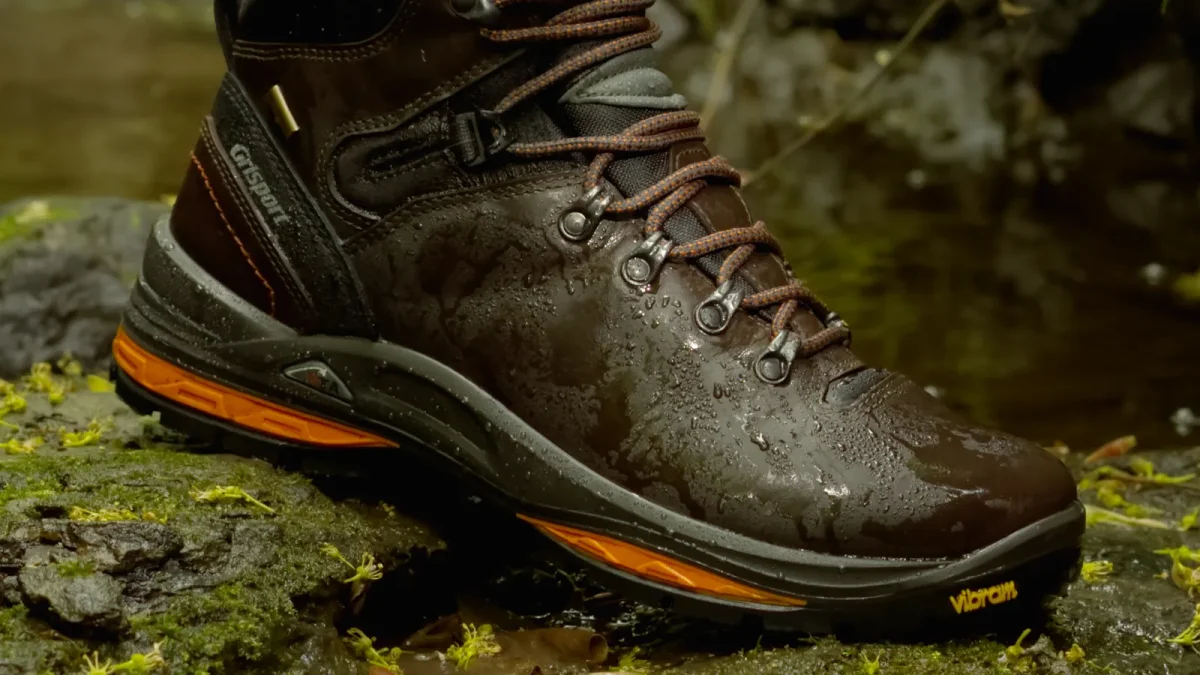
The Chocorua Trail’s semi-aggressive lugs were the strongest performer in testing we found, gripping through four inches of mud in Outdoor Gear Lab’s review. The Mt. Maddsen’s lugs are shallower for the boot’s size, and testers still called the overall traction solid on both wet and dry ground, though not class-leading. Both use a lug pattern designed to bite into dirt, roots and loose trail surfaces, which is the whole point of a hiking outsole.
The classic 6-inch boot’s sole is built around a different goal. Reviews describe a flatter, chunkier tread that grips wet leaves, cobblestones and light snow reasonably well, which makes sense for sidewalks and job sites. At least one long-term reviewer specifically warned it is not stable on ice, since the hard rubber compound does not flex and bite into slick surfaces the way a softer hiking lug does. Nothing in Timberland’s own materials claims this outsole is built for rocky, root-covered trail, and independent reviews back that up.
💡 Check the lug depth before you buy
Deeper, more widely spaced lugs generally grip mud and loose dirt better, because they let debris fall away instead of packing in. Shallower lugs, like the ones on the Mt. Maddsen and the classic 6-inch boot, work fine on packed dirt and gravel, but lose their edge on steep, muddy or rooty ground.
The mainstream KEEN Targhee IV lands in between. Reviewers praised its straight-line grip going up and down a trail, but flagged less confident footing on smooth, wet rock and submerged stones during creek crossings. No boot in this comparison, Timberland or otherwise, is immune to slick rock. Trekking poles and a slower pace on wet stone help regardless of which boot you wear.
Break-In, Weight and Ankle Support
Weight and stiffness decide how a boot feels by mile five, not mile one. This is another area where Timberland’s hiking and work boots tell a similar story with different details.
All three Timberland lines covered here use full-grain leather uppers, and full-grain leather takes time to soften. Outdoor Gear Lab called the Mt. Maddsen’s leather “fairly stiff and unyielding” at first. Trailspace reviewers of the same boot report a mixed experience: some needed real break-in time, while others found them comfortable within the first few wears. The Chocorua Trail follows a similar pattern, with Outdoor Gear Lab noting the leather “softened impressively after multiple hikes.” The classic 6-inch boot’s leather is also stiff out of the box, though Bootspy’s reviewer reported no blisters after an initial three-mile walk, just leather that was “not particularly malleable” at first.
On weight, the Mt. Maddsen is the lightest of Timberland’s hiking boots at about 2.3 pounds a pair, close to the mainstream KEEN Targhee IV’s roughly 2.5 pounds. The Chocorua Trail runs heavier at about 3.25 pounds a pair for the women’s Mid GTX version tested. Reports on the classic 6-inch boot’s exact weight vary by source and by whether it is insulated, but every review we found agrees it is the heaviest boot of the group, thanks to its full-grain leather, steel shank and, on insulated versions, added PrimaLoft.
Ankle support follows a similar shape. All of these boots use a tall collar that limits ankle roll better than a low hiking shoe. Outdoor Gear Lab called the Mt. Maddsen “very stable” on rough terrain when properly fitted, thanks to a genuinely stiff structure. The classic boot’s collar is just as tall, but it is tuned for looks and warmth, not the flex pattern a hiking boot needs for a natural stride on uneven ground.
Verdict: Which Timberland Boot Fits Which Hike
Put simply: the Mt. Maddsen and Chocorua Trail are genuine hiking boots, with real trade-offs against other brands but no fundamental design gap. The classic 6-inch boot is a different product wearing similar leather, and it is not a hiking boot no matter how rugged it looks.
| Your situation | Best choice | Why |
|---|---|---|
| Short, flat, paved or gravel walks | Classic 6-Inch Premium | Waterproof and durable enough, no trail-specific traction needed |
| Maintained day-hike trails | Solid pick Mt. Maddsen Mid WP | Real hiking outsole and membrane, lighter than the Chocorua Trail |
| Muddy, wet or rocky day hikes | Chocorua Trail (Mid GTX) | Gore-Tex membrane and semi-aggressive lugs tested well in mud |
| Snowy sidewalks and job sites | Classic 6-Inch Premium (insulated) | Sealed leather and PrimaLoft suit standing in the cold, not climbing |
| Want a non-Timberland comparison | KEEN Targhee IV Mid | Similar weight and waterproofing, no work-boot heritage to work around |
If you already own the classic 6-inch boot, there is no need to retire it. Keep it for wet commutes, yard work and light snow, and save your trail miles for a boot actually built to log them.
Common Mistakes (and How to Fix Them)
1. Packing the classic 6-inch boot for a real hike
❌ The mistake: assuming any Timberland boot will handle a rocky, multi-hour trail.
✅ The fix: save it for pavement, yard work and light snow. Bring the Mt. Maddsen or Chocorua Trail for actual trail miles.
2. Skipping the break-in period
❌ The mistake: wearing any full-grain leather Timberland straight out of the box on a long hike.
✅ The fix: walk several short trips first. Reviewers across every model here describe stiff leather that needs time to soften.
3. Assuming “waterproof” means “breathable”
❌ The mistake: treating the classic boot’s sealed leather the same as a Gore-Tex or TimberDry membrane.
✅ The fix: pick the Chocorua Trail or Mt. Maddsen for long, active days, where breathable membranes matter most.
4. Ignoring lug depth on technical trail
❌ The mistake: trusting shallow lugs on steep, muddy or root-covered ground.
✅ The fix: choose the Chocorua Trail’s semi-aggressive tread for muddy terrain, and slow down on wet rock in any boot.
5. Wearing insulated boots on a warm, active hike
❌ The mistake: lacing up a 400-gram insulated boot for a sweaty, uphill day.
✅ The fix: save heavy insulation for standing around in the cold. Choose a non-insulated hiking line for active days, even in winter.
Pro Tips for Wearing Timberlands on Trail
A few small habits make the difference between a Timberland boot that works for you and one that works against you. None of these cost extra money, and most take just a few minutes before you leave the house.
- Match the model to the mission. Mt. Maddsen or Chocorua Trail for hiking, classic 6-inch for everything else.
- Break in new leather boots on short walks first, then move up to a full day once they flex more easily.
- Re-treat the leather periodically with a leather conditioner or waterproofer to keep the seals working. Our how to buy hiking boots guide covers general boot care.
- Check the lug pattern before a muddy trail, not after you are already sliding on it.
- Pack a lighter shoe for camp if you are hiking in the heavier Chocorua Trail, so your feet get a break at the end of the day.
- Use trekking poles on wet rock, in any boot. None of the outsoles compared here are immune to slick stone.
- Size carefully. Full-grain leather does not stretch as much as mesh, so a snug fit at the store can feel tight for weeks.
- Rotate two pairs if you hike often. Letting leather boots fully dry between hikes helps both the membrane and the leather last longer.
A boot’s name does not decide what it is built for. Its membrane, outsole and shank do. Read those before you read the label.
Real-World Examples
These are composite examples built from patterns hikers commonly share in gear reviews, forums and trail journals. They are not individual testimonials, but they show how this plays out in practice.
What these three examples have in common: each person matched the boot to the actual ground they expected to cover, not just the Timberland name on the box. The commuter learned the hard way that street tread and trail tread are not the same thing. The other two picked a hiking-labeled model on purpose, and neither reported a surprise once they were on the trail. That is really the whole lesson of this guide.
Frequently Asked Questions
Are Timberland boots good for hiking?
Some are. The Mt. Maddsen and Chocorua Trail are built as hiking boots, with waterproof membranes and rubber lug outsoles, and independent reviews rate them as reasonable, budget-friendly options. The classic 6-inch boot is a work and street boot, not a hiking boot.
Which Timberland boots are made for hiking?
The Mt. Maddsen, Chocorua Trail and White Ledge lines are all sold and marketed specifically as hiking boots, each with a waterproof membrane and a lug outsole. Any boot simply labeled “boot,” including the classic 6-inch Premium, is not part of this hiking lineup.
Can you hike in the classic yellow Timberland boots?
You can walk in them for a short, easy or flat outing, since they are genuinely waterproof and sturdy. For a longer or rougher hike, the lack of a breathable membrane, the heavier build and the pavement-style sole make a dedicated hiking boot a better choice.
Are Timberland hiking boots waterproof?
Yes. The Mt. Maddsen uses Timberland’s TimberDry membrane, and the Chocorua Trail uses Gore-Tex, both under a waterproof leather upper. The classic 6-inch boot is also waterproof, through sealed leather rather than an internal membrane, so it manages sweat differently.
Do Timberland hiking boots need a break-in period?
Yes, in most reviews we found. All three lines use full-grain leather, which starts stiff and softens with wear. Reports vary from a few short walks to several full hikes before the boots feel fully broken in.
Is Timberland as good as Merrell, KEEN or Salomon for hiking?
Timberland’s dedicated hiking boots are competitive on paper and in independent reviews, though testers often rank them in the middle of the pack rather than at the top. The KEEN Targhee IV comparison in this guide shows similar weight and waterproofing, with each brand trading small advantages in traction and comfort.
Your Timberland Hiking-Boot Checklist
Use this checklist before you buy or pack a Timberland boot for a hike. Working through it in order helps you land on the right model for your actual plans.
Tap each item as you complete it. Your progress is saved in this browser.
- Confirm the exact model name: Mt. Maddsen, Chocorua Trail and White Ledge are hiking boots
- Treat any plain “boot,” including the classic 6-inch Premium, as street or work footwear
- Check whether you need a membrane (TimberDry or Gore-Tex) or just sealed leather
- Match the outsole to the terrain: shallower lugs for packed trail, deeper lugs for mud
- Break in any full-grain leather boot on short walks before a long hike
- Skip insulated 400g models for active, sweaty days
- Pack trekking poles if wet rock or stream crossings are likely
- Compare weight and price against a mainstream boot like the KEEN Targhee IV if unsure
The Bottom Line
So, are Timberlands good for hiking? The Mt. Maddsen and Chocorua Trail genuinely are, with waterproof membranes, real hiking outsoles and independent reviews that back up the trail-boot label. The classic 6-inch boot is a different animal: a waterproof work and street icon that never claimed to be hiking footwear.
Match the model to the mission, break in the leather before a long day, and you can get real trail use out of Timberland’s hiking lines. Save the yellow boot for the sidewalk, the job site and the snow shovel, where it has always belonged.
🎒 Plan your next hike’s gear
Use our free tools to build a footwear and gear plan that matches your actual trail.
Keep reading: how to buy hiking boots, can you hike in steel toe boots and are combat boots good for hiking. You can also browse every guide in our hiking boots category.
Sources
- Timberland: Men’s Mt. Maddsen Mid Waterproof Hiking Boot
- Timberland: Men’s Chocorua Trail 2.0 Waterproof Hiking Boots
- Timberland: Men’s Premium 6-Inch Waterproof Boot
- Outdoor Gear Lab: Timberland Mt. Maddsen Mid Waterproof review
- Outdoor Gear Lab: Timberland Chocorua Trail Mid GTX review
- Outdoor Gear Lab: KEEN Targhee IV Mid review
- Bootspy: Timberland Premium 6-inch boot review
- KEEN: Men’s Targhee IV Mid Waterproof product page
Facts checked in September 2026. Models, materials and prices change, so confirm current specs before you buy.
You may also like
How to Clean Hiking Boots: A Complete Care Guide
Mud, salt and sweat wear boots out fast. Here is how to clean hiking boots by material, dry them safely, fix odor…
How to Buy Hiking Boots: A Step-by-Step Guide (2026)
Buying hiking boots gets easy when you follow a simple order: match the boot to your hikes, choose materials and waterproofing, then…

Are Combat Boots Good for Hiking? An Honest Answer (2026)
Combat boots can handle short, rough or cold hikes, but most are heavier, stiffer and hotter than hiking boots. Here’s how they…

Get better at hiking.
Practical hiking tips, gear guides, trail advice and outdoor stories, delivered occasionally. No spam, unsubscribe any time.