Ultralight Backpacking Gear: Sub-15 lb Base Weight Setup
Build a sub-15 lb ultralight backpacking base weight without sacrificing safety. Tent, sleep system, pack, kitchen and clothing breakdown.
HikingCare is reader-supported. When you buy through links on our site we may earn a commission at no extra cost to you. How we choose what to recommend.
Ultralight backpacking isn’t about buying the most expensive gear — it’s about questioning every single item in your pack. A sub-15 lb base weight (everything except food, water and fuel) is achievable on a normal budget if you focus on the “big three”: pack, shelter and sleep system.
The big three: where weight actually lives
The big three typically account for 60–70% of base weight. Cutting them is where you make real progress:
- Pack: target ≤ 2 lb. Most traditional packs are 4+ lb.
- Shelter: target ≤ 2.5 lb for a 2-person tent.
- Sleep system: bag + pad ≤ 3 lb combined.
Hit those three numbers and you’re already under 8 lb in the most critical categories.
Ultralight pack
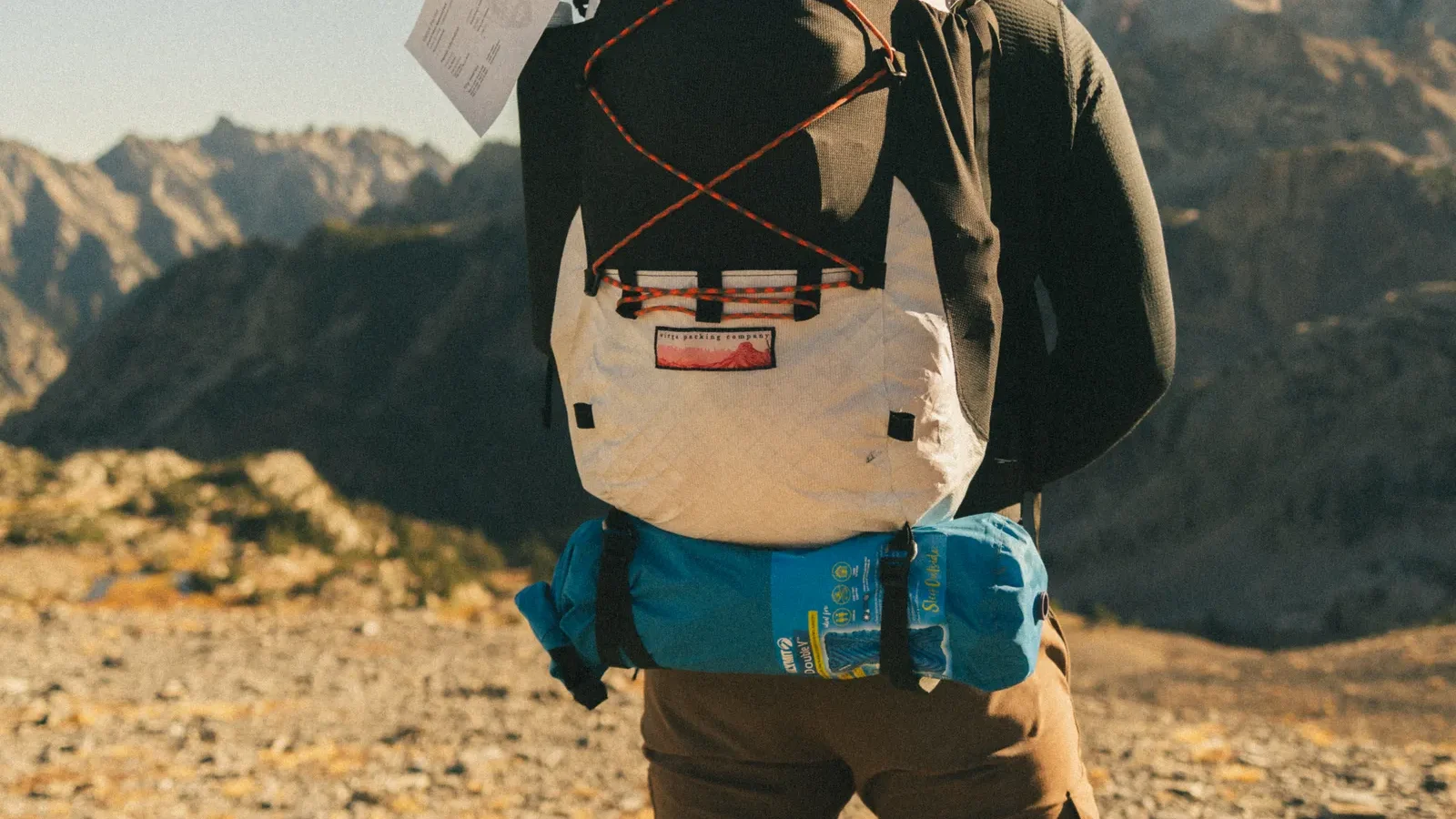
A 40–55L frameless or minimal-frame pack saves 2+ lb compared to a traditional pack. The trade-off: less load capacity, so you must commit to actually hitting that ~25 lb total weight. Ultralight backpacks 50L on Amazon
Ultralight shelter
Sub-2.5 lb 2-person tents now exist at reasonable prices. Trekking-pole tents save even more weight if you already carry poles. Ultralight 2-person tents on Amazon
Sleep system
A quilt instead of a sleeping bag saves 8–14 oz. Pair it with an inflatable sleeping pad in the 12–14 oz range for a 3-season setup. Backpacking quilts on Amazon
Kitchen
A single titanium 750 ml pot, a 1.8-oz alcohol or canister stove, and a long-handled spoon will cook anything an ultralight backpacker needs. Skip the multi-piece sets.
Clothing and worn items
Wear, don’t pack: hiking shirt, hiking pants or shorts, base briefs, socks. Packed: 1 spare base layer top, 1 spare socks, light insulation, rain shell. That’s it for 3-season backpacking.
What you don’t need
The fastest weight cuts are usually free:
- Drop redundancy — 1 spoon, 1 lighter, 1 pair of camp shoes.
- Repackage food (no boxes, no full toothpaste tube).
- Skip the camp chair, big knife, and second flashlight.
Verify your numbers
Plug your gear into the Backpack Load Optimizer to see which category is eating your weight and where ultralight swaps will help most. Then preview your trip in the Backpack Weight Calculator for total loaded weight.
Frequently asked questions
What is base weight?
Everything in and on your pack except consumables: food, water and fuel. It is the number ultralight hikers compare because it is the part of the load you control with gear choices.
Is ultralight backpacking for beginners?
The principles are: carry what you use, weigh what you carry, prefer multi-use items. Beginners should start with a moderate kit and lighten it as they learn which items they never touch, rather than buying a minimal kit before they have the skills to use it.
Where should I not cut weight?
Sleep insulation, rain protection, footwear that fits and the safety kit. A cold, wet or injured hiker is in trouble regardless of how light the pack was.
Read next
 Read nextBest Ultralight Tents in 2026 (Under 3 lb)
 Read nextHow to Choose a Hiking Backpack: Complete Sizing Guide
Plan it with our free tools: Backpack Load Optimizer · Pack Weight Calculator
You may also like

Best Ultralight Tents in 2026 (Under 3 lb)
Ultralight tents under 3 lb explained — freestanding, trekking-pole, single-wall and double-wall designs, and which one suits your kind of backpacking.

How to Train for a Mountain Hike
A practical 8-week mountain hiking training plan — cardio, elevation training, strength and recovery. Built around real schedules.

Best Hiking Headlamps for Trail Safety
How to choose a hiking headlamp — lumens, battery life, beam patterns, weight and price, with picks by use case.

Get better at hiking.
Practical hiking tips, gear guides, trail advice and outdoor stories, delivered occasionally. No spam, unsubscribe any time.