Hiking Food: What to Pack for Day, Overnight & Multi-Day Trips
Hiking food guide — calorie targets, real packing examples, snacks, meals, weight-to-calorie ratios for day hikes through multi-day trips.
HikingCare is reader-supported. When you buy through links on our site we may earn a commission at no extra cost to you. How we choose what to recommend.
Hiking food planning is two questions: how many calories per day, and how much weight does that take? Get the first wrong and you bonk. Get the second wrong and your pack is miserable.
Calorie targets
Hiking burns 250–600 kcal per hour depending on pace, terrain and pack weight. Rough daily targets:
- Day hike (4–8 hr): 1,500–2,500 kcal beyond breakfast.
- Backpacking, moderate: 3,000–4,000 kcal/day.
- Hard multi-day: 4,000–5,500 kcal/day.
For body-weight-personalized estimates, use our Water & Nutrition Calculator.
Calories per ounce — the magic ratio
The metric that matters more than absolute weight is calories per ounce. Target ≥ 110 kcal/oz for backpacking food. Below 100 kcal/oz, food is too water-heavy. Above 130 kcal/oz starts to require fat-dense foods (nuts, oils, peanut butter).
Best day-hike snacks
- Trail mix with nuts + dried fruit + chocolate.
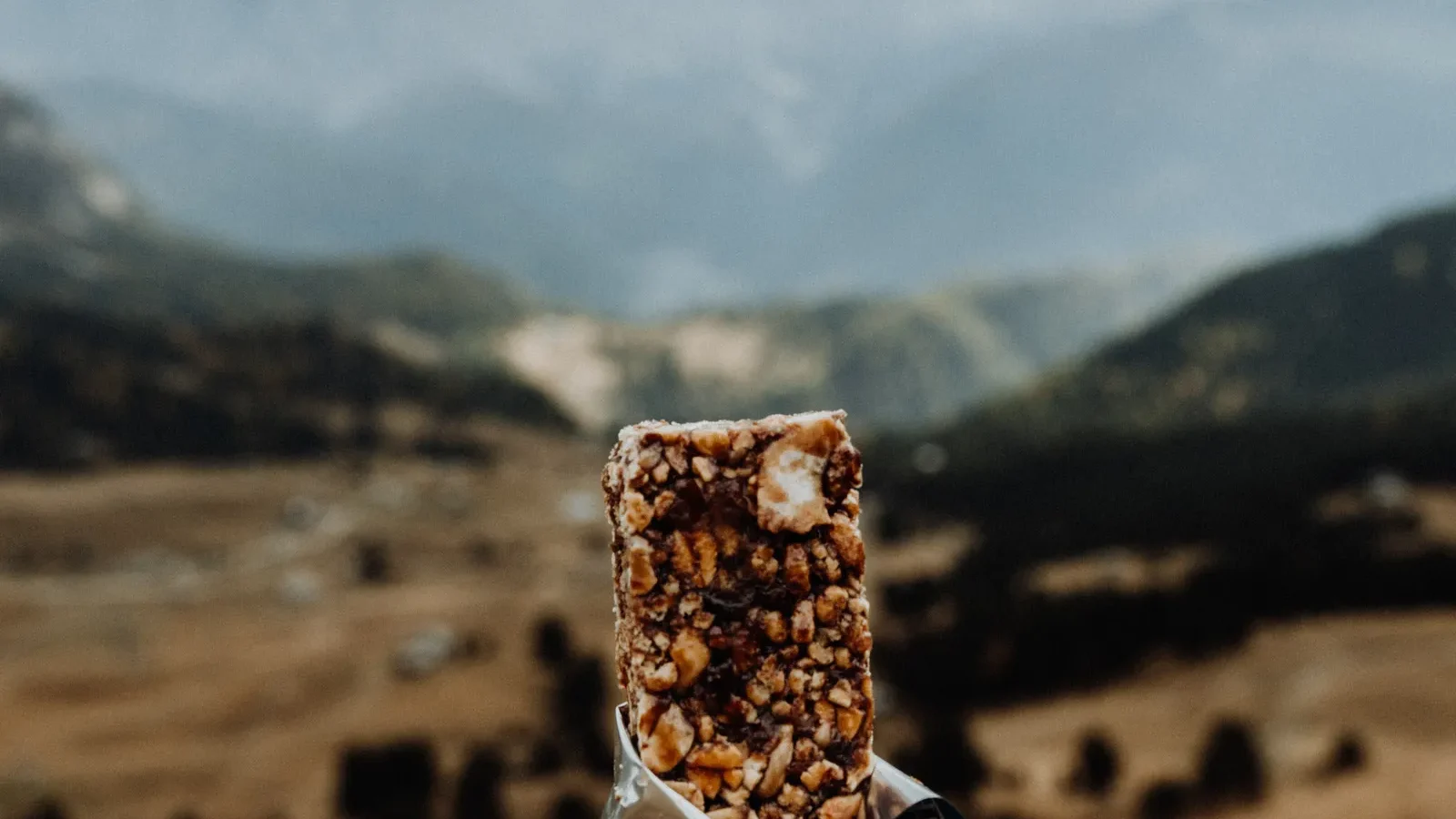
- Energy bars (look for protein over 8 g, sugar under 18 g).
- Cheese + crackers.
- Jerky.
- Tortillas with peanut butter and honey.
Day hike lunch ideas
- Wraps with hard cheese + cured meat + mustard.
- Bagel + cream cheese + smoked salmon.
- PB&J on dense bread.
- Cold-soaked couscous with olive oil and dried tomato.
Backpacking dinners
Two routes:
- Freeze-dried meals: easy, ~110 kcal/oz, expensive.
- DIY: ramen + dehydrated vegetables + olive oil + jerky. Around half the cost.
Freeze-dried backpacking meals on Amazon
Breakfast on trail
- Instant oats + powdered milk + nuts + dried fruit. ~130 kcal/oz.
- Granola + powdered milk (no cooking).
- Tortillas with peanut butter (no cooking).
What to skip
- Fresh produce on multi-day trips (too heavy for the calories).
- Canned anything (water weight).
- Sweet-only days (you’ll crash by hour 4).
Repackaging
Strip packaging at home. Use ziplock bags or reusable silicone bags. You’ll cut bulk dramatically and reduce trail trash. Just write the rehydration instructions on the bag with a marker before you leave.
Plan your food load
Once you have your calorie target, plug your food weight into the Backpack Load Optimizer to verify your total stays within your target.
Frequently asked questions
How much food should I pack per day for backpacking?
Most hikers land between 1.5 and 2 lb per person per day, which delivers roughly 2,500–3,500 calories with calorie-dense choices. Big mileage, cold weather and larger hikers push that upward.
Do I need a stove for an overnight hike?
No. Cold-soaked meals, wraps, cheese and cured meats work for a night out, and skipping the stove saves weight. A stove earns its place on longer trips, in cold weather and whenever a hot meal is what keeps morale up.
Which snacks survive heat and a squashed pack?
Nuts, seeds, jerky, hard cheeses, dried fruit, tortillas and pretzels hold up well. Chocolate, soft bars and crackers melt or crumble; keep them near the top of the pack and eat them early.
Read next
 Read nextHow Much Water Should You Bring Hiking?
 Read nextUltralight Backpacking Gear: Sub-15 lb Base Weight Setup
Plan it with our free tools: Water & Nutrition Calculator · Hiking Checklist Generator
You may also like

First Day Hike: Complete Beginner Hiking Setup
A complete beginner hiking checklist — what to wear, what to pack, and how to plan your first day hike confidently and…

Hiking With Kids: Family-Friendly Trail Setup
A practical guide to hiking with kids — trail selection, what to pack, snack strategy, and how to keep small hikers engaged…

How to Train for a Mountain Hike
A practical 8-week mountain hiking training plan — cardio, elevation training, strength and recovery. Built around real schedules.

Get better at hiking.
Practical hiking tips, gear guides, trail advice and outdoor stories, delivered occasionally. No spam, unsubscribe any time.