Are Combat Boots Good for Hiking? An Honest Answer (2026)
Combat boots can handle short, rough or cold hikes, but most are heavier, stiffer and hotter than hiking boots. Here’s how they compare, when they work and how to make a pair trail-ready.
HikingCare is reader-supported. When you buy through links on our site we may earn a commission at no extra cost to you. How we choose what to recommend.
⏱️ Quick answer
Are combat boots good for hiking? They can work, but they’re rarely the best choice. Well-fitted, broken-in combat boots are fine for short, rough or cold hikes. For most trails, hiking boots or shoes feel lighter, cooler and kinder to your feet.
Combat boots are built for protection and toughness, not for comfort over many miles. U.S. Army boots stand 8 to 10 inches tall, and Army research found that weight on your feet costs far more energy than the same weight on your back.
*Boot height from U.S. Army uniform standards. Energy figures from U.S. Army load-carriage research (Soule and Goldman, 1969; Knapik and Reynolds), listed in the sources below.
Maybe you kept your boots after leaving the military. Maybe you spotted a tough-looking pair at an army surplus store for less than a new pair of hiking boots. Either way, you’re wondering the same thing: can you take them up a trail without wrecking your feet?
The honest answer is “it depends.” Combat boots are tough, protective and supportive. But most are heavier, stiffer and hotter than hiking footwear, and those differences grow with every mile. In this guide we compare the two side by side in plain English, explain when combat boots make sense, and show you how to make a pair trail-ready if you decide to try them.
Here’s what you’ll get from this guide:
- A clear, honest answer, including who can hike in combat boots and who shouldn’t
- A side-by-side table covering weight, break-in, support, traction, waterproofing and breathability
- The simple science behind why heavy boots tire you out faster
- Easy steps to make combat boots hike-ready: socks, insoles, lacing and break-in
- Better alternatives, including military-style hiking boots
- Common mistakes, a quick FAQ and a tap-to-track checklist
Are Combat Boots Good for Hiking? The Short Answer
Combat boots are fine for some hikes and a poor match for others. They were designed for soldiers who need protection from rough ground, brush and long days on their feet under heavy gear. Hiking boots were designed for one main job: walking comfortably on trails. That difference in purpose explains almost everything else in this guide.
Here’s the quick version:
- Yes, for short or rough hikes. If your combat boots fit well and are already broken in, a few hours on a rocky trail, a muddy forest road or a snowy path is usually fine.
- Maybe, for day hikes with a heavy pack. Tall, stiff boots can feel stable under a load, as long as they fit and have good tread.
- Usually not, for long-distance or hot-weather hiking. Extra weight, stiffness and heat add up over many miles. That’s when blisters, sore feet and tired legs show up.
Keep in mind that “combat boot” covers a lot of footwear. An old all-leather surplus boot and a modern lightweight tactical boot are very different things. Some newer military boots are even built on hiking-boot designs, so they hike far better than the heavy black boots many people picture.
The best hiking boot isn’t the toughest one. It’s the one that fits your foot, suits your trail and still feels good at the end of the day.
So if you already own a good pair, you don’t need to rush out and buy new boots for an easy weekend walk. But if you’re shopping mainly for hiking, a hiking boot or shoe is almost always the smarter buy. Our best hiking boots guide is a good place to start.
What Makes a Combat Boot Different?
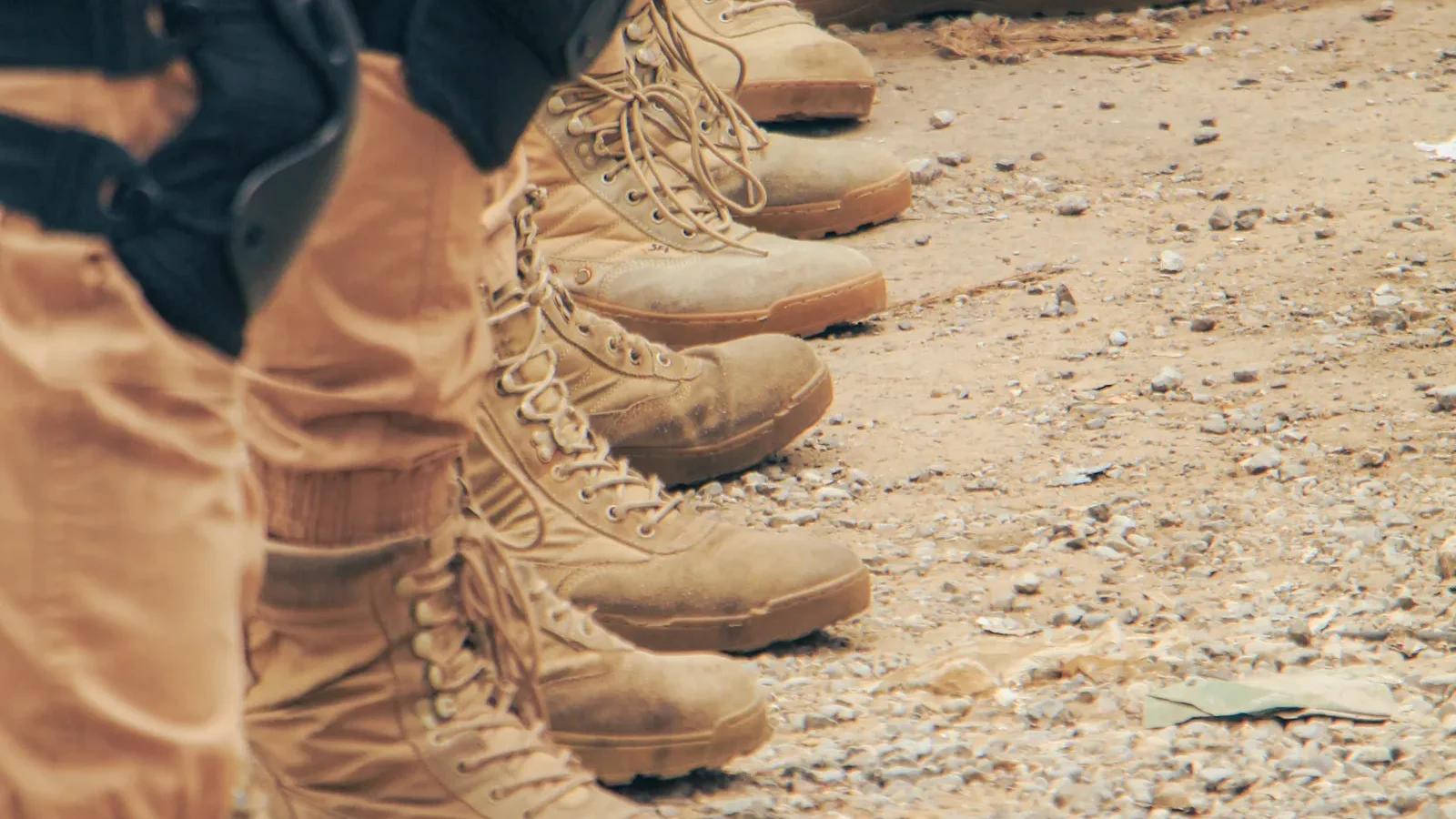
A combat boot is a tall, laced boot made for military field use. The U.S. Army’s uniform regulation, AR 670-1, points to a companion pamphlet, DA PAM 670-1, for its boot rules. Army installation standards spell them out: boots must be 8 to 10 inches tall and made of coyote brown, flesh-side-out cattlehide leather with a plain toe. Only rubber or polyether polyurethane, a tough, foam-like plastic, is allowed for the outsole.
A few more details explain how these boots feel on a trail. The sole can’t be more than 2 inches tall, and the upper can’t contain mesh. It must be all leather, or leather plus non-mesh fabric. That’s one reason Army-style boots breathe less than many hiking boots, which often use airy mesh panels. “Flesh-side out” simply means the rough, suede-like side of the leather faces outward, which is why modern Army boots look matte rather than shiny.
You’ll also hear a few related terms when you shop:
- Tactical boots: a broad label for military-style boots sold to soldiers, police, security workers and outdoor fans. Many are lighter than issue boots, and some come in shorter heights.
- Hot-weather boots: made for heat. Belleville’s 390 hot-weather combat boot, for example, is 8 inches tall, unlined and non-insulated, with a leather-and-nylon upper and a Vibram Sierra outsole.
- Temperate-weather boots: made for cooler, wetter conditions. These usually add a waterproof GORE-TEX lining, which Gore says completely surrounds the foot.
- Military-style hiking boots: hiking boots adapted for soldiers. Salomon’s Quest 4D Forces 2, for example, is a tactical version of a mountain hiking boot.
So what does a hiking boot do differently? Outdoor retailer REI sorts hiking footwear into three groups. Hiking shoes are low-cut and light. Day hiking boots are mid- to high-cut, and REI says they “often flex easily and require little break-in time.” Backpacking boots have a high cut that wraps above the ankle for support under heavier loads.
In other words, combat boots have the most in common with heavy backpacking boots. They’re tall, tough and stiff. That’s great for protection. It’s less great for comfort over many miles, especially if you usually hike with a small daypack.
🪖 Buying surplus? Check the condition
Army surplus stores sell used and old-stock boots at low prices. Before you buy, flex the sole, check the stitching and look for cracked leather or soles pulling away from the upper. A boot that looks tough on the shelf can still fall apart on a wet trail.
Combat Boots vs Hiking Boots: Side by Side
Here’s how a typical combat boot compares with a typical hiking boot on the things that matter most on the trail. Every model is different, so treat this as a general guide rather than a rule.
| Feature | Combat and tactical boots | Hiking boots | Edge for hiking |
|---|---|---|---|
| Weight | Usually heavier, with tall shafts and tough soles | Lighter, especially mid-height and synthetic models | Hiking boots |
| Break-in | Often long, because stiff leather needs time to soften | Day hiking boots often need little break-in | Hiking boots |
| Support | 8- to 10-inch shafts that feel very stiff and stable | Mid or high cut, with shanks and plates for stiffness underfoot | Depends on the trip |
| Traction | Varies a lot; some use lugged Vibram soles | Lug patterns and heel brakes made for dirt, rock and descents | Hiking boots |
| Waterproofing | Hot-weather boots are unlined; temperate boots often have GORE-TEX | Many come in waterproof and non-waterproof versions | Tie |
| Breathability | Unlined boots breathe better; Army-style uppers can’t use mesh | Mesh and synthetics breathe well; membranes reduce it | Hiking boots |
| Toughness | Excellent against brush, thorns and scrapes | Good, though light day boots are less durable | Combat boots |
Notice the pattern? Combat boots win on toughness and protection. Hiking boots win on weight, comfort and grip. A 2025 study in Scientific Reports sums up the difference: compared with athletic footwear, military boots have higher shafts, more mass and more stiffness. That may add stability, but it also changes how your ankles and knees move.
The gap isn’t the same for every boot, though. A modern lightweight tactical boot with a lugged sole may hike better than a cheap, flimsy hiking boot. And an old, dried-out surplus boot may be the worst of both worlds. Judge the actual pair on your feet, not the label on the box.
💡 The two-minute boot check
Before you hike in any boot, try this. Press your thumb into the tread to feel how deep the lugs are. Bend the boot at the ball of the foot to feel how stiff it is. Then lift it and feel the weight. Deep lugs, a little flex at the front and a lighter feel are all good signs for trail use.
Weight: Why Heavy Boots Tire You Out Faster
Weight is the biggest reason most hikers skip combat boots. It isn’t just about the number on the scale. It’s about where that weight sits.
With every step, you lift your foot, swing it forward and set it down. Heavy boots make your legs repeat that work thousands of times, with extra weight at the very end of the swing. Back in 1969, U.S. Army researchers Soule and Goldman measured the cost. A 2020 study on heavy firefighter boots sums up their result: carrying a load on the feet took about 6.3 times more energy than carrying it on the torso.
A later review by U.S. Army scientists Joseph Knapik and Katy Reynolds put the figure at five to seven times. They also reported that each kilogram (2.2 pounds) added to the feet raised energy use by 7 to 10 percent. Their advice was simple: footwear should be as light as possible while still being durable enough for the job.
What does that mean on a real hike? Here’s a simple way to picture it:
- Heavy boots feel like a heavier pack. The old hiker saying “a pound on your feet equals five on your back” comes from research like this.
- The cost grows with distance. On a one-hour walk you may barely notice. On a long day, the extra effort adds up to real fatigue.
- Tired legs lead to sloppy steps. Late in the day, heavy feet are more likely to catch on roots and rocks.
How heavy are combat boots? It depends on the model and size, so always check the listing before you buy. As one example of a lighter military-style design, Salomon lists its Quest 4D Forces 2 at 1 lb 7 oz per unit. Traditional all-leather boots with thick soles tend to weigh more. If you want to see how your gear adds up, try our Pack Weight Calculator, and remember that what’s on your feet counts extra.
✨ The weight rule of thumb
If two boots fit you equally well, pick the lighter one for hiking. Save the heaviest, toughest boots for short trips, off-trail brush and jobs where protection matters more than miles.
There’s one more reason weight matters. It affects how soon you get tired, and tired hikers are more likely to trip or misstep. Lighter footwear won’t make a hard trail easy, but it leaves you more energy for the parts that need your full attention, like steep descents and stream crossings.
Support and Traction: Stiff Isn’t Always Stable
Many people pick combat boots because they seem supportive. In one sense, they are. A tall, stiff shaft wraps your lower leg and ankle, and it feels locked in. Under a heavy load on rough ground, that can feel reassuring.
But support comes in more than one form. Hiking boots add stability in ways you can’t see from the outside:
- Shanks: stiff inserts, usually 3 to 5 mm thick, that REI says add load-bearing stiffness to the midsole.
- Plates: thin plates of plastic or carbon fiber that make it harder to twist your foot or ankle when you land on uneven ground.
- Midsoles: EVA foam is lighter and cushier, while polyurethane is firmer and more durable, according to REI.
- A higher cut when you need it: backpacking boots wrap above the ankle for extra support under heavy loads.
Very stiff, tall boots come with a trade-off. The 2025 Scientific Reports study notes that military boots reduce ankle and knee range of motion, so the body makes up for it at the hip. On a smooth trail that may not matter much. Over a long day, many hikers find that a boot with a little flex at the front feels more natural.
Traction: look at the tread, not the label
Traction comes from the outsole, the rubber layer that touches the ground. REI explains that the depth and spacing of the lugs, the little rubber bumps on the sole, decide how well a boot grips, and that deeper lugs bite better on rough, rocky ground. A heel brake, the step between the heel and the arch, gives you more control on steep descents.
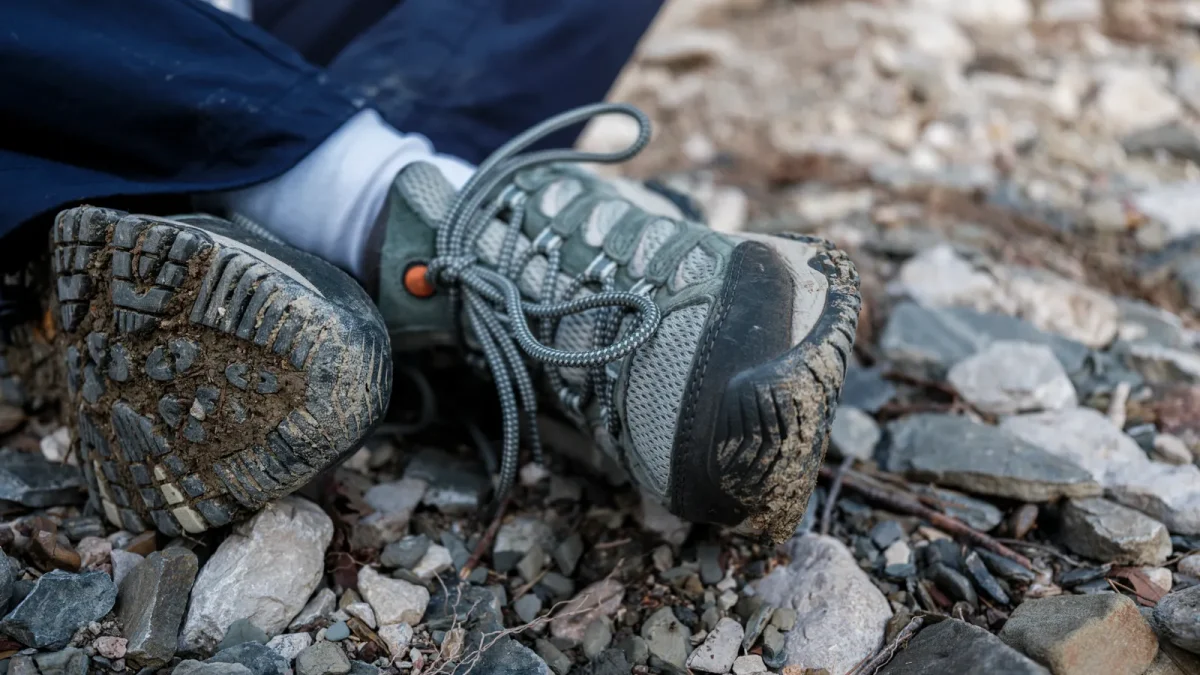
Some combat boots have excellent tread. Belleville’s 390 hot-weather boot, for example, uses a Vibram Sierra outsole. Others have much shallower tread. Before you hike, turn your boots over. If the lugs look shallow or worn smooth, save those boots for easy, dry paths.
One more thing: thick, stiff soles can make it harder to feel the ground. On rock slabs, roots and scrambles, that makes careful foot placement even more important. Slow down on tricky ground, and consider trekking poles for extra balance.
Waterproofing vs Breathability: Hot-Weather and Temperate Boots
This is where the type of combat boot matters most. Militaries issue different boots for different climates, and each type behaves very differently on a hike.
Hot-weather boots are made to handle heat. Belleville’s 390, for example, is unlined and non-insulated. With no waterproof lining, more heat and sweat can escape. The trade-off is that wet grass, puddles and creeks can soak straight through to your socks.
Temperate-weather boots add a waterproof, breathable lining. Gore says the GORE-TEX lining in its temperate-weather military footwear completely surrounds the foot to form a barrier water can’t get through, while still letting sweat vapor escape. That’s a big help in cold rain, snow and mud.
But no waterproof boot breathes as well as an open mesh shoe. REI notes that waterproof membranes reduce breathability, and that full-grain leather gives up breathability too. On a hot, humid day, a lined leather boot can leave your feet damp with sweat. Damp skin rubs more easily, which is why the NHS suggests changing socks often if your feet get sweaty.
Here’s how to match the boot to the weather:
| Conditions | Best combat-boot type | Best hiking option | Why |
|---|---|---|---|
| Hot and dry | Unlined hot-weather boot | Breathable, non-waterproof hiking shoe or boot | Heat and sweat are the main problems |
| Hot with creek crossings | Unlined boot, plus dry socks to change into | Non-waterproof shoes that drain and dry quickly | Your feet will get wet anyway, so drying matters most |
| Cool and wet | GORE-TEX-lined temperate boot | Waterproof mid-height hiking boot | Best match Keeps feet dry and warm |
| Snow and cold | Lined or insulated boot with warm socks | Insulated winter hiking boot | Warmth and grip on snow matter most |
Leather combat boots can also take a waterproofing treatment, which helps them shed water on rainy days. Our guide on how to waterproof hiking boots explains the basics. Just remember that a treatment helps leather resist water. It doesn’t turn an unlined boot into a fully waterproof one.
⚠️ Wet feet in the cold
Wet feet get cold fast. If your boots aren’t waterproof, avoid long hikes in near-freezing rain or slush, and always pack spare dry socks. For snow and ice, read our winter hiking gear guide before you go.
When Combat Boots Work Well for Hiking
Combat boots aren’t a mistake on every trail. In some situations they’re a perfectly sensible choice, especially if you already own a pair that fits.
1. Short hikes on rough ground
For a hike of a few hours, extra weight matters much less. If the trail is rocky, rooty or overgrown, a tall, tough boot protects your ankles and shins from knocks and scrapes.
2. Off-trail brush and thorns
Heavy leather and tall shafts shine when you leave the trail. Pushing through brush, briars or loose rock is hard on light mesh shoes, and a tough boot keeps sticks and stones out of your socks.
3. Cold, muddy or snowy days
A lined temperate boot keeps mud and slush out, and its tall shaft helps keep snow off your socks. Add warm wool socks and you have a solid setup for a winter walk on a packed trail. Deep snow and ice call for proper winter boots and traction devices.
4. Rucking and fitness training
If you’re training for a military fitness test or a rucking event, it makes sense to train in the boots you’ll wear on the day. Rucking means walking with a weighted pack, and it’s a close cousin of hiking. See rucking vs hiking for how the two compare.
5. When they’re what you have
If combat boots are what’s in your closet, and they fit well, start with them. Use them on short outings, notice how your feet feel, and upgrade later if you catch the hiking bug. There’s no need to spend money before you know what you like.
✅ Green lights for hiking in combat boots
They fit well with hiking socks, they’re fully broken in, the tread is deep, the hike is short to moderate, and the boot matches the weather: lined for cold and wet, unlined for heat.
When Combat Boots Are the Wrong Choice
Now for the other side. These are the situations where combat boots usually cause more problems than they solve:
- Long days and multi-day trips. The extra energy cost of heavy boots grows with every mile, and it shows up as tired legs and sore feet.
- Hot, humid weather. Lined leather boots trap heat and sweat, and hot, damp feet blister more easily.
- Frequent stream crossings. If water pours over the top of a waterproof boot, the lining can hold it in, and thick leather takes a long time to dry.
- Steep scrambles and rock slabs. A hard, flat or worn sole can slip on smooth rock, and a rigid shaft limits how your ankle bends.
- Boots that don’t fit. A boot in the wrong size, or a used pair shaped by someone else’s feet, can rub from the first mile.
- Brand-new boots. Stiff new leather can rub your heels raw on the first long hike.
Let’s look closer at blisters, because they can end a hike early. A friction blister forms when your skin rubs against a sock or boot again and again. Heat and moisture make it worse. The NHS advises wearing comfortable, well-fitting shoes, breaking in new footwear by wearing it for short periods, choosing moisture-wicking socks and changing socks if your feet get sweaty.
Heavy, stiff combat boots can make all of that harder. They take longer to break in, they can hold more heat, and a stiff heel cup can rub if the fit isn’t perfect. None of this means combat boots can’t work. It just means you need to be more careful with them than you would with a lighter hiking boot.
⚠️ Stop at the first hot spot
If you feel a warm, rubbing spot, stop right away. Take off your boot, dry your foot and cover the spot with tape or a blister dressing before it turns into a blister. If you have diabetes, poor circulation or numb feet, check your feet often and talk to a doctor before hiking in stiff, heavy boots.
Also think about where you’re hiking. On a well-kept trail with a light daypack, the benefits of a combat boot mostly disappear, and only the downsides remain. On rough, brushy ground, the balance shifts back toward the tougher boot.
How to Make Combat Boots Hike-Ready
Decided to give your combat boots a try? Good news: a few simple changes make a big difference. Work through these steps in order.
- Check the fit first. REI’s rule for any hiking footwear is that it should fit “snug everywhere but tight nowhere,” with room to wiggle your toes. Try boots on late in the day, when your feet are largest, and wear the socks you’ll hike in. Our guide to how hiking boots should fit walks you through it.
- Swap cotton for hiking socks. Moisture-wicking hiking socks help keep your skin drier. Garmont Tactical recommends medium- to heavy-weight, moisture-wicking socks with extra cushioning while you break in new boots.
- Upgrade the insoles if needed. A supportive aftermarket insole can add cushioning and a better arch shape, and it can take up a little extra space in a roomy boot. Bring your insoles when you try boots on, because they change the fit.
- Break them in slowly. Garmont suggests starting with short periods around the house and gradually wearing them longer. Then walk them around town, on different surfaces, and on short, easy trails. Garmont also advises avoiding wet conditions until the boots are fully broken in.
- Condition and protect the leather. Garmont recommends a conditioning cream to keep leather supple during break-in and a waterproofing treatment before first use.
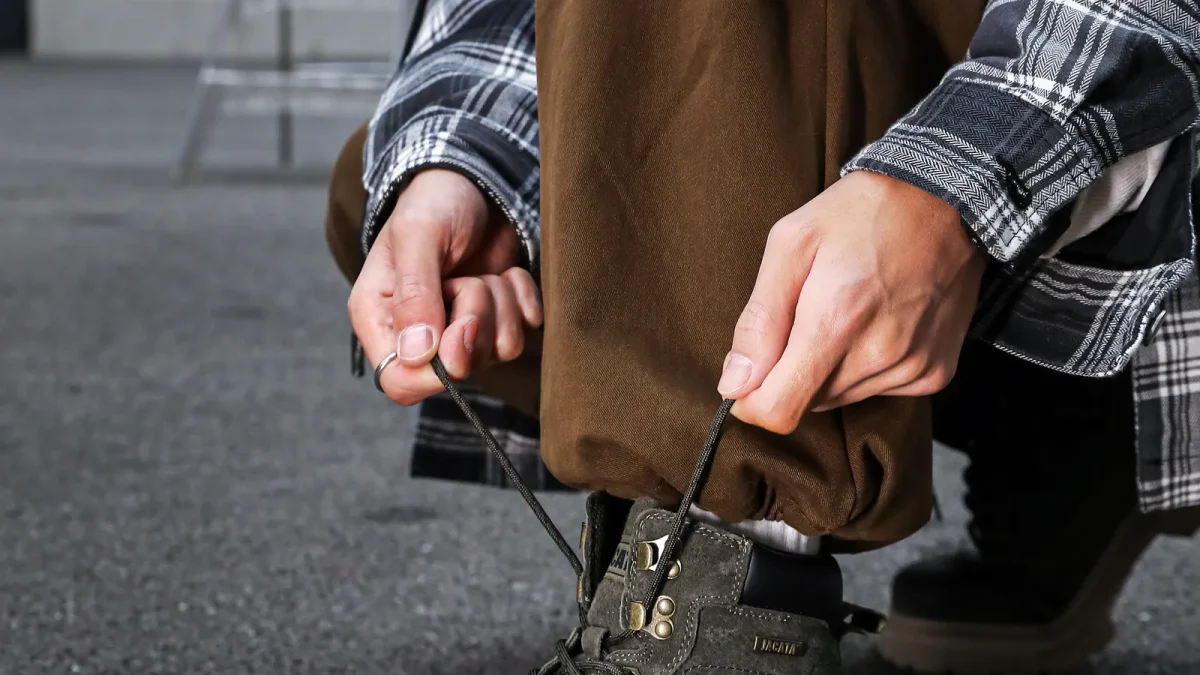
- Lace for the terrain. Snug the laces over your instep so your heel doesn’t lift. If it still slips, try a heel-lock lacing loop at the top eyelets. On long descents, tighten the top for control. On climbs, loosen it a little so your ankle can flex.
- Pack a small foot-care kit. Carry tape or blister dressings, spare socks and small scissors. The NHS says a pharmacist can recommend hydrocolloid dressings that protect a blister and help reduce pain.
Don’t skip the break-in, even if the boots feel fine in the store. Leather relaxes and molds to your feet as you wear it, and your skin needs time to adjust too. The NHS suggests wearing new shoes for short periods until they’re comfortable. That advice matters even more with stiff military boots.
What about shortcuts, like soaking boots or bending them by hand? Garmont warns against forcefully bending or twisting boots, which can damage their structure, and says patience is essential. We’d skip the soaking trick too, since Garmont advises keeping new boots out of wet conditions until they’re broken in.
🩺 A quick health note
This guide is general information, not medical advice. If you have ongoing foot pain, repeated blisters, bunions, plantar fasciitis or diabetes, see a doctor or podiatrist before changing your footwear or hiking longer distances.
Better Alternatives for Most Hikers
If you’re buying footwear mainly for hiking, these options usually make more sense than combat boots. The right one depends on your trail, your pack and your feet.
| Footwear | Best for | Why it beats combat boots here | Trade-off |
|---|---|---|---|
| Trail runners | Fast, light hiking on good trails | Lightest option; breathes and dries quickly | Less protection and ankle coverage |
| Hiking shoes | Day hikes on groomed trails | Light and low-cut, with hiking tread | Less ankle coverage |
| Mid-height hiking boots | Most day hikes and weekend trips | Best all-rounder Support with much less weight | Waterproof versions run warm |
| Backpacking boots | Heavy loads on rugged terrain | Support designed for hiking, with hiking outsoles | Heavier, with a longer break-in |
| Military-style hiking boots | Duty use plus weekend trails | Built on hiking-boot designs | Check they meet your uniform rules |
For most people, a mid-height hiking boot is the sweet spot. It covers your ankle bone, keeps out trail grit and steadies you on uneven ground, but it’s lighter and more flexible than a classic combat boot. If you hike smooth trails with a light pack, trail runners or hiking shoes are even easier on your legs. Our comparison of trail runners vs hiking boots helps you decide.
If you like the look and toughness of military footwear, there’s a middle ground. Several outdoor brands make tactical versions of their hiking boots, using hiking-style chassis and outsoles in coyote, black or other duty colors. Salomon’s Quest 4D Forces 2 and Merrell’s Moab 3 Mid Tactical Waterproof are two examples. Need tough, waterproof boots for work or duty? See our guide to the best tactical waterproof boots.
The same thinking applies to other everyday boots people try on the trail. Work boots, fashion boots and safety boots all trade some hiking comfort for other strengths. If you’re curious, find out whether you can hike in Doc Martens or in steel-toe boots.
Boots and Socks Worth Considering
These three picks cover the most common situations. You want a military-style boot that actually hikes well, you want a proven everyday hiking boot, or you want to make the boots you already own more comfortable. We chose them from manufacturer specs, Amazon listings and published product information. Nobody paid for a spot on this list.
🪖 Military-style hiking boot
Salomon
Salomon Quest 4D Forces 2 Boots (Coyote)
A tactical boot built on the frame of a mountain hiking boot.
Salomon says the Quest 4D Forces 2 gives you “the support and grip of a mountain boot” with the flexibility to take a knee or sprint. It pairs a nubuck leather upper with Salomon’s 4D Advanced Chassis for stability and an All-Terrain Contagrip outsole for wet, dry, hard or loose ground. That makes it a strong fit for people who need a duty-style boot but also spend real time on trails.
- Hiking-boot chassis built to carry heavy loads
- All-Terrain Contagrip outsole made for many surfaces
- Puncture-resistant sole (ISO 20344:2011)
- OrthoLite insole and lace-up fit with closed hooks
| Weight | 1 lb 7 oz per unit |
|---|---|
| Drop | 12 mm |
| Upper | Nubuck leather |
| Outsole | All-Terrain Contagrip |
| Chassis | 4D Advanced Chassis |
| Water | Water resistant (no GORE-TEX lining) |
Best for: soldiers, police, hunters and hikers who want a tactical-looking boot that hikes like a hiking boot. This version has no waterproof lining; Salomon also makes a Quest 4D GORE-TEX Forces 2 for wet conditions. Check your unit’s rules before you wear any boot on duty.
🛒 Buy from Amazon Check sizes and today’s price on Amazon.
⛰️ Standard hiking boot
Merrell
Merrell Moab 3 Mid Waterproof Hiking Boot
A cushioned, waterproof mid-height boot for everyday trails.
The Moab 3 Mid is the kind of boot most day hikers are better off with than a combat boot. It has a waterproof membrane, a light EVA foam midsole, an air cushion in the heel and a Vibram TC5+ rubber outsole. The mid-height cut covers your ankle without the stiffness of a tall military shaft.
- Waterproof membrane seals out water and lets moisture escape
- Lightweight EVA midsole plus a heel air cushion
- Molded nylon arch shank and protective toe cap
- Bellows tongue keeps out trail debris
| Upper | Pigskin leather and mesh |
|---|---|
| Membrane | Waterproof |
| Midsole | EVA foam, heel air cushion |
| Shank | Molded nylon |
| Outsole | Vibram TC5+ |
| Insole | Kinetic Fit ADVANCED, removable |
Best for: day hikers and weekend backpackers who want cushioning and dry feet on muddy trails. Like any waterproof boot, it runs warmer than a mesh shoe on hot days.
🛒 Buy from Amazon Men’s link. Prefer the women’s Moab 3 Mid Waterproof? Check sizes and today’s price on Amazon.
🧦 Makes any boot better
Darn Tough Vermont
Darn Tough Hiker Micro Crew Midweight with Cushion (1466)
A cushioned merino wool hiking sock that suits combat and hiking boots alike.
If you change only one thing about hiking in combat boots, change your socks. This midweight sock has soft cushioning underfoot and extra protection over the ankle and Achilles, where stiff boot collars often rub. The merino wool blend moves moisture away from your skin, and the seamless toe helps prevent rubbing.
- Merino wool blend helps manage moisture
- Cushioned footbed plus padding at the ankle and Achilles
- True Seamless toe for a smooth feel
- Unconditional lifetime guarantee
| Fiber | 61% merino, 36% nylon, 3% Lycra spandex |
|---|---|
| Weight | Midweight |
| Cushion | Underfoot, ankle and Achilles |
| Height | Micro crew (about 8.5 in, heel to cuff) |
| Made in | Vermont, USA |
Best for: anyone hiking in boots, especially stiff combat boots that need extra cushioning. The micro crew height peeks just above a standard hiking boot, so with tall 8-inch combat boots you may prefer a taller boot sock to stop the shaft rubbing your shin.
🛒 Buy from Amazon Men’s link. Check sizes and today’s price on Amazon.
Prices and stock change often, so check each listing before you buy. As an Amazon Associate, HikingCare earns from qualifying purchases, at no extra cost to you.
Common Mistakes When Hiking in Combat Boots (and How to Fix Them)
Most bad experiences with combat boots on the trail come from a handful of avoidable mistakes. Here’s what to watch for, and what to do instead.
1. Taking brand-new boots on a long hike
❌ The mistake: unboxing stiff new boots and heading straight out for a full day on the trail.
✅ The fix: break them in gradually with short wears at home, then walks around town, then short, easy hikes. Only go long once they feel comfortable all day.
2. Wearing cotton or thin dress socks
❌ The mistake: pairing tough boots with everyday cotton socks that stay damp and bunch up.
✅ The fix: wear cushioned, moisture-wicking hiking socks and carry a spare pair. Change them at lunch or whenever your feet feel sweaty.
3. Picking the wrong boot for the weather
❌ The mistake: wearing lined leather boots on a hot summer hike, or unlined boots in cold rain.
✅ The fix: use unlined boots for heat and lined, waterproof boots for cold, wet days. If you own only one pair, choose hikes that suit it.
4. Buying surplus boots in the wrong size
❌ The mistake: grabbing a bargain pair that’s “close enough” and hoping thick socks will fix the fit.
✅ The fix: try boots on late in the day with hiking socks. Your heel should stay put, your toes should wiggle freely, and nothing should pinch.
5. Ignoring worn-out tread
❌ The mistake: trusting old boots with smooth, shallow lugs on a steep, wet trail.
✅ The fix: check the tread before every season. If the lugs are worn flat, keep those boots for dry, easy paths and wear something grippier on hard trails.
6. Lacing once and forgetting it
❌ The mistake: leaving laces loose all day, so your heel lifts and rubs with every step.
✅ The fix: retie at the trailhead and again before long climbs or descents. A heel-lock loop at the top eyelets helps stop heel slip.
Pro Tips for Hiking in Military Boots
These simple habits make combat boots far more comfortable on the trail. None of them cost much, and most cost nothing at all.
- Start with a short, familiar loop. Learn how your boots feel on a trail you know before you commit to a big day somewhere new.
- Take your boots off at breaks. Loosen the laces or pull your boots off at lunch so your feet can cool and dry.
- Carry spare socks. A dry pair halfway through a hike can make stiff boots feel much friendlier.
- Use trekking poles on descents. Poles help you balance in heavy, stiff boots and take some strain off your knees.
- Lighten everything else. If your boots are heavy, save weight in your pack. Our Hiking Gear Planner helps you build a lean kit.
- Look after the leather. Clean off mud after hikes and condition the leather so it stays supple instead of cracking.
- Retire boots when the tread is gone. Worn soles are a slip hazard on wet rock, no matter how good the uppers look.
Combat boots are built to survive the mission. Hiking boots are built to make the miles feel easy. Choose the pair that matches today’s mission.
If you do a lot of different activities, it’s fine to own both. A tough, tall boot for brushy, cold or muddy days and a lighter boot or shoe for everything else is a practical combination that covers almost any trail.
Real-World Examples: Three Common Combat-Boot Hikers
These are composite examples built from patterns hikers commonly share in reviews, forums and online communities. They’re not individual testimonials, but they show how the same boots can work well or badly depending on the plan.
What these stories have in common: the boots themselves weren’t the whole story. Fit, break-in, socks and matching the boot to the trail and weather made the difference. A broken-in combat boot on a short, rough hike is a good match. A brand-new one on a long, hot hike is not.
Frequently Asked Questions
Are combat boots better than hiking boots?
Not for most hiking. Combat boots are tougher and more protective, but hiking boots are usually lighter, more flexible and designed with trail traction in mind. Combat boots make the most sense for short, rough or brushy hikes.
Can you hike in army surplus boots?
Yes, if they fit you well and are in good condition. Check that the soles are firmly attached, the stitching is intact and the tread still has deep lugs. Break them in slowly before any long hike.
Do combat boots give better ankle support?
Their tall, stiff shafts feel very stable, especially under a heavy pack. But a 2025 study in Scientific Reports notes that military boots also reduce ankle and knee range of motion. A good fit, a stable sole and strong ankles matter as much as boot height.
How long does it take to break in combat boots?
It varies with the boot, the leather and your feet. Start with short periods at home and build up gradually, then move to short walks and easy trails. Take them on a long hike only once they feel comfortable all day.
Are tactical boots the same as combat boots?
Not exactly. “Tactical boot” is a broader term for military-style boots sold to soldiers, police and the public. Many are lighter than issue combat boots, and some are built on hiking-boot designs.
Can I use combat boots for backpacking?
For a short trip with a heavy pack, well-fitted combat boots can work. On longer trips the extra weight adds up, since Army research found each kilogram on the feet raised energy use by 7 to 10 percent. Backpacking boots give similar support with hiking outsoles.
Your Combat-Boot Hiking Checklist
Use this checklist before you take combat boots on the trail. Work through it from top to bottom: fit comes first, then break-in, then the small upgrades that make a big difference. If you can tick every box, your boots are as trail-ready as they can be.
Tap each item as you complete it. Your progress is saved in this browser.
- Try the boots on late in the day with the socks you’ll hike in
- Confirm your heel stays put and your toes can wiggle
- Break them in with short wears at home, then around town
- Check the tread depth and make sure the soles are firmly attached
- Match the boot to the weather: unlined for heat, lined for cold and wet
- Switch to moisture-wicking hiking socks and pack a spare pair
- Add a supportive insole if the stock one is thin
- Condition and waterproof leather boots
- Pack tape or blister dressings
- Start with a short hike, then build up
The Bottom Line
So, are combat boots good for hiking? Sometimes. A broken-in pair that fits well can handle short, rough, brushy or cold hikes just fine. But most combat boots are heavier, stiffer and hotter than hiking footwear, and Army research shows that weight on your feet costs far more energy than weight on your back.
If you already own combat boots, try them on short hikes with good socks and a slow break-in. If you’re buying for the trail, a mid-height hiking boot, a hiking shoe or a military-style hiking boot will usually serve you better.
🥾 Build a trail-ready kit
Plan your footwear and gear for your next hike with our free tools. No sign-up needed.
🎒 Gear Planner ✅ Checklist Generator ⚖️ Pack Weight Calculator
Keep reading: the best hiking boots, how hiking boots should fit and trail runners vs hiking boots.
Sources
- U.S. Army: AR 670-1, Wear and Appearance of Army Uniforms and Insignia (PDF)
- Joint Base Lewis-McChord: JBLM Standards, including boot rules (PDF)
- Belleville Boot Company: 390 TROP Hot Weather Combat Boot
- GORE-TEX Professional: Temperate weather footwear
- REI Expert Advice: How to choose hiking boots
- Scientific Reports (2025): Footwear has a modifying effect on tibial loading during military weight carriage
- Fashion and Textiles (2020): Physiological and subjective burden when wearing fire protective boots
- Knapik and Reynolds, U.S. Army Research Laboratory and USARIEM: Load carriage in military operations (PDF)
- Garmont Tactical: How to break in new boots
- NHS: Blisters
- Salomon: Quest 4D Forces 2
- Darn Tough: Men’s Hiker Micro Crew Midweight with Cushion
Facts checked in September 2026. Product details and uniform rules change, so confirm them before you buy.
You may also like

Best Hiking Boots in 2026: How to Choose the Right Pair
How to pick hiking boots that suit your trails: grip, ankle support, waterproofing, weight and sizing — plus when a trail runner…

Trail Runners vs Hiking Boots: Which Should You Buy?
Trail runners vs hiking boots — the honest comparison. When to pick each, the durability question, and what most hiking forums get…

How Long Does It Take to Hike the Appalachian Trail? (2026 Guide)
Most thru-hikers need five to seven months to walk all 2,197.9 miles. Here is how the timeline really works: daily miles, start…

Get better at hiking.
Practical hiking tips, gear guides, trail advice and outdoor stories, delivered occasionally. No spam, unsubscribe any time.